
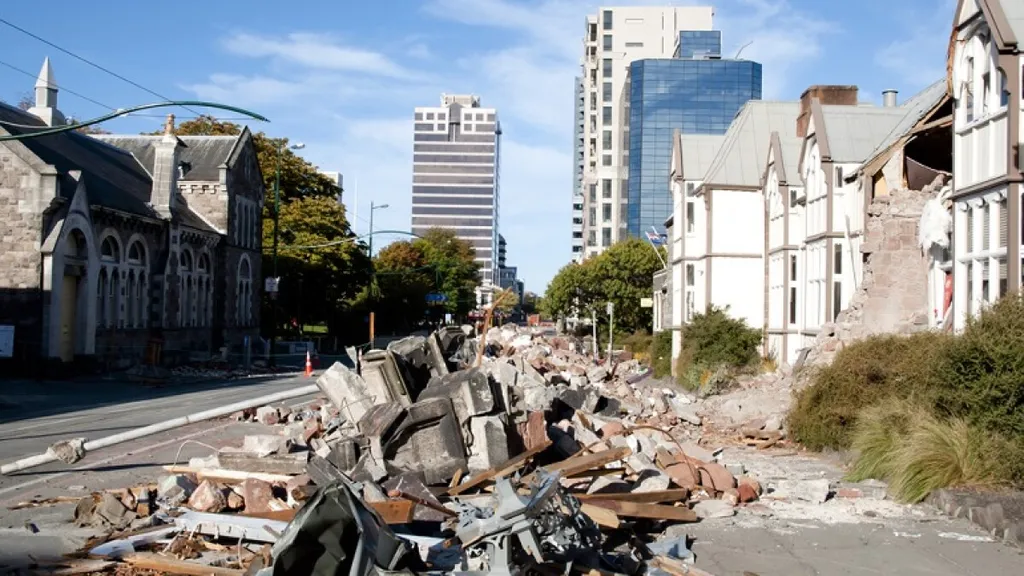
In the heart of New Zealand, the city of Christchurch has been steadily rising from the rubble of the devastating 2010–2011 Canterbury earthquakes. Fourteen years into the reconstruction of its central business district, a new study led by Michel Bruneau, a SUNY Distinguished Professor at the University at Buffalo, offers a compelling snapshot of the structural choices shaping the city’s resilience and the commercial landscape.
The study, published in the journal *Resilient Cities and Structures* (translated from Russian as “Устойчивые города и сооружения”), delves into the design decisions behind 55 buildings constructed between 2017 and 2025, providing a unique longitudinal perspective on post-disaster reconstruction. Bruneau and his team interviewed representatives from consulting engineering companies to understand the materials and structural systems used, as well as the drivers behind these choices.
The findings reveal a city in transition. Steel and concrete remain the dominant materials for lateral force-resisting systems, accounting for 47% and 45% of the buildings, respectively, with timber making up the remainder. However, when considering floor space, steel buildings tend to be larger, occupying 70% of the area, while concrete structures account for 24%.
“The most popular structural steel seismic systems were moment-resisting frames (MRFs) and buckling-restrained braced frames (BRBFs),” Bruneau explains. “These systems accounted for 29% and 20% of the floor areas, respectively.” Gravity systems, when required, were generally steel, reflecting a trend towards consistency in material use.
Comparing these results with a previous study conducted by the same authors for buildings constructed from 2012 to 2017, the numbers are remarkably similar. However, the drivers behind these choices have evolved. “As the Canterbury earthquakes become further away in time, fewer of our clients request resilient designs that would help achieve functionality following future earthquakes,” one engineer commented. “Instead, they often prioritize lowest-cost designs.”
This shift in client priorities raises important questions about the balance between cost and resilience in post-disaster reconstruction. While the study notes that many newer buildings were designed for significantly higher strength and lower drift than permitted in the standards, the trend towards cost-cutting could have long-term implications for the city’s ability to withstand future seismic events.
For the commercial sector, particularly the energy sector, these findings underscore the importance of investing in resilient infrastructure. Buildings designed to withstand earthquakes not only protect the lives of occupants but also ensure business continuity, minimizing downtime and financial losses in the event of a disaster.
As Christchurch continues to rebuild, the insights from Bruneau’s study offer valuable lessons for other cities facing the challenge of post-disaster reconstruction. By prioritizing resilience alongside cost, urban centers can build back better, creating structures that not only stand the test of time but also foster a more sustainable and secure future.
In the words of Bruneau, “The choices we make today in reconstruction will shape the resilience of our cities tomorrow.” As the world grapples with the increasing frequency and intensity of natural disasters, the lessons from Christchurch serve as a timely reminder of the importance of investing in resilient infrastructure.