
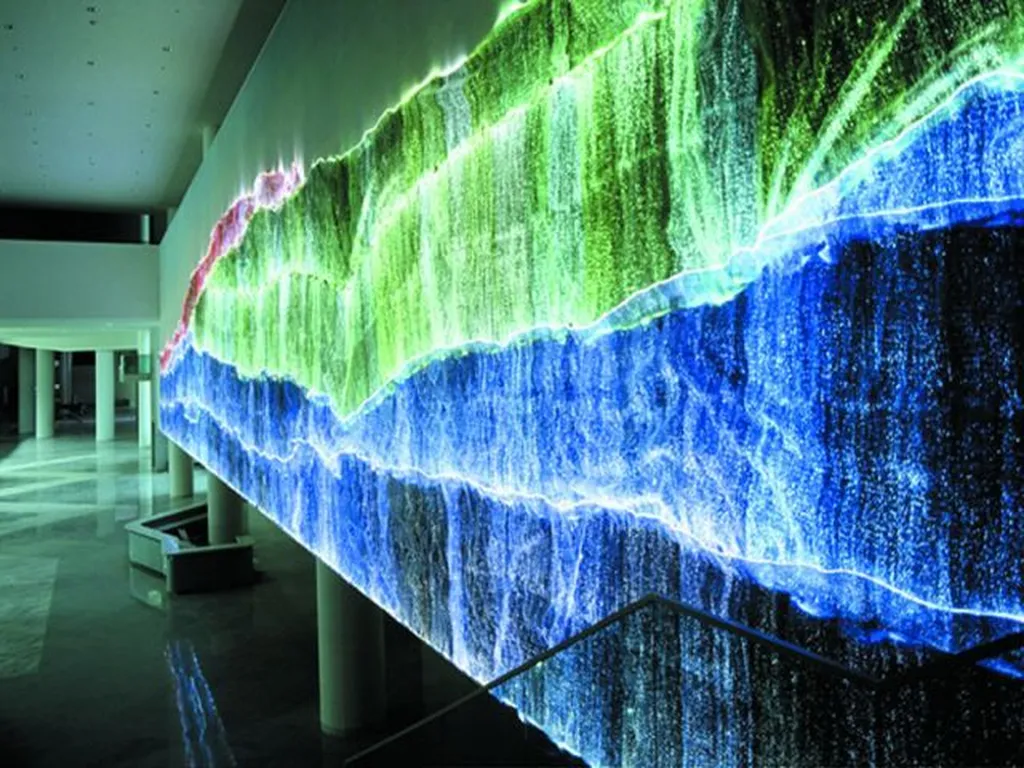
In the quest for sustainable and energy-efficient solutions in civil construction, a groundbreaking study published in the Brazilian Journal of Structures and Materials (Revista IBRACON de Estruturas e Materiais) has unveiled a promising innovation: a luminescent waterproofing membrane. Led by Jéssica Pian Bez Birolo, this research explores the integration of strontium aluminate doped with europium and dysprosium (SrAl2O4:Eu2+,Dy3+) into construction materials, potentially revolutionizing safety and energy efficiency in buildings.
The study, which involved creating samples with varying concentrations of phosphorescent powder (20%, 30%, and 40%), revealed that the 40% sample exhibited the highest quantum yield at 63% and a residual emission lasting up to 810 seconds. “The Dy3+ ions play a crucial role in forming electronic traps, which prolong the emission,” explained Birolo. This prolonged emission is particularly significant for applications in low-light environments, such as escape routes and safety signage, where visibility and energy efficiency are paramount.
The commercial implications for the energy sector are substantial. Traditional lighting systems consume a significant amount of energy, particularly in large buildings and public spaces. By incorporating phosphorescent materials into waterproofing membranes, the need for artificial lighting in critical areas can be reduced, leading to lower energy consumption and costs. “This innovation not only enhances safety but also contributes to sustainable construction practices,” Birolo noted.
However, the study also highlighted challenges. The increase in phosphorescent content compromised the workability of the material, necessitating formulation adjustments. This trade-off between functionality and practicality is a common hurdle in material science, but one that researchers are confident can be overcome with further innovation.
The potential applications of this technology extend beyond safety signage. In the energy sector, the integration of phosphorescent materials into building envelopes could lead to the development of self-illuminating structures that require minimal external lighting. This could be particularly beneficial in off-grid or remote locations where access to electricity is limited.
As the construction industry continues to evolve, the demand for sustainable and energy-efficient solutions will only grow. This research, published in the Brazilian Journal of Structures and Materials, represents a significant step forward in meeting these demands. By harnessing the power of phosphorescent compounds, the construction industry can pave the way for safer, more efficient, and environmentally friendly buildings.
The study’s findings open up a world of possibilities for future developments. As Birolo and her team continue to refine the formulation, the potential for widespread adoption of this technology becomes increasingly tangible. In the meantime, the construction and energy sectors are poised to benefit from this innovative approach to sustainable building practices.