
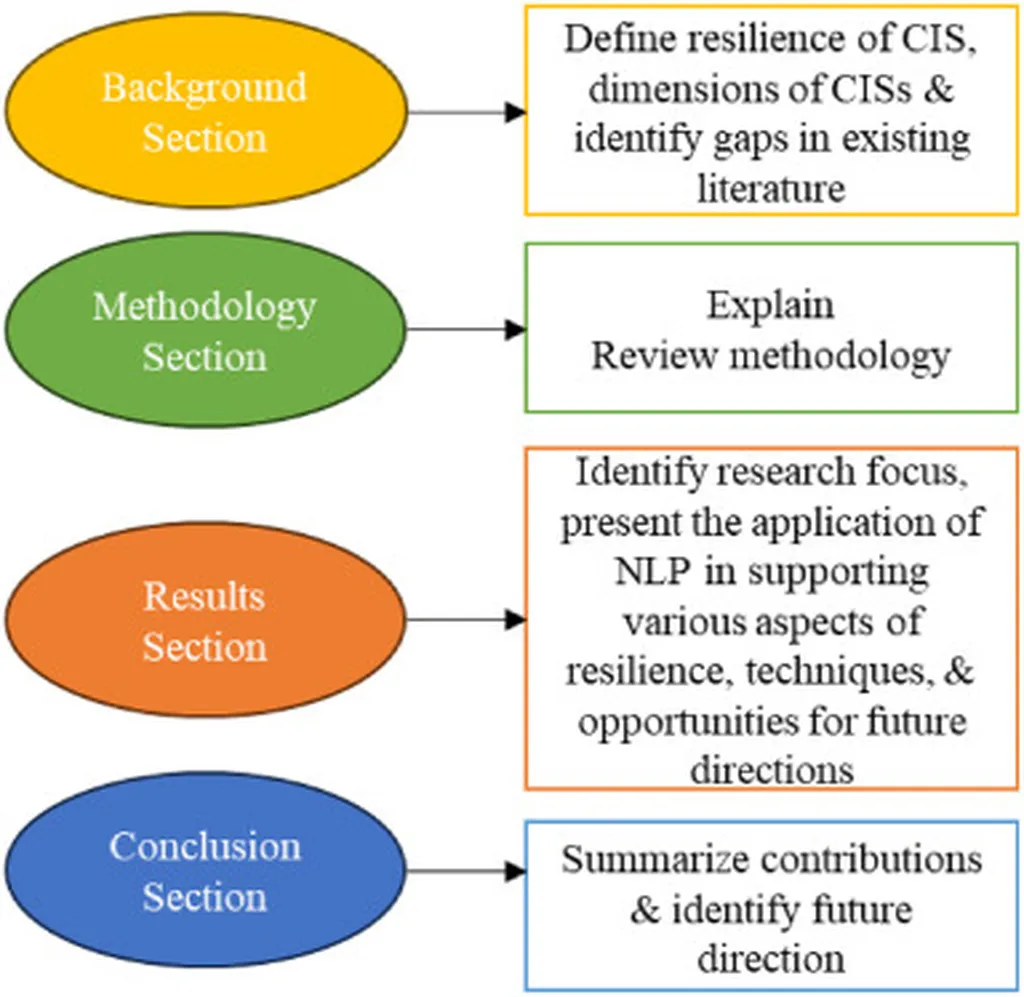
In the face of increasingly frequent and severe natural disasters, the energy sector is turning to innovative technologies to bolster the resilience of critical infrastructure systems (CISs). A groundbreaking study led by Muhammad Ali Moriyani from the University of North Carolina at Charlotte has shed light on the transformative potential of natural language processing (NLP) in disaster management. Published in the journal *Resilient Cities and Structures* (translated as *Städte und Strukturen mit Widerstandsfähigkeit*), this research offers a roadmap for leveraging NLP to enhance the preparedness, absorption, recovery, and adaptability of energy infrastructure.
Moriyani and his team analyzed 231 bibliographic records from Scopus and Web of Science, identifying five key research areas where NLP can support the resilience of CISs during natural disasters. These areas include sentiment analysis, crisis informatics, data and knowledge visualization, disaster impacts, and content analysis. The study highlights how NLP can sift through vast amounts of unstructured human language data, providing real-time insights that are crucial for decision-making during crises.
“NLP has the potential to become a supplementary data source to support the resilience of CISs,” Moriyani emphasized. This capability is particularly relevant for the energy sector, where timely and accurate information can mean the difference between a minor disruption and a catastrophic failure. For instance, sentiment analysis can gauge public sentiment and concerns, enabling energy companies to address issues proactively. Crisis informatics can provide real-time updates on infrastructure status, while data visualization tools can offer clear, actionable insights for emergency response teams.
The study also maps the utility of NLP techniques across various aspects of resilience. Preparedness can be enhanced by analyzing historical data to predict potential vulnerabilities. Absorption, or the ability to withstand and manage disruptions, can be improved by monitoring real-time data to identify and mitigate issues as they arise. Recovery efforts can be streamlined by analyzing post-disaster communications to understand the most effective response strategies. Adaptability, the ability to evolve and improve over time, can be fostered by continuously analyzing data to refine and update resilience strategies.
Looking ahead, the research points to several promising directions for future studies. These include developing more sophisticated NLP models tailored to the specific needs of the energy sector, integrating NLP with other advanced technologies like artificial intelligence and machine learning, and creating standardized frameworks for NLP applications in disaster resilience.
As the energy sector grapples with the challenges posed by climate change, the insights from Moriyani’s research offer a beacon of hope. By harnessing the power of NLP, energy companies can build more resilient infrastructure, better prepared to withstand and recover from natural disasters. This not only ensures the continuity of essential services but also safeguards the economic and social well-being of communities.
In a world where natural disasters are becoming increasingly unpredictable, the ability to leverage technology for resilience is more critical than ever. Moriyani’s work serves as a catalyst for further exploration and innovation, paving the way for a more resilient future.