
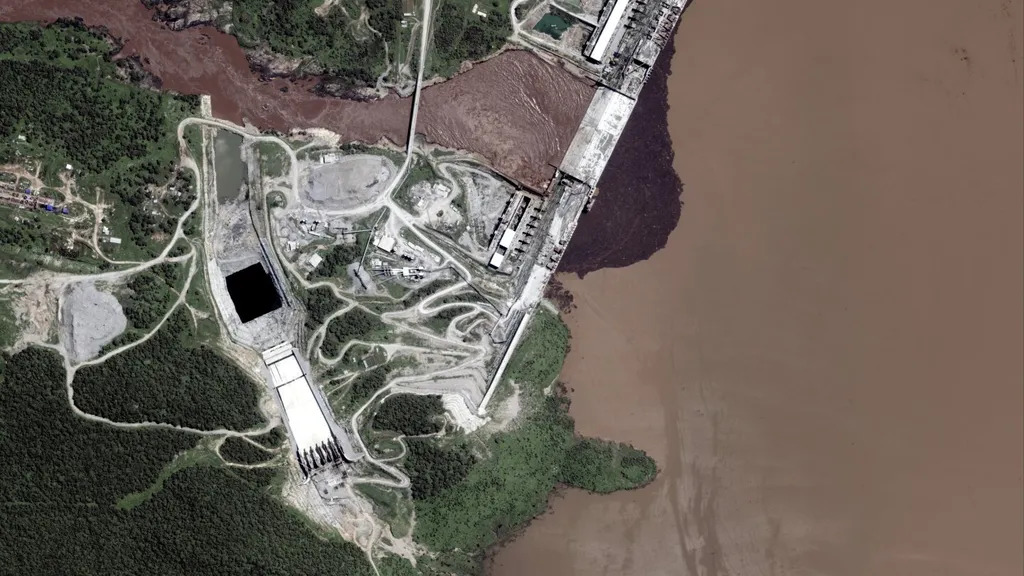
In the heart of Ethiopia, the Upper Blue Nile Basin pulses with life, sustaining millions and powering industries downstream. Yet, the basin’s vast expanse is sparsely monitored, leaving critical gaps in our understanding of its hydrology. A recent study published in *HydroResearch* (translated as Water Research) sheds light on how remote sensing technology is bridging these gaps, offering a lifeline to policymakers, researchers, and energy sector stakeholders.
Lead author Yilkal Gebeyehu Mekonnen, affiliated with the Hydrology and Water Resources Management department at Addis Ababa University and Debre Markos University, has systematically reviewed the application of remote sensing in the Upper Blue Nile Basin. His work reveals a treasure trove of insights, demonstrating how satellite technology is revolutionizing hydrological monitoring.
“Remote sensing provides synoptic, repetitive, and timely information,” Mekonnen explains, highlighting the technology’s ability to capture real-time data over large areas. This is a game-changer for the energy sector, where water resource management is paramount. Hydropower plants, which rely on consistent water flow, can leverage this technology to optimize operations and predict maintenance needs.
The study identifies several key application areas. Satellite rainfall products, such as CHIRPS, have been found to outperform traditional methods, providing more accurate and timely precipitation data. This is crucial for energy sector stakeholders, enabling them to anticipate water availability and plan accordingly.
Moreover, remote sensing has been instrumental in mapping land use and land cover changes (LULCC). Mekonnen’s review reveals a worrying trend: natural forest, grassland, and shrubland coverage is decreasing, while agriculture and urban areas are expanding. This shift can significantly impact water availability and quality, directly affecting hydropower generation and other water-intensive industries.
The technology also aids in evapotranspiration modeling, groundwater recharge estimation, and soil moisture and water storage monitoring. “Remote sensing is used to extract hydrogeological features, identify recharge zones, assess soil moisture, and manage reservoirs,” Mekonnen notes. These capabilities are invaluable for the energy sector, enabling stakeholders to make informed decisions about water usage and resource management.
As we look to the future, the potential of remote sensing in hydrology is vast. Mekonnen’s review offers a roadmap for harnessing this technology, benefiting policymakers, researchers, and practitioners alike. For the energy sector, this means improved water resource management, enhanced predictive capabilities, and ultimately, more sustainable and efficient operations.
In the words of Mekonnen, “This review offers insights into how remote sensing can be applied in hydrology, benefiting policymakers, researchers, and practitioners by harnessing the full potential of remote sensing technology.” As we navigate an increasingly water-scarce world, these insights are more valuable than ever. The Upper Blue Nile Basin may be thousands of miles away, but its lessons resonate globally, offering a beacon of hope for sustainable water management in the energy sector.