
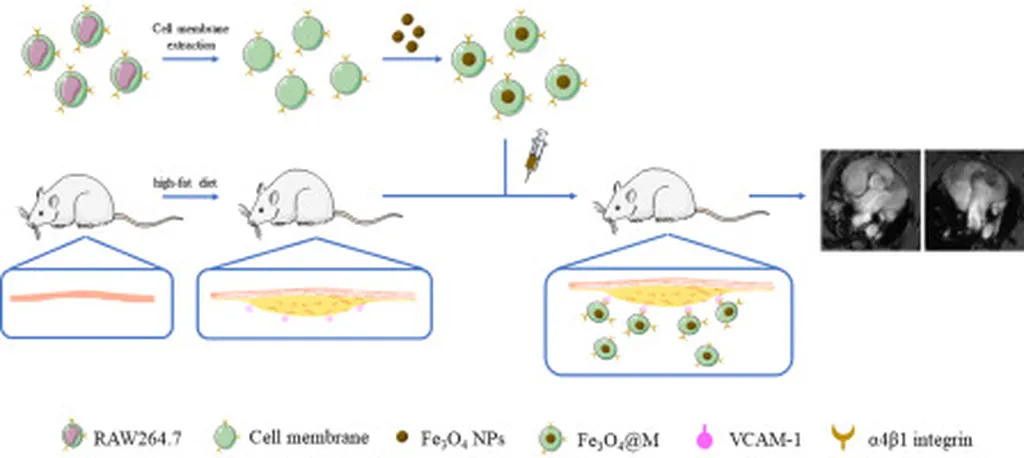
In a groundbreaking development that could revolutionize the early diagnosis of atherosclerosis, researchers have engineered a novel imaging tool that combines the power of magnetic resonance imaging (MRI) with targeted nanotechnology. Led by Lina Papadimitriou at the Foundation for Research and Technology-Hellas in Crete, Greece, the study introduces iron oxide nanoclusters (NCs) functionalized with vascular cell adhesion molecule 1 (VCAM-1), offering a promising approach to detect early-stage atherosclerotic lesions.
Atherosclerosis, a leading cause of cardiovascular diseases, often goes undetected until it reaches advanced stages. Current diagnostic methods lack the precision to identify early lesions, which is crucial for timely intervention. The research published in *MedComm – Biomaterials and Applications* (which translates to “Medical Communications – Biomaterials and Applications”) addresses this gap by developing targeted MRI contrast agents that can specifically bind to inflamed endothelial cells, a hallmark of early atherosclerosis.
The team synthesized iron oxide nanoclusters using a high-temperature polyol method, ensuring controlled growth and colloidal stability. These nanoclusters were then functionalized with VCAM-1 antibodies, enabling them to target and bind to VCAM-1-overexpressing cells under inflammatory conditions. “The key innovation here is the specific binding and internalization of these nanoclusters through the endolysosomal pathway, which mimics the early stages of atherosclerosis,” explains Papadimitriou.
The study demonstrated that the functionalized nanoclusters remained bound even under shear stress, mimicking the dynamic conditions of blood flow in arteries. This stability is crucial for accurate imaging in a clinical setting. Moreover, MRI phantom analysis confirmed that the nanoclusters retained their contrast capability, despite the increased T2* relaxation times post-antibody conjugation.
The potential commercial impacts of this research are substantial, particularly in the energy sector, where cardiovascular health is a significant concern for workers exposed to high-stress environments. Early detection of atherosclerosis could lead to preventive measures, reducing healthcare costs and improving workforce productivity. “This technology could be a game-changer in occupational health, providing a non-invasive, early diagnostic tool that can be integrated into regular health check-ups,” says Papadimitriou.
While the study is limited by the lack of in vivo validation and therapeutic evaluation, it lays a strong foundation for future research. The findings open avenues for developing theranostic nanoparticles that combine diagnostic and therapeutic functions, potentially transforming the landscape of cardiovascular disease management.
As the research progresses, the integration of VCAM-1-functionalized nanoclusters into clinical practice could redefine the standards of early diagnosis and personalized treatment for atherosclerosis. The study’s implications extend beyond the medical field, offering a glimpse into a future where advanced nanotechnology and imaging techniques converge to enhance health outcomes and operational efficiency in various sectors.