
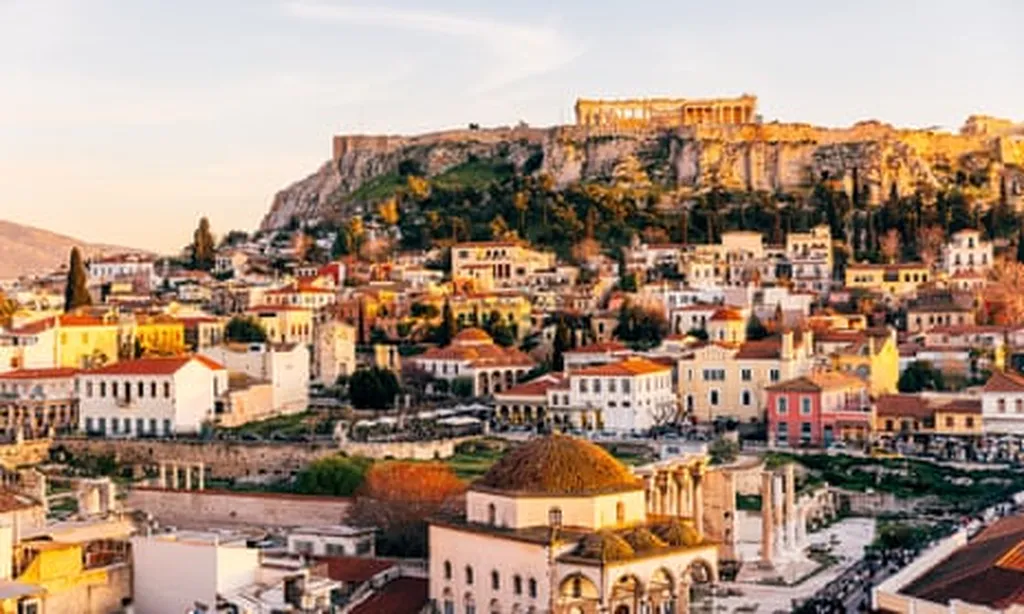
In the heart of Athens, an innovative approach to retrofitting historic social housing is bridging the gap between cultural preservation and energy efficiency, offering a promising model for Mediterranean cities. Led by Zoe Kanetaki of the University of West Attica’s Department of Mechanical Engineering, a groundbreaking study published in *Atmosphere* (which translates to “Atmosphere” in English) presents a pilot methodological framework that could redefine urban regeneration strategies.
The Kaisariani Asia Minor refugee housing complex, a historic site in Athens, served as the case study for Kanetaki’s research. This complex, like many others in Mediterranean cities, faces the dual challenges of energy inefficiency and the need for cultural preservation. “We saw a significant research gap between heritage retrofitting and social housing,” Kanetaki explains. “Our goal was to create a framework that integrates these two critical aspects, ensuring that energy efficiency doesn’t come at the cost of architectural authenticity.”
The study proposes a comprehensive framework that combines historical analysis, energy consumption assessment, and technical evaluation. Three retrofit scenarios were examined, incorporating thermal insulation, upgraded HVAC systems, renewable domestic hot water systems, and photovoltaic installations. The most ambitious scenario achieved a staggering 97% reduction in primary energy demand, a 63–76% decrease in heating and cooling loads, and substantial CO2 emission reductions. Perhaps most impressively, this was achieved while maintaining economic feasibility, with a payback period of approximately ten years.
For the energy sector, the implications are profound. This research demonstrates that it is possible to transform obsolete housing into low-energy buildings without compromising their historical value. “Beyond the quantitative energy gains, our study underscores the importance of integrating heritage values and community identity into urban regeneration strategies,” Kanetaki notes. This approach not only fosters environmental and social sustainability but also offers a transferable model for Mediterranean municipalities seeking to align climate action with cultural continuity.
The commercial impacts for the energy sector are significant. As cities worldwide grapple with the need to reduce energy consumption and emissions, the framework developed by Kanetaki and her team provides a blueprint for achieving these goals in a way that respects and preserves cultural heritage. This could open up new markets for energy-efficient technologies and services, particularly in the retrofit sector.
Moreover, the study highlights the potential for interdisciplinary collaboration between cultural conservation and energy-efficient design. This could lead to the development of new technologies and materials specifically designed for heritage buildings, creating opportunities for innovation and investment.
As urban areas continue to grow and the demand for sustainable solutions increases, the insights from this research could shape future developments in the field. By demonstrating that conservation-compatible retrofitting is not only possible but also economically viable, Kanetaki’s work offers a compelling vision for the future of urban regeneration. It’s a vision that balances the need for energy efficiency with the preservation of cultural heritage, ensuring that our cities remain vibrant, sustainable, and true to their roots.