
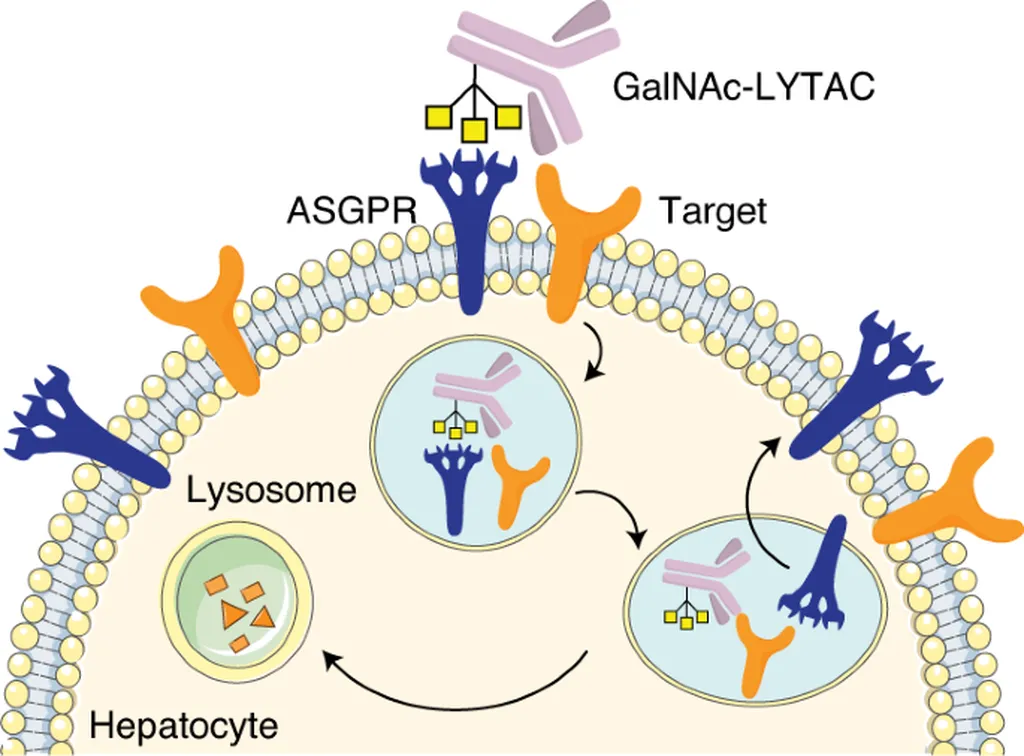
In the realm of biomedical research, a novel approach to targeted protein degradation is gaining traction, with significant implications for the energy sector and beyond. Researchers, led by Lijian Shen from the State Key Laboratory of Medicinal Chemical Biology at Nankai University in China, are exploring lysosome-targeting chimeras (LYTACs), a technology that could revolutionize how we tackle previously “undruggable” proteins.
LYTACs leverage lysosome-targeting receptors (LTRs) to direct extracellular and membrane-bound proteins to lysosomes for degradation. This process, known as receptor-mediated endocytosis, offers a promising alternative to traditional proteasomal degradation pathways. “LYTACs open up new avenues for targeting proteins that were once considered beyond the reach of conventional therapies,” Shen explains.
The research, published in *MedComm – Biomaterials and Applications* (which translates to *Materials and Applications in Medical Communication*), provides an in-depth analysis of the current state of LYTAC technologies. The study enumerates 15 LTRs employed in LYTAC systems, with a detailed analysis of nine representative LTRs and their corresponding targeted protein degradation chimera designs. Additionally, the review discusses two transmembrane E3 ubiquitin ligases functioning as non-classical LTRs.
One of the most compelling aspects of this research is its potential commercial impact. In the energy sector, for instance, targeted protein degradation could lead to the development of more efficient biofuels and biocatalysts. By precisely controlling protein degradation, researchers can optimize the performance of enzymes used in biofuel production, making the process more cost-effective and sustainable.
However, the journey is not without its challenges. The review highlights three major hurdles currently facing LYTAC technologies: specificity, efficiency, and delivery. “While LYTACs hold immense promise, we must address these challenges to fully realize their potential,” Shen notes. Recent research advancements offer potential solutions, and the field is buzzing with optimism.
The implications of this research extend far beyond the energy sector. In medicine, LYTACs could pave the way for novel therapies for diseases caused by extracellular and membrane-bound proteins. In agriculture, they could enhance crop yields by optimizing protein function in plants.
As the scientific community continues to explore the capabilities of LYTACs, the future of targeted protein degradation looks brighter than ever. This research not only provides an updated overview of current developments but also offers valuable insights and research perspectives for scientists actively engaged in LYTAC-related investigations. The journey is just beginning, and the possibilities are endless.