
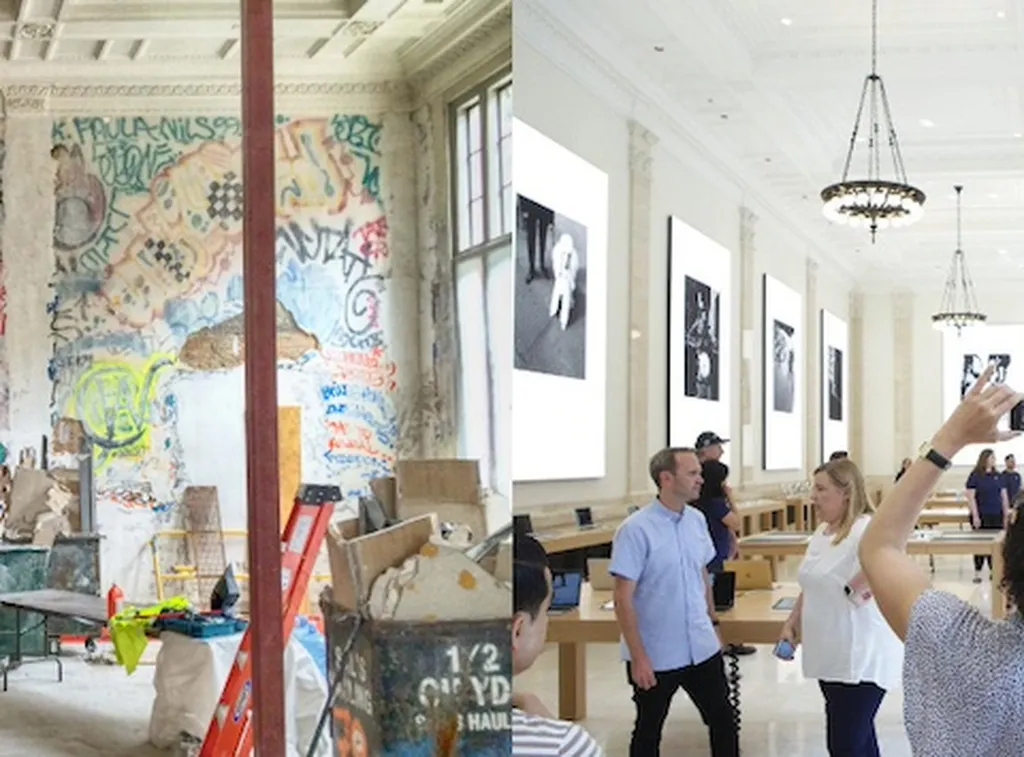
In the heart of urban renewal lies a fascinating case study that could reshape how we view industrial buildings and their potential for cultural and commercial impact. Neslihan Yıldız, an architect and academic from Gedik University, has published groundbreaking research in the Journal of Design for Resilience in Architecture and Planning (translated from Turkish as ‘Journal of Design for Resilience in Architecture and Planning’). The study focuses on the transformation of the Cendere Art Museum, a former industrial building that has been repurposed to serve as a cultural hub, offering insights into the future of adaptive reuse in the energy sector and beyond.
The research delves into the spatial and historical identity of industrial buildings, exploring how their re-functionalisation can preserve cultural heritage while introducing new uses. Yıldız’s study is particularly relevant as cities worldwide grapple with the challenge of revitalizing aging industrial infrastructure. “The re-functionalisation of industrial buildings is not just about giving new life to old structures; it’s about creating a dialogue between the past and the present,” Yıldız explains. This dialogue, she argues, can foster cultural sustainability and enhance the commercial viability of urban spaces.
The Cendere Art Museum serves as a prime example of this dialogue. Through a comprehensive analysis using the SWOT method, Yıldız evaluated the building’s strengths, weaknesses, opportunities, and threats in the context of its transformation. The study reveals that the museum’s new identity has achieved harmony between its historical features, environmental context, and contemporary function. This balance is crucial for the energy sector, where repurposing old facilities can reduce costs and environmental impact while creating new revenue streams.
One of the most compelling aspects of Yıldız’s research is its methodological approach. By associating the historical function and current intended use of the space with structural, environmental, and architectural features, the study provides a framework for future projects. “The results show that the re-functionalisation of the Cendere Art Museum has given the space a new identity and that this process has set an important example in terms of cultural sustainability,” Yıldız notes. This approach could be particularly valuable for energy companies looking to repurpose old facilities into community centers, cultural spaces, or even renewable energy hubs.
The commercial implications are significant. Repurposing industrial buildings can attract tourism, boost local economies, and create new markets for energy-efficient technologies. As cities increasingly prioritize sustainability, the ability to transform old infrastructure into vibrant cultural and commercial spaces will be a key competitive advantage. Yıldız’s research offers a roadmap for achieving this transformation, highlighting the potential for spatial and cultural sustainability in the process.
In the broader context, Yıldız’s work contributes to the growing literature on architecture and interior architecture, emphasizing the importance of adaptive reuse. The study’s findings suggest that repurposing industrial buildings is not just a viable option but a necessary step towards sustainable urban development. As the energy sector continues to evolve, the lessons learned from the Cendere Art Museum could pave the way for innovative and commercially viable solutions.
For professionals in the construction and energy sectors, Yıldız’s research offers a compelling case for the value of adaptive reuse. By embracing the past and integrating it into the present, we can create spaces that are not only culturally significant but also economically viable. The Cendere Art Museum stands as a testament to this vision, and its story is one that will undoubtedly inspire future developments in the field.