
In the wake of global displacement crises and natural disasters, the need for sustainable and resilient refugee settlements has never been more urgent. A groundbreaking study led by Fatma Kürüm Varol Güneş of Bingöl University offers a novel framework that could revolutionize how we design and implement these critical spaces, with significant implications for the energy sector.
The research, published in the *Journal of Design for Resilience in Architecture and Planning* (translated to English as *Journal of Resilience in Architecture and Planning*), proposes a comprehensive approach that integrates prioritized design indicators with network-based spatial planning. By evaluating six international refugee camps and applying the Analytic Hierarchy Process (AHP) to thirteen key design categories, Güneş and her team identified the most critical factors for creating inclusive, adaptive, and environmentally sustainable settlements.
“Our goal was to develop a framework that not only addresses immediate humanitarian needs but also aligns with long-term urban sustainability goals,” Güneş explained. “By prioritizing safety, sustainability, and health, we can create settlements that are both resilient and adaptable to changing conditions.”
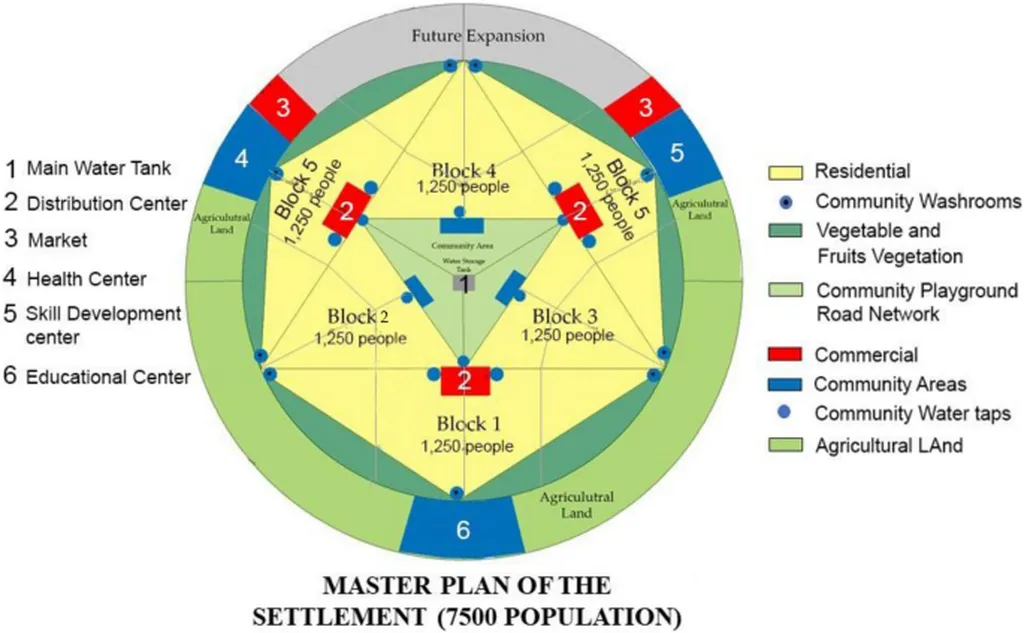
The study’s customized network analysis visualizes the systemic relationships between physical features and design priorities across global case studies. This approach was applied to a design scenario for Kilis, a province in Türkiye significantly affected by the 2023 Kahramanmaraş earthquake and home to a dense population of Syrian refugees. The scenario incorporates modular housing, decentralized sanitation systems, solar energy infrastructure, and participatory planning processes, all informed by local architectural traditions and socio-cultural dynamics.
The resulting network diagram for Kilis demonstrates how priority indicators can be spatially embedded within the camp design. This integrative approach offers a replicable model for future refugee settlement planning, with profound implications for the energy sector. By integrating solar energy infrastructure, the framework supports decentralized and renewable energy solutions, reducing reliance on traditional energy sources and promoting sustainability.
“This research provides a blueprint for creating sustainable refugee settlements that can be replicated in various contexts,” Güneş noted. “It’s a step towards aligning humanitarian efforts with long-term environmental and energy goals.”
The study’s findings could shape future developments in the field, offering a more systematic and sustainable approach to refugee settlement planning. As the world grapples with increasing displacement and climate change, this research provides a timely and innovative solution that could transform the way we address these complex challenges.
For the energy sector, the integration of solar energy infrastructure within these settlements presents a significant opportunity. By promoting decentralized and renewable energy solutions, the framework supports the transition to a more sustainable energy future, reducing carbon footprints and enhancing energy security.
As we look ahead, the insights from this research could pave the way for more resilient and sustainable communities, not just for refugees but for all populations affected by displacement and natural disasters. The framework’s emphasis on participatory planning and local traditions ensures that the solutions are not only effective but also culturally sensitive and community-driven.
In a world where the need for sustainable and resilient infrastructure is more pressing than ever, this research offers a beacon of hope and a practical guide for creating spaces that truly serve the needs of their inhabitants.