
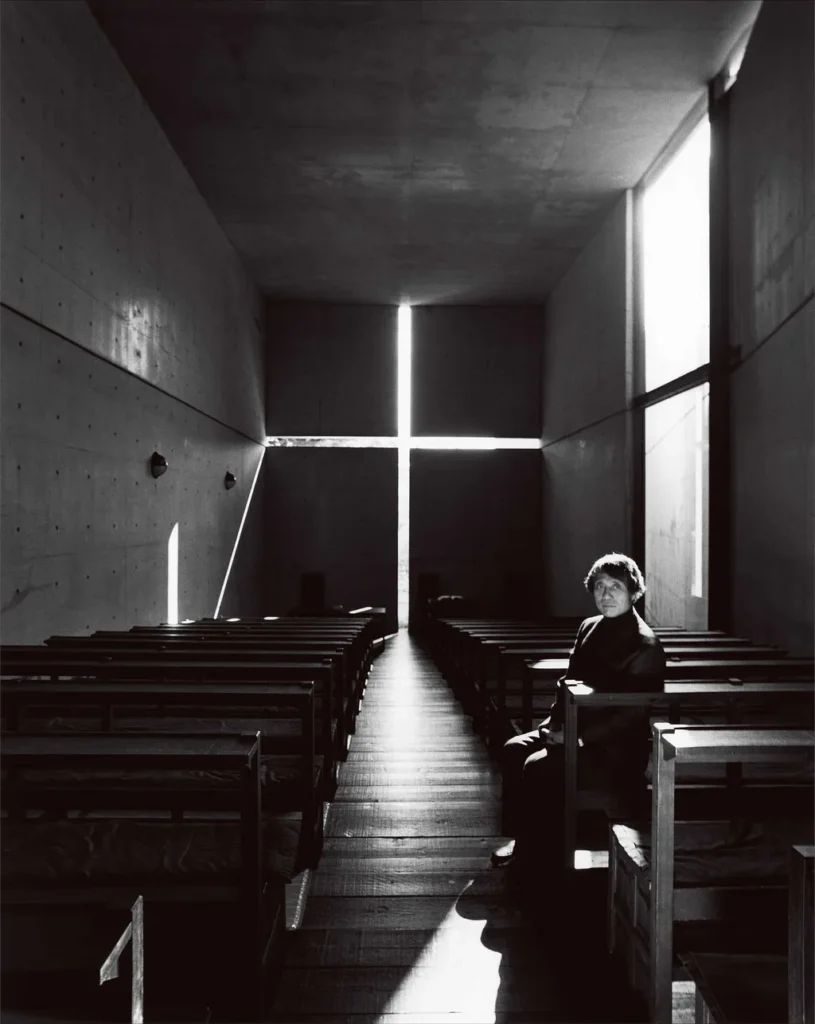
In the heart of Ibaraki, Japan, a seemingly unassuming concrete structure stands as a testament to the profound interplay between light, space, and materiality. Tadao Ando’s Church of the Light, a masterpiece of modern architecture, has long captivated architects and enthusiasts alike. Now, a new study published in the Journal of Design for Resilience in Architecture and Planning, translated from Turkish as ‘Journal of Design for Resilience in Architecture and Urban Planning’, delves into the tectonic character of this iconic building, offering insights that could reshape our understanding of architectural design and its potential impacts on the energy sector.
Helin Bağcıvan, a researcher from Dokuz Eylül University, has meticulously analyzed the Church of the Light, exploring the relationship between its structural form, architectural space, and materiality. Bağcıvan’s work is grounded in the taxonomy proposed by Chad Schwartz, which includes principles such as Place, Precedent, Space, Anatomy, Stereotomic, Tectonic, Representation, and Detail.
The study reveals how Ando’s tectonic sensibility transforms raw materials and the use of light into an experiential and spiritual architectural space. “Ando’s use of light is not merely functional; it is a sculptural element that defines the space and evokes a spiritual experience,” Bağcıvan explains. This approach to design could have significant implications for the energy sector, particularly in the realm of sustainable architecture.
By understanding how light can be harnessed to create meaningful spaces, architects can design buildings that rely less on artificial lighting, thereby reducing energy consumption. “The Church of the Light demonstrates that natural light can be a powerful tool in architectural design, not just for aesthetic purposes, but also for creating spaces that are functional and energy-efficient,” Bağcıvan notes.
The study also highlights the importance of materiality in architectural design. Ando’s use of raw concrete, for instance, is not just a structural choice but a deliberate aesthetic decision that contributes to the overall tectonic character of the building. This emphasis on materiality could inspire architects to explore new materials and construction techniques that are both sustainable and visually striking.
As the world grapples with the challenges of climate change and energy efficiency, the insights gleaned from Bağcıvan’s study could prove invaluable. By embracing a tectonic approach to design, architects can create buildings that are not only beautiful but also functional and sustainable. This could pave the way for a new era of architecture that is deeply attuned to the needs of both people and the planet.
In the words of Bağcıvan, “Ando’s work reminds us that architecture is not just about creating buildings; it’s about creating spaces that inspire, uplift, and connect us to the world around us.” As we look to the future, this philosophy could guide us towards a more sustainable and resilient built environment.