
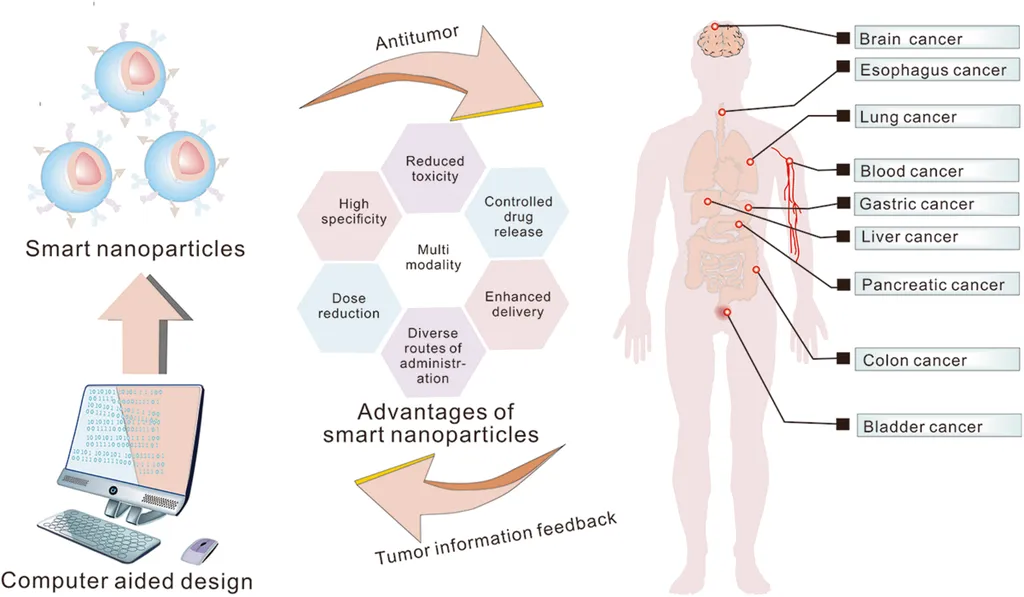
In the quest to conquer cancer, precision oncology is emerging as a beacon of hope, and a recent review published in *MedComm – Biomaterials and Applications* (translated to *Materials and Applications in Biomedical Communications*) is shedding light on a promising avenue: vitamin-engineered nanoplatforms. These innovative tools, derived from the humble vitamin, are poised to revolutionize cancer treatment by integrating therapy, diagnosis, and immune modulation.
At the heart of this research is Ruowa Xu, an associate professor at the Eye Institute and Department of Ophthalmology at Fudan University in Shanghai, China. Xu and her team have been exploring the unique properties of vitamins, which are not only biocompatible and metabolically active but also possess receptor-targeting capabilities. These attributes make them ideal candidates for addressing the challenges posed by tumor heterogeneity and therapeutic resistance.
The review categorizes vitamin-derived nanomaterials into two main groups: fat-soluble vitamins (A, D, E, and K) and water-soluble vitamins (B complex and C). Each group has its own set of advantages and applications in the fight against cancer. For instance, fat-soluble vitamins can enhance cancer immunotherapy by activating dendritic cells, reprogramming T-cells, and inhibiting M2 macrophage polarization. On the other hand, water-soluble vitamins can regulate T-cells, upregulate anticancer immunity, and remodel the tumor microenvironment.
One of the most compelling aspects of this research is its potential for diagnostic integration. Vitamin-conjugated imaging probes and theranostic hybrids can provide real-time, tumor-specific payload release and spatiotemporal delivery of antigens and adjuvants. This could significantly improve the accuracy and efficacy of cancer diagnosis and treatment.
“Vitamin-derived nanomaterials offer a versatile toolkit for precision oncology,” Xu said. “They can be engineered to address the unique challenges posed by different types of cancer, making them a promising avenue for developing next-generation nanomedicines.”
The commercial implications of this research are vast. The global cancer immunotherapy market is projected to reach $117.9 billion by 2025, and the integration of vitamin-engineered nanoplatforms could significantly enhance the efficacy of these therapies. Moreover, the ability to tailor these platforms to specific tumor types and patient profiles could pave the way for personalized cancer treatment, a burgeoning field with immense commercial potential.
However, the path to clinical translation is not without its challenges. Issues such as scalability, reproducibility, stability, long-term biodistribution, and clinical translatability need to be systematically addressed. Yet, the preclinical breakthroughs highlighted in the review demonstrate the immense potential of these platforms to enhance immunotherapeutic efficacy while minimizing toxicity.
As we look to the future, the integration of vitamin biology into nanomedicine could usher in a new era of precision oncology. By leveraging the unique properties of vitamins, researchers like Xu are paving the way for more effective, personalized, and less toxic cancer treatments. The journey is far from over, but the promise of vitamin-engineered nanoplatforms offers a glimmer of hope in the ongoing battle against cancer.