
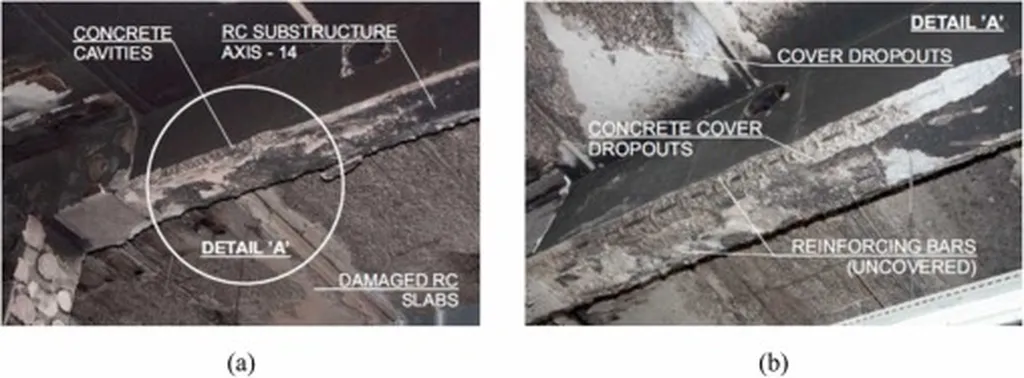
In the relentless pursuit of enhancing structural safety and resilience, a groundbreaking study led by Li-Hsien Chen from the Department of Civil Engineering has unveiled a novel approach to assess fire-induced damage in concrete. Published in the esteemed journal *Advances in Civil Engineering* (translated as *Advances in Civil Engineering*), this research harnesses the power of ultrasonic pulse (UP) and acoustic emission (AE) techniques to quantify the extent of damage in concrete subjected to both thermal and mechanical stresses.
Concrete, the backbone of modern infrastructure, often faces the dual challenge of thermal and mechanical loading in real fire scenarios. Traditional methods of assessing fire damage have been largely destructive and time-consuming. Chen’s research introduces a game-changing, nondestructive tool: the shear-to-pressure wave velocity ratio (VS/VP). This innovative indicator promises to revolutionize postfire site assessments, offering engineers a rapid and practical means to evaluate the residual strength and peak fire temperatures of concrete structures.
The study involved exposing concrete specimens to varying temperatures and working stresses (WS) using a custom-designed high-temperature furnace. The results were enlightening. Without WS, the stiffness and strength of concrete significantly decreased only above 500°C, with reduction rates approaching 70% and 60%, respectively. “The occurrence of microcrack clustering also shifts to earlier stages as the temperature increases,” Chen noted. However, the presence of WS altered this behavior. Below 500°C, the confining effect of WS mitigated the reduction of stiffness and strength, delaying the onset of microcrack clustering. But when temperatures exceeded 600°C, increased WS accelerated the reduction of stiffness and strength, while the microcrack clustering behavior became less pronounced.
The VS/VP ratio emerged as a reliable indicator of thermal degradation. At normal temperatures without WS, the VS/VP ratio was 0.67. As the temperature increased, so did the VS/VP ratio, but it decreased with increasing WS. Notably, the relationship between VS/VP and strength revealed that thermal damage significantly impacts ultrasonic wave velocities when the strength reduction exceeds 60%.
The implications of this research for the energy sector are profound. With the increasing focus on structural safety and resilience, the ability to rapidly and accurately assess fire damage in concrete structures is invaluable. This innovative approach could lead to more efficient and cost-effective postfire assessments, minimizing downtime and ensuring the integrity of critical infrastructure.
As Chen’s research continues to gain traction, it is poised to shape future developments in the field of structural engineering. The introduction of the VS/VP ratio as a nondestructive indicator of thermal degradation marks a significant step forward in our ability to evaluate and mitigate the impacts of fire on concrete structures. In an era where safety and resilience are paramount, this research offers a beacon of hope and a tool for progress.