
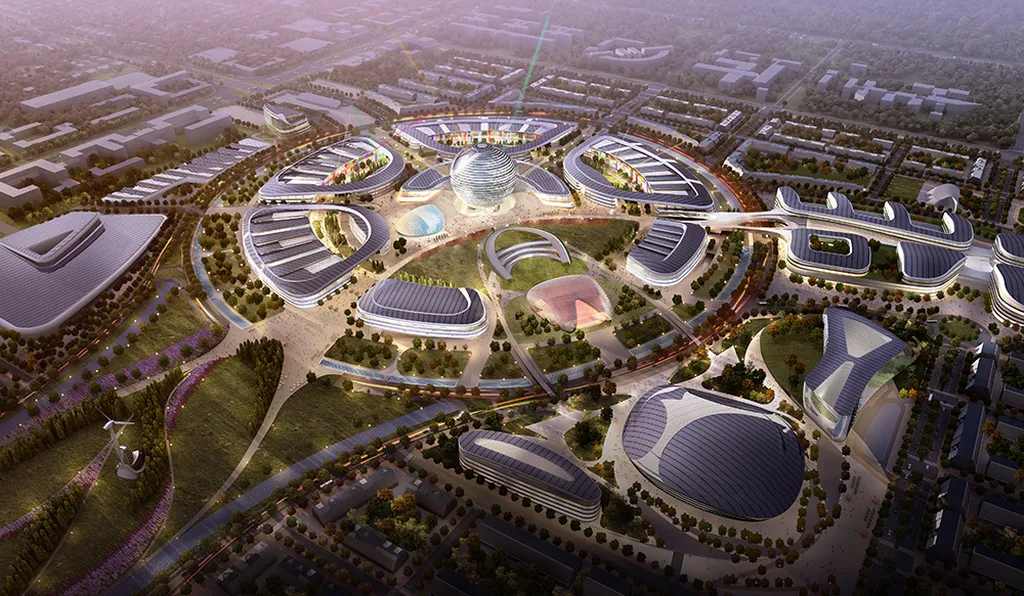
In the heart of Kazakhstan, the capital city of Astana is undergoing a remarkable transformation, blending cutting-edge technology with urban development. A recent study published in the journal *Prostor* (which translates to “Space”) sheds light on how this high-tech evolution is reshaping the socio-cultural fabric of the city. Led by Mira Manassova from the Department of Philosophy and Theory of Culture at Karaganda Buketov University, the research offers valuable insights for urban planners, policymakers, and even the energy sector.
Manassova’s study, which involved interviews with 18 experts from diverse fields and a survey of 250 residents, reveals that technological advancements in Astana are contributing to the city’s harmonious development. “Technological changes in Astana have significantly improved urban infrastructure, visual appearance, and digital services,” Manassova notes. This is not just about aesthetics; it’s about creating a more efficient, sustainable, and inclusive urban environment.
For the energy sector, the implications are substantial. As cities become smarter, the demand for innovative energy solutions grows. Smart grids, renewable energy integration, and energy-efficient buildings are no longer futuristic concepts but immediate necessities. The study highlights the importance of considering multiple perspectives in urban planning, which could drive demand for energy solutions that cater to diverse socio-cultural groups.
One of the key findings is the differing evaluations of urban environmental aspects among the working-age population and more vulnerable groups. This underscores the need for tailored energy solutions that address the unique needs of various demographic segments. For instance, energy-efficient housing solutions could significantly improve the quality of life for vulnerable populations, while smart energy management systems could cater to the tech-savvy working-age population.
The research also emphasizes the role of digital inclusivity. As Astana becomes more technologically advanced, ensuring that all residents can access and benefit from these advancements is crucial. This could open up new markets for energy companies offering digital solutions, such as smart meters and energy management apps.
Manassova’s study is a call to action for urban planners and energy providers to collaborate more closely. By understanding the socio-cultural dynamics at play, they can develop more inclusive and equitable strategies. This could lead to the creation of energy solutions that not only meet the technical requirements but also resonate with the diverse needs of the population.
As Astana continues to evolve, the lessons learned from this research could shape the future of urban development and energy management. The city’s journey offers a blueprint for other urban centers looking to balance technological advancement with socio-cultural harmony. For the energy sector, this means a wealth of opportunities to innovate and cater to a rapidly changing urban landscape.
In the words of Manassova, “The findings are crucial for informed urban planning and the development of more inclusive and equitable urban strategies.” This is not just about building smarter cities; it’s about building cities that work for everyone. And in doing so, the energy sector has a pivotal role to play.