
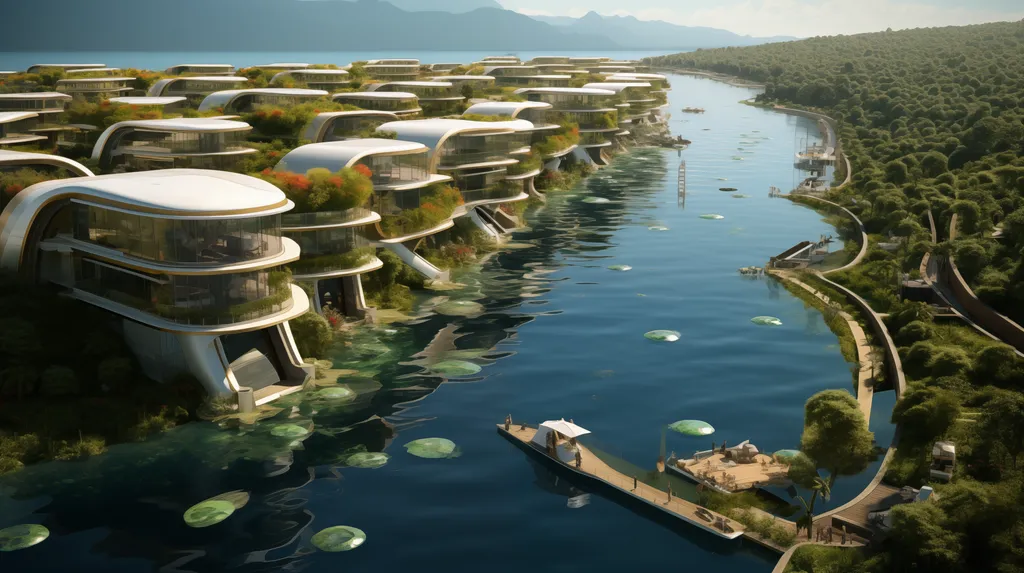
In the heart of Belgrade, where the Sava and Danube rivers converge, a novel approach to residential development is gaining traction, one that looks not just to the land, but to the water for solutions. Tijana Jaćović Maksimović, a researcher from the University of Belgrade Faculty of Architecture, is spearheading a study that explores the potential of floating buildings to redefine the city’s housing landscape. Published in the journal Prostor, which translates to “Space,” this research could have significant implications for urban planning, climate resilience, and even the energy sector.
Belgrade, like many cities worldwide, grapples with increasing urban density and land scarcity. Traditional housing models are struggling to keep up with demand, prompting a search for innovative alternatives. Floating structures, with their adaptability and sustainability, have emerged as a promising contender. “Floating buildings offer a unique opportunity to utilize under-explored waterfront spaces, while also providing a resilient response to climate change,” Maksimović explains.
The study draws on extensive research into urban riverfronts and floating typologies, focusing on the key environmental, regulatory, and socio-economic dimensions relevant to Belgrade. To gain firsthand insights, Maksimović visited the Ijburg floating housing project in Amsterdam, a pioneering initiative that has successfully integrated floating homes into the urban fabric. This European case study, along with others, provides a comparative overview that informs the research’s findings.
One of the most compelling aspects of floating buildings is their potential to enhance climate resilience. As sea levels rise and extreme weather events become more frequent, traditional housing structures are increasingly vulnerable. Floating buildings, by contrast, are designed to adapt to changing water levels, offering a more sustainable and resilient housing solution. This adaptability could also extend to the energy sector, with floating structures potentially integrating renewable energy systems, such as solar panels and wind turbines, to create self-sustaining communities.
The commercial impacts of this research are significant. Developers and investors are increasingly looking for innovative, sustainable projects that can deliver long-term value. Floating buildings, with their unique design and environmental benefits, could attract new investment and open up fresh opportunities in the real estate market. Moreover, the technology and expertise required to build and maintain floating structures could stimulate growth in related industries, from engineering and construction to renewable energy.
Maksimović’s research is not just about theoretical analysis; it’s about practical, strategic urban planning. The findings are expected to serve as a foundation for continued interdisciplinary research and development along Belgrade’s waterfront. “This is not just about building on water; it’s about creating sustainable, resilient communities that can adapt to the challenges of the 21st century,” Maksimović says.
As Belgrade looks to the future, floating buildings could play a pivotal role in shaping its skyline and defining its identity. This research, published in Prostor, offers a glimpse into a new era of urban development, one that is sustainable, resilient, and adaptable. For the energy sector, it presents an opportunity to innovate and integrate renewable energy systems into the fabric of our cities. The ripple effects of this research could be felt far beyond the water’s edge, transforming the way we think about urban living and paving the way for a more sustainable future.