
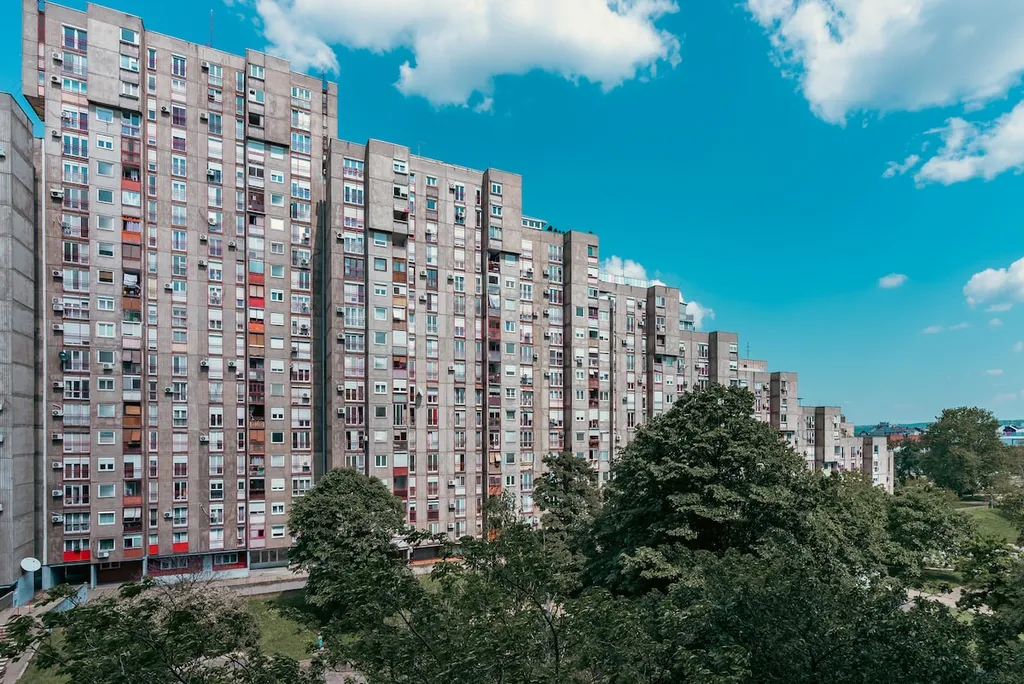
In the heart of Belgrade, a city where history and modernity intertwine, a fascinating exploration of residential architecture is unfolding. Ana Rajković, a researcher from the University of Union-Nikola Tesla’s Faculty of Construction Management, is delving into the socialist period of the 1970s and 1980s, a time when the demand for apartments surged, and state policies shaped the very fabric of the city’s residential landscape.
Rajković’s research, published in the journal Prostor (which translates to “Space”), examines how architectural design principles during this era influenced everyday social life. “The architecture of residential space in socialist Yugoslavia, particularly in Belgrade, was not just about creating homes,” Rajković explains. “It was about shaping society, about social engineering through design.”
The study employs a multi-faceted approach, including content analysis of professional and scientific literature, historical-descriptive analysis of urban policies, and interpretation of architectural elements characteristic of the Belgrade School of Housing. Rajković also synthesizes philosophical views on space and home, applying them critically to specific architectural practices.
One of the key aspects of Rajković’s research is the two-tier relationship between policy and architecture, and architecture and society. “Policies shaped architecture, and architecture, in turn, shaped the lifestyle of the population,” Rajković notes. This interplay reveals housing as an active medium of social engineering, a concept that has significant implications for today’s urban planners and architects.
The commercial impacts of this research are substantial, particularly for the energy sector. Understanding how past architectural practices influenced social behavior can inform the design of energy-efficient buildings that promote sustainable living. For instance, the dense, high-rise apartment blocks that characterized the socialist period could be reimagined with modern energy-efficient technologies, creating a blueprint for future urban developments.
Moreover, Rajković’s work highlights the importance of habitological research, which studies the relationship between human habits and their physical environment. This research can guide the creation of residential spaces that not only meet the physical needs of inhabitants but also foster positive social interactions and sustainable lifestyles.
As Belgrade continues to evolve, Rajković’s insights offer a valuable perspective on how the city’s architectural heritage can inform its future. By understanding the past, we can shape a more sustainable and socially conscious future, one brick at a time.