
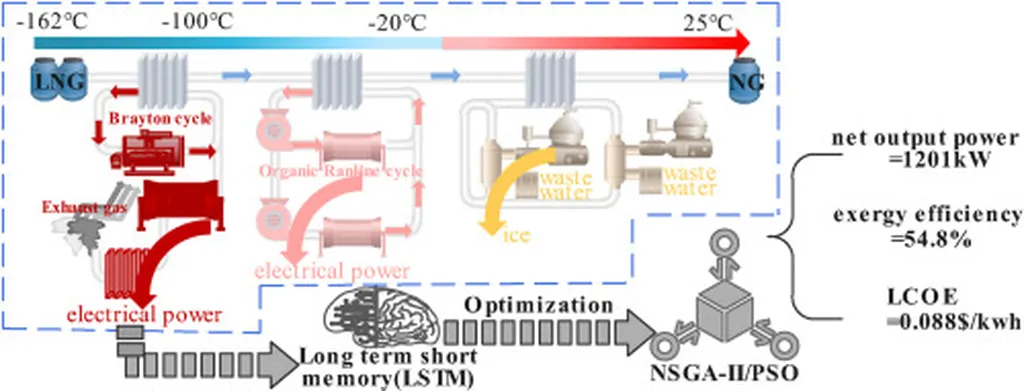
In the quest for more efficient energy utilization, researchers are turning their attention to an often-overlooked resource: the cold energy of liquefied natural gas (LNG). A recent study published in *Zhileng xuebao* (translated as *Journal of Refrigeration*) sheds light on the advancements and challenges in harnessing this untapped potential. Led by Yang Ting, the research delves into the technical intricacies and practical applications of LNG cold-energy recovery, offering insights that could reshape the energy sector.
LNG, when stored at cryogenic temperatures (-162°C or -260°F), holds a significant amount of cold energy. Traditionally, this energy has been vented into the atmosphere, but recent technological advancements are paving the way for its recovery and utilization. Yang Ting’s study highlights the advantages and disadvantages of various technologies, emphasizing the need for a multi-combined generation system that integrates LNG cold-energy utilization with existing cogeneration systems.
“The potential for LNG cold-energy recovery is immense,” says Yang Ting. “By leveraging this resource, we can enhance energy efficiency, reduce emissions, and create new opportunities for commercial applications.”
The study explores several key technologies, including cascade utilization and cryogenic-storage biotechnology. Cascade utilization involves using the cold energy in multiple stages, each tailored to specific temperature ranges, thereby maximizing efficiency. Cryogenic-storage biotechnology, on the other hand, focuses on integrating cold-energy recovery with biological processes, such as food preservation and pharmaceutical production.
However, the path to widespread adoption is not without challenges. Yang Ting emphasizes the need for accelerated research and the establishment of process experimental platforms. “To fully realize the potential of LNG cold-energy recovery, we must strengthen our understanding of system performance and enhance safety assessments,” she notes. “This requires a collaborative effort across multiple disciplines and industries.”
The commercial implications of this research are profound. Energy companies stand to benefit from improved efficiency and reduced operational costs. Additionally, the integration of LNG cold-energy recovery with other industries, such as food and pharmaceuticals, could open new revenue streams and drive innovation.
As the energy sector continues to evolve, the insights from Yang Ting’s research provide a roadmap for future developments. By harnessing the cold energy of LNG, we can move towards a more sustainable and efficient energy landscape. The study, published in *Zhileng xuebao*, serves as a call to action for researchers, industry leaders, and policymakers to collaborate and drive forward this transformative technology.
In the words of Yang Ting, “The future of LNG cold-energy recovery is bright, but it requires collective effort and strategic investment. Together, we can unlock its full potential and shape a more sustainable energy future.”