
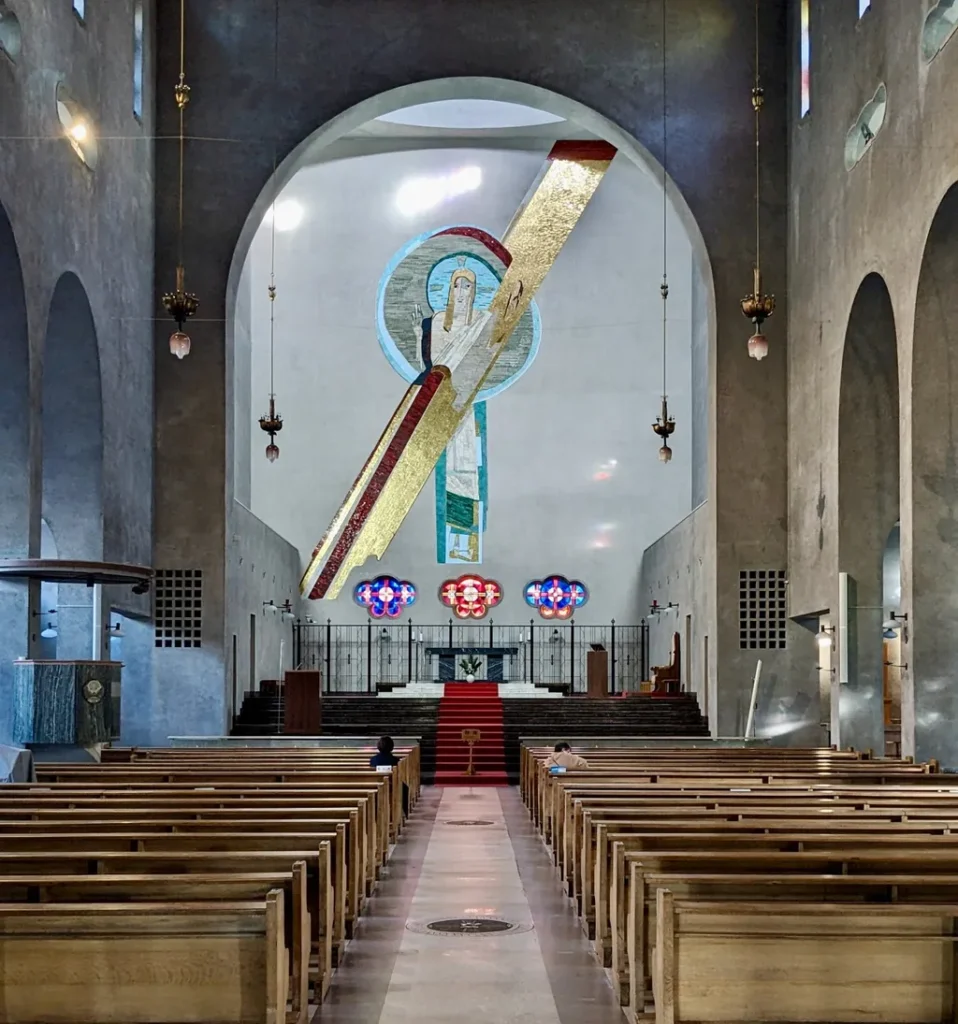
In the heart of Hiroshima, a silent sentinel stands, a testament to resilience and architectural ingenuity—the Memorial Cathedral for World Peace. Designed by Togo Murano, this iconic structure has long captivated architects and historians alike. Now, new research published in the Japan Architectural Review (Nihon Kenchiku Gakkai Ronbunshu in Japanese) by Yoshito Tomioka of Mie University’s Division of Architecture is shedding light on the intricate design process that brought this cathedral to life, offering insights that could influence future architectural and structural engineering practices.
Tomioka’s research delves into the often-overlooked phases of working design and construction instruction, which spanned from 1948 to 1954. These stages were crucial in transforming the initial schematic design into the awe-inspiring structure that stands today. “The cathedral’s design evolution is a masterclass in formal manipulations,” Tomioka explains. “Each revision, each sketch, tells a story of strategic design thinking that responded to both aesthetic and structural challenges.”
One of the most striking aspects of Tomioka’s research is the detailed analysis of the dome installation over the sanctuary, the redesign of the crypt, and the intricate window and tower designs. These elements, now iconic, were the result of meticulous revisions and creative problem-solving. For instance, the dome’s design was not just an aesthetic choice but a structural response to the site’s conditions and the cathedral’s symbolic purpose.
The research highlights the importance of the working design phase, where the architect’s vision is translated into practical construction plans. This phase, often seen as merely technical, was, in this case, a hotbed of creative innovation. Tomioka notes, “The drawings and sketches from this period reveal a dynamic interplay between form and function, where each revision was a step towards achieving both structural integrity and aesthetic harmony.”
The implications of this research extend beyond the realm of architecture. In the energy sector, where structural planning and design methods are critical, the lessons from the cathedral’s design process could inspire more efficient and innovative approaches. The detailed design and drawing revision processes could inform the development of new construction techniques and materials, potentially reducing costs and improving sustainability.
Moreover, the focus on formal manipulations and structural planning could influence the design of energy infrastructure, such as wind turbines and solar panel arrays, where aesthetic and structural considerations are increasingly important. As the energy sector continues to evolve, the principles exemplified in the Memorial Cathedral for World Peace could pave the way for more integrated and innovative design solutions.
Tomioka’s research serves as a reminder that the design process is a journey of continuous refinement and adaptation. As we look to the future, the lessons from the past can guide us towards more creative and effective solutions in architecture and beyond. For professionals in the energy sector, the cathedral’s story offers a compelling narrative of how strategic design thinking can lead to groundbreaking innovations.
In the words of Tomioka, “Understanding the past is key to shaping the future.” As we continue to push the boundaries of design and construction, the Memorial Cathedral for World Peace stands as a beacon of inspiration, reminding us of the power of creative problem-solving and the enduring impact of thoughtful design.