
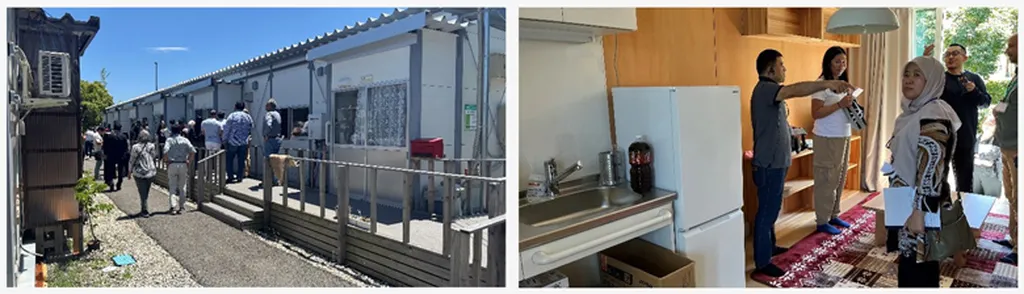
In the wake of disaster, the path to recovery is often long and complex, with housing restoration being a critical component. A recent study published in the *Japan Architectural Review* (known in English as the *Japanese Architectural Review*) sheds new light on how disaster case management (DCM) and public housing reconstruction can accelerate this process. Led by Fuminori Kawami of the Organization for Research Initiatives and Development at Doshisha University in Kyoto, the research offers valuable insights for policymakers, urban planners, and the construction industry.
Kawami and his team analyzed data from Sendai City and 18 other cities in Miyagi Prefecture, focusing on the trends in households under designated temporary housing. Their findings reveal that both DCM and the reconstruction of public housing play significant roles in promoting housing recovery from temporary shelters. “Our analysis shows that these interventions are not just beneficial but essential for speeding up the recovery process,” Kawami explains.
The study employed the synthetic control method, a statistical technique that creates a counterfactual scenario to estimate the impact of an intervention. This approach allowed the researchers to isolate the effects of DCM and public housing reconstruction on housing recovery. The results were clear: both strategies significantly reduce the time households spend in temporary housing.
One of the most intriguing aspects of the study is its use of Mary Richmond’s discussion of wholesale and retail methods of social reform to elucidate policy implications. Richmond’s framework, originally developed in the context of social work, provides a fresh perspective on disaster victim support. “By applying Richmond’s concepts, we can better understand the nuances of disaster recovery and tailor our interventions accordingly,” Kawami notes.
The commercial impacts of this research are substantial. For the construction industry, the findings underscore the importance of investing in disaster-resistant public housing. This not only accelerates recovery but also creates a steady demand for construction services, fostering economic stability in the long term. Additionally, the study highlights the need for robust DCM systems, which can streamline the recovery process and reduce costs associated with prolonged temporary housing.
As the frequency and intensity of natural disasters continue to rise, the insights from this study become increasingly relevant. Kawami’s research offers a roadmap for more effective disaster recovery strategies, benefiting not only the affected communities but also the industries involved in the rebuilding process. “Our hope is that this research will inform policy decisions and lead to more resilient communities,” Kawami concludes.
Published in the *Japanese Architectural Review*, this study is a testament to the power of data-driven research in shaping disaster recovery efforts. As the construction industry continues to evolve, the lessons from Sendai and Miyagi Prefecture will undoubtedly play a crucial role in shaping future developments in the field.