
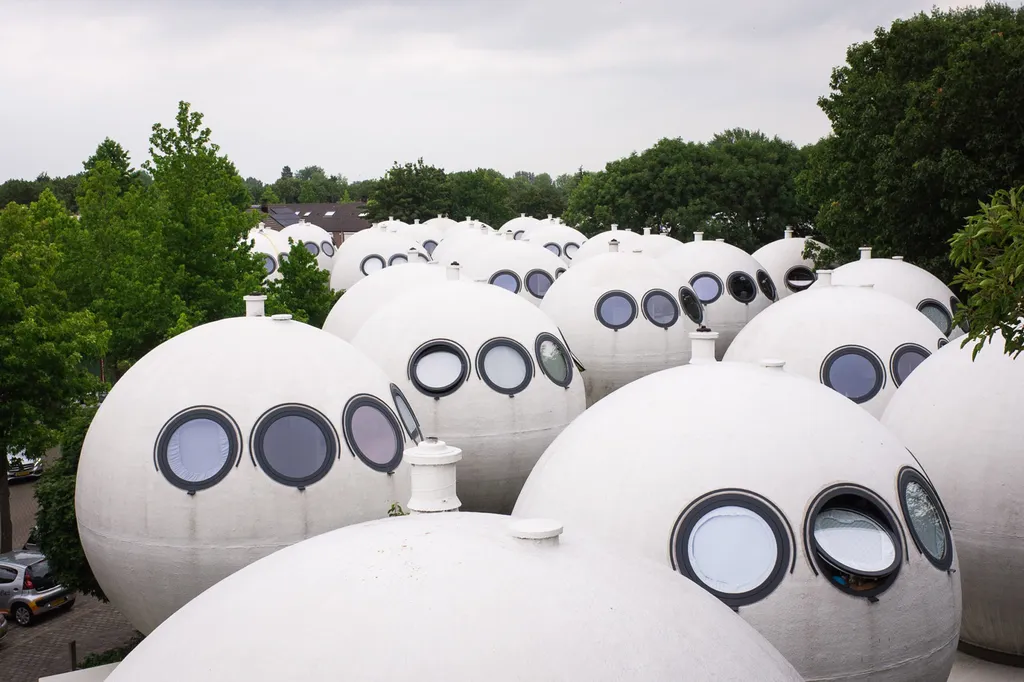
In the realm of architecture and housing, a quiet revolution is brewing, one that harks back to ancient utopian visions and could reshape the future of individual dwellings. At the forefront of this movement is Dina Vulin Ileković, a researcher from the University of Zagreb Faculty of Architecture, who has been exploring the potential of the sphere in individual housing design. Her work, published in the journal Prostor (which translates to “Space”), challenges conventional architectural paradigms and offers a glimpse into a future where our homes might look and function quite differently.
The sphere, an elementary geometrical form, has long been a source of inspiration for architects. From Antoine Laurent Thomas Vaudoyer’s utopian vision in 1783 to modern-day constructions, the sphere has been employed to challenge the status quo. “The sphere, with its curved envelope and inherent connotations of protection and intimacy, offers a unique opportunity to rethink the way we live,” Vulin Ileković explains.
The research delves into the historical development and use of the sphere in architecture, presenting a selection of significant examples. But it doesn’t stop at theory. Vulin Ileković and her team have also explored practical applications, including a design-driven experiment with students from the Graduate Programme of Architecture and Urban Planning at the University of Zagreb. The goal was to examine the younger generation’s affinity for moving away from traditional housing layouts and towards more humanized spaces that support new lifestyles, such as nomadic living, integrated workspaces, and single-occupant dwellings.
The implications for the energy sector are substantial. Spherical homes, with their curved envelopes, offer unique opportunities for optimizing space and energy use. The design can potentially reduce energy consumption by minimizing surface area and maximizing insulation, a boon for sustainability efforts. Moreover, the integration of work into the domestic sphere could lead to more efficient use of energy resources, as commuting is reduced.
The research also touches on the increasing need for privacy, a trend that has been accentuated by the COVID-19 pandemic. As remote work becomes more prevalent, the demand for private, comfortable, and efficient living spaces is likely to grow. The sphere, with its inherent sense of intimacy and protection, could be the answer to this evolving need.
Vulin Ileković’s work is a testament to the power of design-driven research. By challenging conventional norms and exploring innovative solutions, she and her team are paving the way for a future where our homes are not just shelters, but spaces that support and enhance our lives. As the research continues, it will be fascinating to see how the sphere evolves from a utopian vision to a practical, energy-efficient reality.
In the words of Vulin Ileković, “The sphere is more than just a geometrical form. It’s a symbol of a new domesticity, a new way of living that is more in tune with our evolving needs and lifestyles.” And as the construction industry continues to grapple with the challenges of sustainability and efficiency, the sphere might just be the innovative solution we’ve been waiting for.