
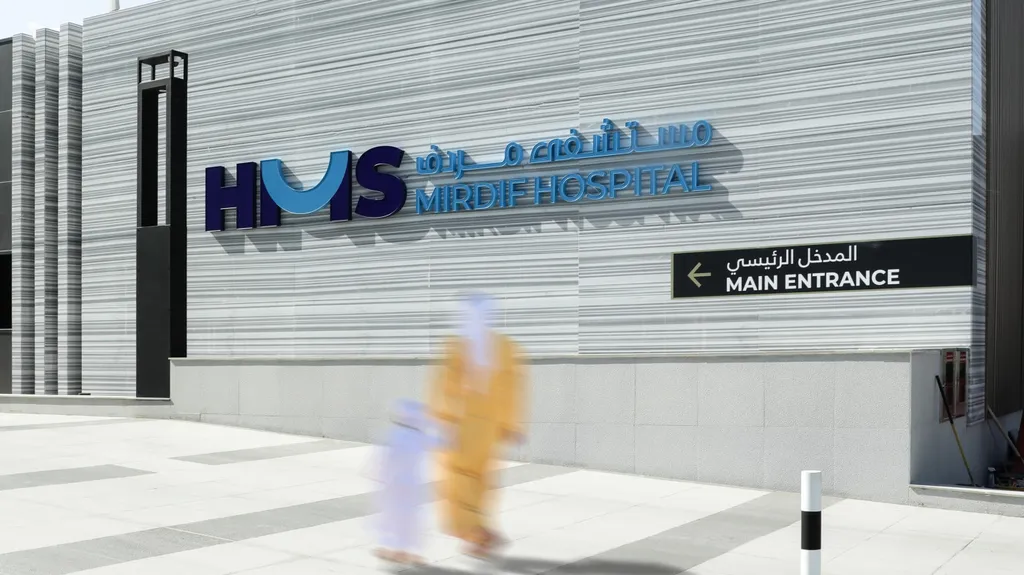
In the bustling urban landscapes of the United Arab Emirates, where modern architecture meets cutting-edge healthcare, a new study is shedding light on how the design of emergency departments can significantly impact patient navigation and overall efficiency. Led by Ola Haj Saleh from the Near East University in Nicosia, this research delves into the often-overlooked realm of wayfinding within transitional spaces, offering insights that could revolutionize the way hospitals are designed in the region and beyond.
Wayfinding, the process of navigating through a physical environment, has become a critical aspect of hospital architecture. However, until recently, it has been largely underestimated in the design of emergency departments. Haj Saleh’s study, published in the journal Prostor (which translates to “Space” in English), aims to bridge this gap by examining the influence of transitional spaces and their physical properties on wayfinding within emergency departments in the UAE.
The research employs a mixed-method approach, utilizing the Wayfinding Transitional Spaces Matrix (WTS-M), derived from the 2023 International Health Facility Guidelines. This matrix provides architectural criteria to evaluate five key physical properties: entrances and exits, pathways, landmarks, circulation routes, and interior design. Haj Saleh and her team assessed three emergency departments in hospitals across the UAE, employing binary coding to evaluate each aspect. The data was then converted into percentages for comparative analysis.
The findings reveal a stark contrast in the presence of these physical properties. While circulation routes were consistently present at a rate of 100%, landmarks were notably absent in all cases. The presence of other features varied, highlighting the need for standardized criteria to improve wayfinding in medical buildings.
“Our study provides a preliminary measure to define localized criteria that can enhance the overall wayfinding experience in medical buildings in the UAE,” Haj Saleh explains. “By understanding the impact of transitional spaces and their physical properties, we can create more efficient and patient-friendly environments.”
The commercial implications of this research are substantial. Improved wayfinding can lead to increased patient satisfaction, reduced stress levels, and enhanced operational efficiency. For the energy sector, this means more sustainable and cost-effective hospital designs, as better navigation can reduce the need for additional staff and resources.
As the healthcare industry continues to evolve, the insights from Haj Saleh’s research could shape the future of hospital design. By prioritizing wayfinding in transitional spaces, architects and planners can create environments that are not only aesthetically pleasing but also functionally superior. This study serves as a call to action for the industry to rethink the way we design and navigate our medical facilities, ultimately leading to better outcomes for patients and healthcare providers alike.