
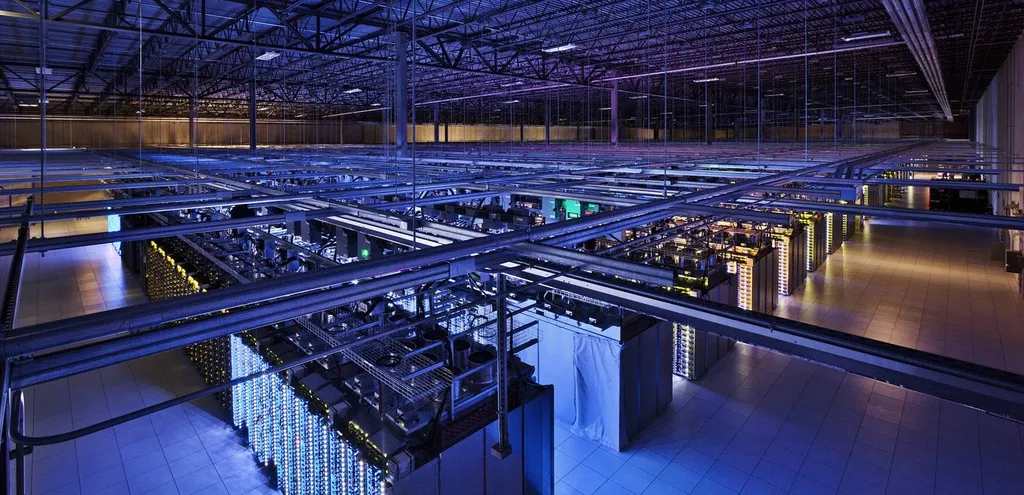
In the quest to bolster the reliability of data center operations, a groundbreaking study has emerged, tackling a critical challenge in the realm of air-conditioning systems. Published in *Zhileng xuebao* (translated to *Journal of Refrigeration*), the research, led by Zhang Yiqi, delves into the interpretability of fault-diagnosis models for composite air-conditioning systems, a topic of significant interest to the energy sector.
Data centers, the backbone of our digital infrastructure, demand robust and efficient cooling solutions to maintain optimal performance. Traditional fault-diagnosis models, while effective, often operate as “black boxes,” offering little insight into their decision-making processes. This lack of interpretability can hinder their widespread adoption and limit their potential to revolutionize data center maintenance.
Zhang Yiqi’s study introduces a composite fault-diagnosis model that leverages typical machine-learning algorithms to enhance diagnostic performance. The research compares various models and employs the Shapley additive explanation method to conduct interpretability research. The findings are compelling: the convolutional neural network (CNN)-based fault-diagnosis model outperforms others, achieving F-1 scores exceeding 0.999 across all classifications in both heat-pipe and vapor-compression modes.
“Our study demonstrates that the CNN-based model not only excels in diagnostic accuracy but also provides valuable insights into the key features influencing its decisions,” Zhang Yiqi explained. In the heat-pipe mode, the model primarily relies on the condenser-fan frequency, outdoor temperature, and refrigerant-pump power consumption. In the vapor-compression mode, the dominant features are the outdoor temperature, compressor frequency, and subcooling degree.
The implications of this research are far-reaching for the energy sector. By enhancing the interpretability of fault-diagnosis models, data center operators can gain a deeper understanding of system behavior, enabling proactive maintenance and reducing downtime. This can lead to significant cost savings and improved operational efficiency, ultimately benefiting both data center operators and their clients.
Moreover, the study’s findings could pave the way for future developments in the field. As Zhang Yiqi noted, “Understanding the key features influencing fault diagnosis can guide the design of more efficient and reliable air-conditioning systems, tailored to the specific needs of data centers.”
The research published in *Zhileng xuebao* not only advances our understanding of fault-diagnosis models but also highlights the potential of interpretability research to drive innovation in the energy sector. As data centers continue to expand and evolve, the insights gained from this study will be invaluable in ensuring their reliable and efficient operation.