
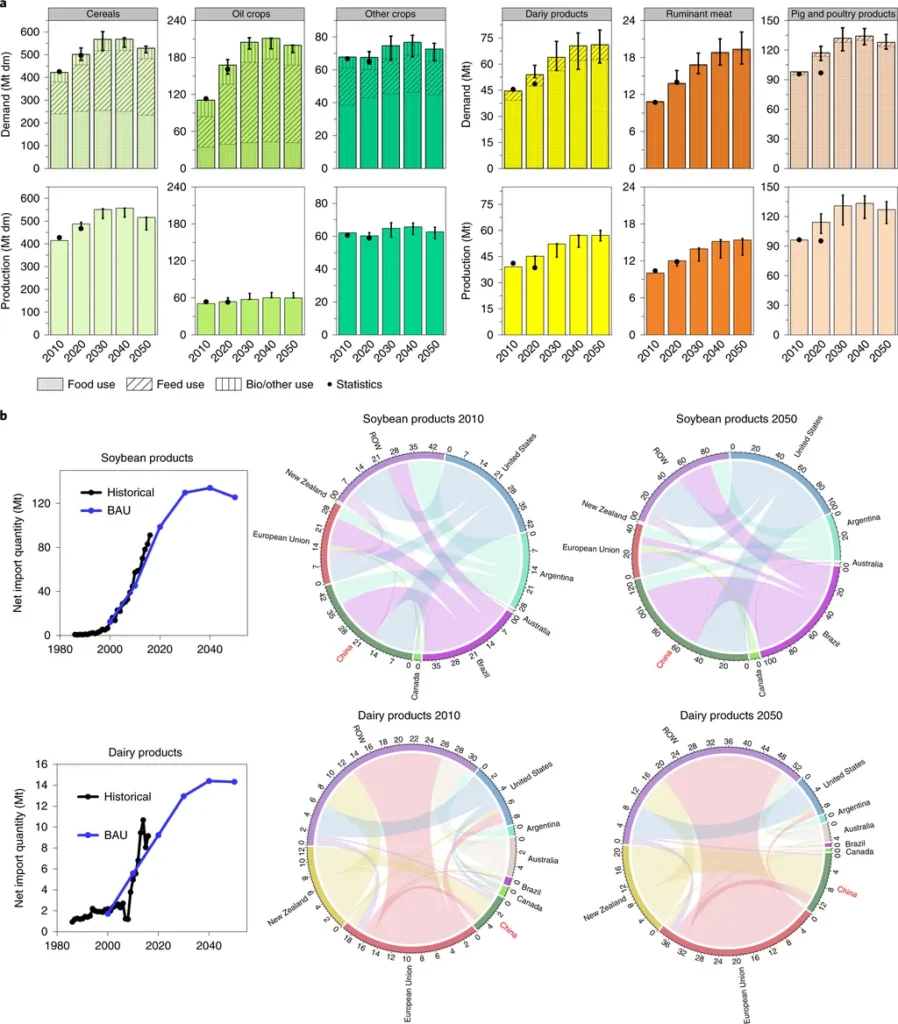
In the face of a warming planet, the global food system is at a crossroads. By 2050, we must produce 50% more food while contending with the harsh realities of climate change—extreme weather, shifting precipitation patterns, and the relentless march of pests. But a new study published in *npj Sustainable Agriculture* offers a roadmap for sustainable agriculture that could reshape the way we grow food and, in turn, impact the energy sector.
At the heart of this research is Xiukang Wang, a scientist at the Key Laboratory of Applied Ecology of Loess Plateau at Yan’an University in China. Wang and his team argue that the solution lies not in a single silver bullet, but in an integrated approach that optimizes land and water use, enhances soil health, and leverages cutting-edge technology.
“Climate change is already disrupting agricultural systems worldwide,” Wang explains. “But by combining precision agriculture, biodiversity promotion, and stress-resistant crop development, we can build resilient food systems that are both sustainable and productive.”
One of the key strategies highlighted in the study is precision agriculture—using data analytics, satellite monitoring, and smart farming technologies to optimize resource use. This approach doesn’t just benefit farmers; it has significant implications for the energy sector. Precision agriculture reduces the need for excessive water and fertilizer use, lowering the energy required for irrigation and chemical production. Additionally, the integration of renewable energy sources, such as solar-powered irrigation systems, can further decrease the sector’s carbon footprint.
The study also emphasizes the importance of reducing food waste across the supply chain. According to Wang, “Waste reduction isn’t just about ethics; it’s about efficiency. By minimizing losses, we can decrease the energy and resources spent on production, transportation, and storage.”
But perhaps the most compelling aspect of this research is its potential to drive innovation in the energy sector. As agriculture becomes more efficient and sustainable, the demand for clean energy solutions will grow. This creates opportunities for energy companies to develop and deploy renewable technologies tailored to the needs of modern farming.
In the end, the study published in *npj Sustainable Agriculture* (translated to English as “npj Sustainable Agriculture”) isn’t just about feeding the world—it’s about reimagining the relationship between agriculture and energy. By embracing integrative strategies, we can build a future where food security and sustainability go hand in hand, and where the energy sector plays a pivotal role in driving this transformation.