
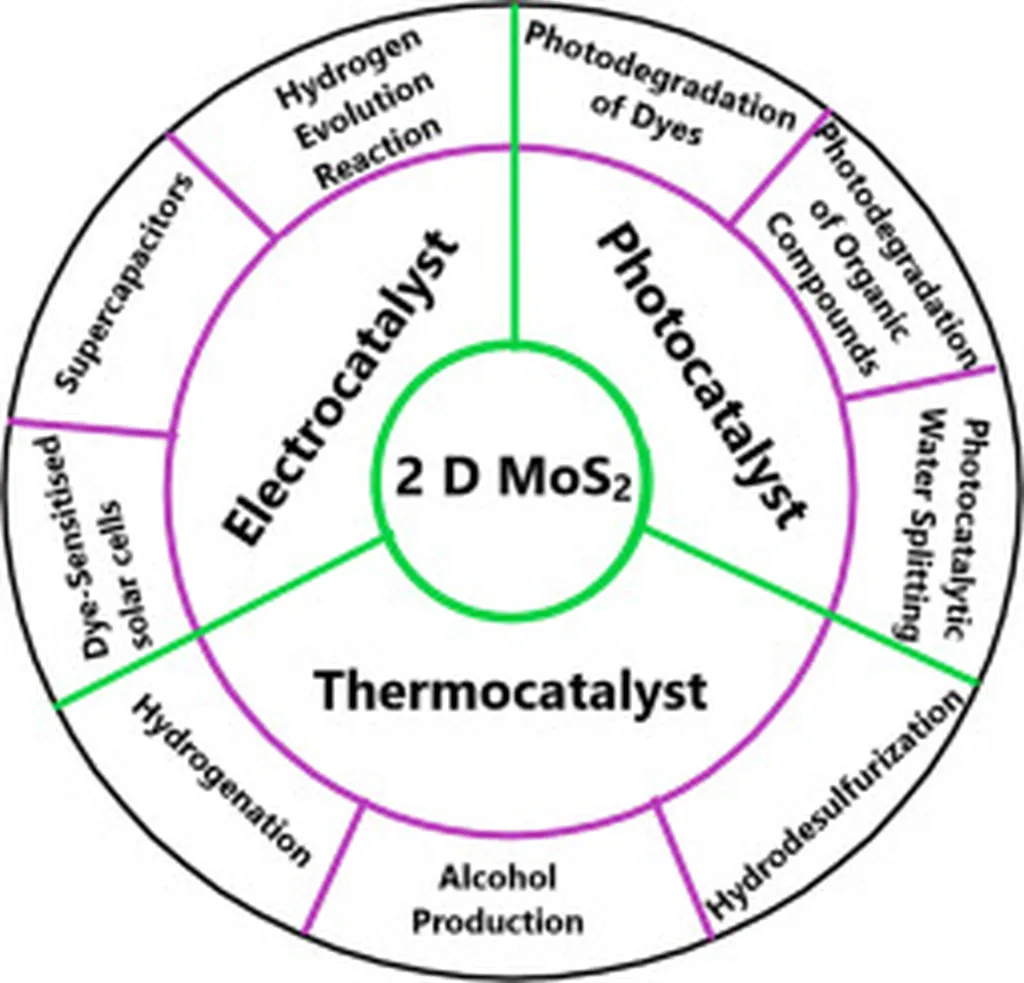
In the ever-evolving landscape of materials science, a new review published in the journal *Discover Materials* (translated from the original title) is shedding light on the untapped potential of molybdenum-based nano-composites, derived from metal-organic frameworks (MOFs). This research, led by Samik Gupta from the Department of Chemistry at Sambhu Nath College, explores how these advanced materials are making waves beyond the energy sector, promising to revolutionize fields as diverse as environmental remediation, healthcare, and industrial catalysis.
Molybdenum-containing materials have long been celebrated for their impressive catalytic activity, a trait that stems from their unique structural features, such as a high proportion of accessible active sites and a porous nature. These characteristics make them highly efficient in facilitating substrate transport, a critical factor in various catalytic processes. Traditionally, these materials have been extensively used in energy research, particularly in electrocatalytic reactions for energy transformation and storage devices. However, Gupta’s review highlights that their potential extends far beyond this realm.
“While molybdenum-based materials have found a niche in energy research, their unique morphology and catalytic properties are being increasingly recognized in other applications,” Gupta explains. These applications range from serving as catalysts for oxidative desulfurization and olefin epoxidation to being used in electrocatalytic sensing of analytes, as nano-medicine carriers, pollutant removers, and even as fire retardant materials.
One of the key advantages of these MOF-derived nano-composites is their ability to outperform their individual components. This synergy is attributed to the homogenous distribution of active reaction sites, the high conductivity of the nano-carbon matrix, and the high accessibility of substrate molecules into their framework. By fine-tuning the synthetic techniques and conditions, researchers can tailor the composition of these nano-composites to achieve desirable results, opening up a world of possibilities for commercial applications.
The implications of this research are vast. In the energy sector, these materials could lead to more efficient and cost-effective catalytic processes, enhancing the performance of energy storage and transformation devices. Beyond energy, their potential in environmental remediation and healthcare could pave the way for innovative solutions to pressing global challenges.
As Gupta’s review underscores, the scientific community is just beginning to scratch the surface of what these molybdenum-based nano-composites can achieve. With continued research and development, these materials could very well shape the future of multiple industries, driving progress and innovation in ways we are only beginning to imagine. The review, published in *Discover Materials*, serves as a call to action for researchers and industry professionals alike to explore the untapped potential of these remarkable materials.