
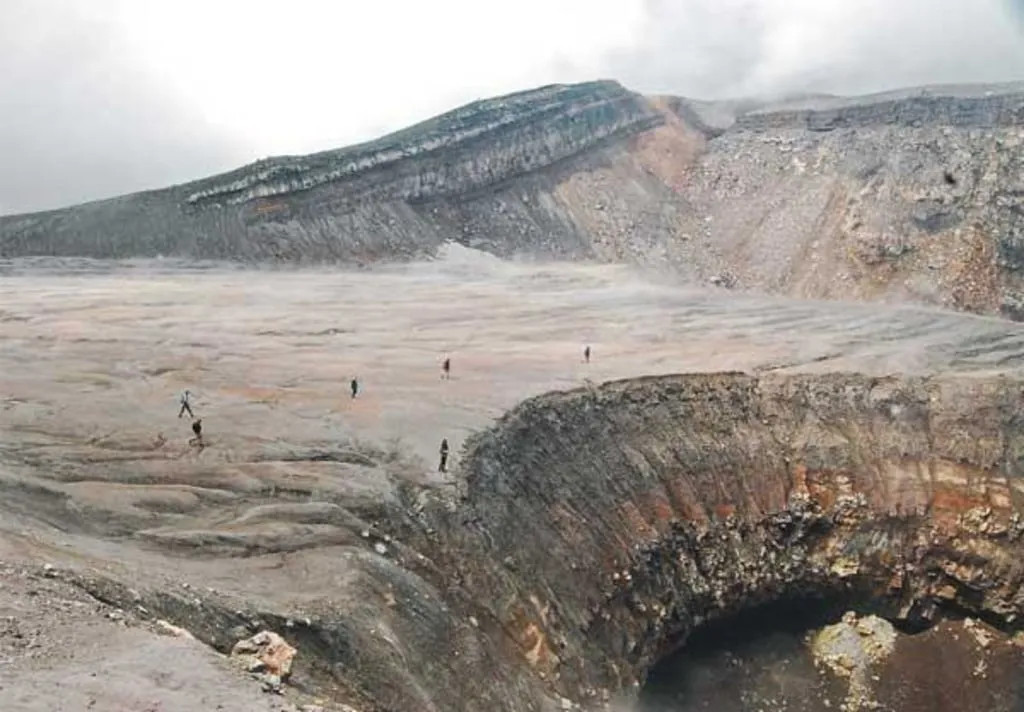
In the rugged and remote landscapes of the Northern Kuril Islands, a team of researchers from the Institute of Volcanology and Seismology, Far Eastern Branch of the Russian Academy of Sciences, embarked on a groundbreaking expedition in the summer of 2025. Led by Samarkina Nastasia K., the team ventured into Krasheninnikov Bay on Paramushir Island as part of the Russian Geographical Society’s expedition “Eastern Bastion – Kuril Ridge.” Their mission: to unravel the secrets of volcanic and hydrothermal activity in one of the world’s most dynamic geological regions.
The team’s work, recently detailed in the journal *Геосистемы переходных зон* (translated as “Geosystems of Transition Zones”), offers a glimpse into the intricate processes shaping the Earth’s crust and holds significant implications for the energy sector. By studying the volcanic activity of Chikurachki, Tatarinov, and Lomonosov volcanoes, the researchers aimed to collect critical data that could inform future energy exploration and extraction efforts.
One of the most innovative aspects of the expedition was the use of an unmanned aerial vehicle (UAV) equipped with a thermal imaging camera. This technology allowed the team to conduct aerial and surface temperature surveys of the crater at the summit of Tatarinov volcano. “The UAV provided us with unprecedented access to areas that were previously too dangerous or difficult to reach,” explained Samarkina. “This technology not only enhanced our safety but also significantly improved the accuracy of our data collection.”
The researchers collected a wide range of samples, including rocks from the unified Pleistocene basement of the volcanoes, lava samples, and mineralogical samples from fumarolic fields. Additionally, they conducted soil sampling and hydrochemical testing of major watercourses in Krasheninnikov Bay. These samples will serve as the foundation for further mineralogical and geochemical studies, potentially unlocking new insights into the geological processes at play.
The implications of this research for the energy sector are profound. Understanding the volcanic and hydrothermal activity in the Kuril Islands can provide valuable information for geothermal energy exploration. Geothermal energy, derived from the Earth’s heat, is a renewable and sustainable resource that could play a crucial role in meeting global energy demands. The data collected by Samarkina and her team could help identify new geothermal hotspots, paving the way for the development of innovative energy solutions.
Moreover, the study of volcanic activity can also inform seismic risk assessments, which are essential for the safe and efficient operation of energy infrastructure. By gaining a deeper understanding of the geological processes in the region, energy companies can make more informed decisions about where to invest and how to mitigate potential risks.
The expedition’s findings, published in *Геосистемы переходных зон*, represent a significant step forward in our understanding of the Earth’s dynamic systems. As Samarkina noted, “This research not only advances our scientific knowledge but also has the potential to drive innovation in the energy sector. By harnessing the power of geothermal energy, we can contribute to a more sustainable and resilient energy future.”
In the ever-evolving landscape of energy exploration, the work of Samarkina and her team serves as a reminder of the critical role that scientific research plays in shaping our understanding of the world and driving technological advancements. As we look to the future, the insights gained from this expedition could open new avenues for energy development, ultimately benefiting both the environment and the global economy.