
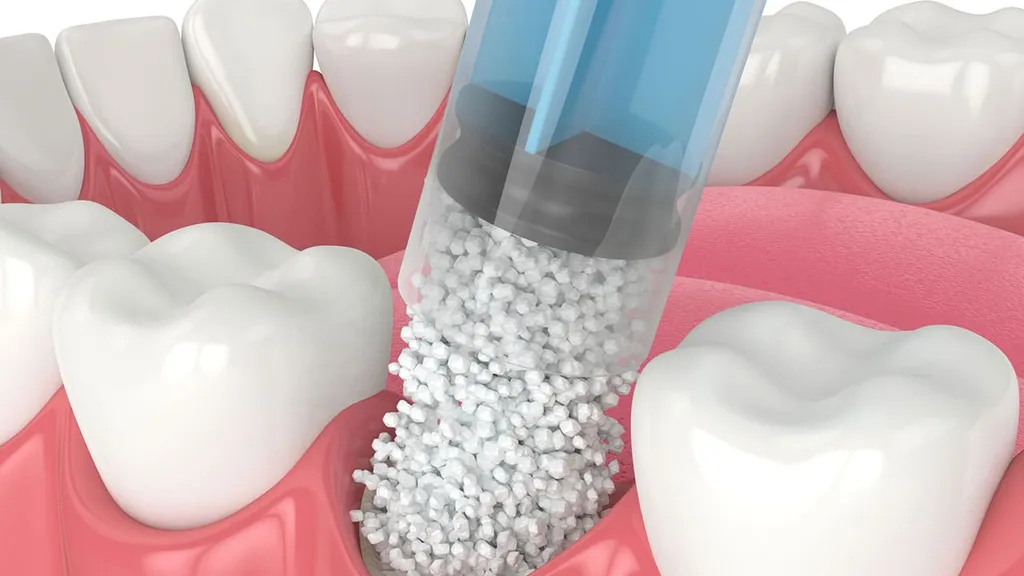
In the relentless pursuit of enhancing bone graft success rates, a team of researchers led by Carla Arca-Garcia from the Universitat Politècnica de Catalunya – BarcelonaTech has made a significant stride. Their work, published in the journal *Bioactive Materials* (which translates to *Active Biomaterials* in English), introduces a novel approach to combat bacterial infections in bone grafts, a persistent challenge that often leads to graft failure.
The study focuses on engineering the surface of calcium phosphate bone grafts, a material widely used in orthopedic and dental surgeries. The researchers employed a dual strategy: creating high-aspect-ratio nanotopographies and incorporating fluoride ions. “We aimed to leverage nanoscale geometries to physically disrupt bacteria upon contact and enhance this effect with fluoride doping,” Arca-Garcia explained.
The team generated calcium-deficient hydroxyapatite nanoneedle structures through controlled hydrolysis of α-tricalcium phosphate. By tuning the fluoride concentration and processing parameters, they could alter the nanoneedle dimensions and spacing, significantly enhancing bactericidal activity, particularly against *Pseudomonas aeruginosa* and, to a lesser extent, *Staphylococcus aureus*.
One of the most intriguing findings was the synergistic effect observed when combining nanotopography with fluoride doping. “Fluoride doping alone showed no antibacterial effects,” Arca-Garcia noted, “but when combined with nanotopography, we saw a marked increase in efficacy.”
The implications of this research extend beyond the immediate medical applications. In the energy sector, where bone graft materials are used in various capacities, the development of antibacterial surfaces could lead to more durable and reliable products. For instance, in the oil and gas industry, where equipment and infrastructure are often exposed to harsh environments, the integration of such materials could enhance longevity and reduce maintenance costs.
Moreover, the study’s findings could pave the way for future developments in the field of biomaterials. The ability to tailor nanotopography and incorporate antibacterial properties offers a promising strategy to mitigate infection risks while supporting osteointegration. This could lead to the development of next-generation bone grafts that are not only more effective but also safer for patients.
As the global rise in antimicrobial resistance continues to pose a significant challenge, the pursuit of antibiotic-free strategies like this one becomes increasingly crucial. The research conducted by Arca-Garcia and her team represents a significant step forward in this endeavor, offering a multifunctional, synthetic bone graft with both physical and chemical antibacterial properties.