
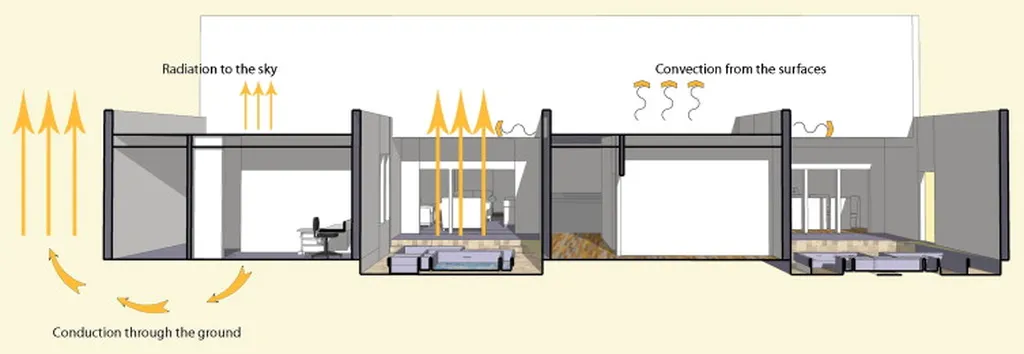
In the relentless pursuit of sustainable urbanization, a groundbreaking study led by Hawraa A.H. from the Department of Thermal Mechanical Engineering at Basra Engineering Technical College, Southern Technical University, Iraq, is making waves in the construction and energy sectors. Published in the journal *Green Technologies and Sustainability* (translated to English as *Technologies and Sustainability*), the research delves into the critical realm of Nearly Zero Energy Buildings (NZEBs), offering a tailored approach for hot-arid climates, with a specific focus on Iraq.
The study bridges a significant research gap by exploring and synthesizing NZEB strategies for extreme climates, where cooling demands and fossil fuel reliance are particularly intense. Hawraa A.H. and her team have developed a multi-objective optimization framework that balances energy efficiency, cost, and thermal comfort, validated through case studies of retrofitted buildings in Iraq. The results are promising, demonstrating 30%–50% energy savings via hybrid systems that combine passive design approaches with active technologies.
“By integrating cutting-edge technologies with adaptive policy frameworks, this research underscores the viability of NZEBs in achieving energy autonomy and resilience in hot climates,” says Hawraa A.H. The study highlights the effectiveness of climate-responsive materials and load-shifting techniques, offering a roadmap for sustainable urbanization aligned with global decarbonization goals.
The research synthesizes passive design strategies such as solar shading optimization, natural ventilation, and phase-change materials (PCMs) with active technologies, including high-efficiency HVAC systems, hybrid energy storage (battery, thermal, hydrogen), and AI-driven smart energy management systems (EMS). This holistic approach not only addresses the immediate need for energy efficiency but also paves the way for future developments in the field.
For the energy sector, the implications are substantial. The study’s findings could revolutionize the way commercial and residential buildings are designed and retrofitted, particularly in hot-arid regions. By reducing energy consumption and reliance on fossil fuels, these innovations could significantly cut carbon footprints and contribute to global sustainability efforts.
Moreover, the research identifies critical challenges such as extreme temperatures, dust degradation, water scarcity, and policy gaps, providing recommendations for region-specific standards and financial incentives. Future directions prioritize advanced materials like high-albedo coatings and aerogel insulation, decentralized renewable microgrids, and bioclimatic designs rooted in traditional Iraqi architecture.
As the world grapples with escalating energy and environmental challenges, this study offers a beacon of hope and a practical roadmap for achieving energy autonomy and resilience. By integrating cutting-edge technologies with adaptive policy frameworks, Hawraa A.H. and her team are setting a new standard for sustainable urbanization, one that could shape the future of the construction and energy sectors for years to come.