
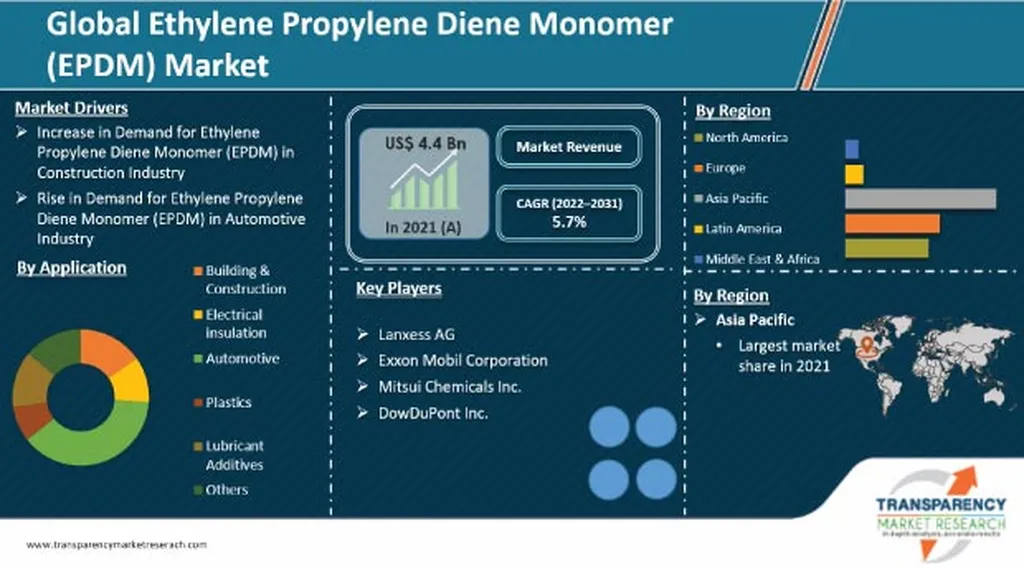
In the quest to bolster the performance of rubber materials used in demanding industrial applications, a team of researchers led by Rezakalla Antypas Imad from Don State Technical University in Rostov-on-Don, Russia, has uncovered promising insights into the effects of gamma radiation on Ethylene Propylene Diene Monomer (EPDM) rubber. Their study, published in the journal “Science and Engineering of Composite Materials” (translated from Russian as “Наука и инженерия композитных материалов”), explores how radiation-induced vulcanization and carbon black reinforcement can enhance the thermal and structural properties of EPDM, potentially revolutionizing its use in the energy sector.
EPDM rubber is a critical material in various industrial applications, particularly in the energy sector, where it is used for seals, gaskets, and hoses that must withstand harsh environments. The research team investigated how gamma irradiation at different doses, combined with varying concentrations of carbon black, affects the material’s properties. Their findings reveal a significant improvement in the rubber’s resistance to swelling in hydraulic and engine oils, a crucial factor for its durability and performance in industrial settings.
“By applying controlled gamma radiation, we observed a notable decrease in the swelling ratio of EPDM composites,” explained Imad. “This enhancement is attributed to the increased crosslinking density, which restricts the molecular mobility of the EPDM chains. The addition of carbon black further amplifies this effect, making the material more robust and resilient.”
The study also employed Differential Scanning Calorimetry (DSC) to measure the glass transition temperature, which increased with higher radiation doses, indicating a more rigid and stable material. Scanning Electron Microscopy (SEM) analysis confirmed that up to a dose of 150 kGy, the filler dispersion and surface homogeneity improved, but beyond this point, degradation occurred. This finding underscores the importance of optimizing radiation doses to achieve the desired material properties without compromising its integrity.
One of the most compelling aspects of this research is its potential impact on the energy sector. EPDM rubber is widely used in oil and gas applications, where it must endure extreme temperatures and aggressive chemicals. The enhanced abrasion resistance and reduced swelling observed in the study suggest that radiation-treated EPDM could offer superior performance and longevity in these demanding environments.
“Our research highlights the potential of controlled gamma radiation to enhance the performance and durability of EPDM-based composites,” Imad noted. “This could lead to more reliable and long-lasting materials for the energy sector, ultimately reducing maintenance costs and improving safety.”
The findings also open up new avenues for further exploration. Future research could focus on optimizing the radiation doses and carbon black concentrations to achieve the best balance between enhanced properties and material integrity. Additionally, investigating the long-term stability and performance of radiation-treated EPDM in real-world applications could provide valuable insights for industry practitioners.
As the energy sector continues to demand more resilient and high-performance materials, the work of Imad and his team offers a promising path forward. By leveraging the power of gamma radiation, engineers and scientists can develop EPDM composites that meet the stringent requirements of modern industrial applications, ensuring safer and more efficient operations.