
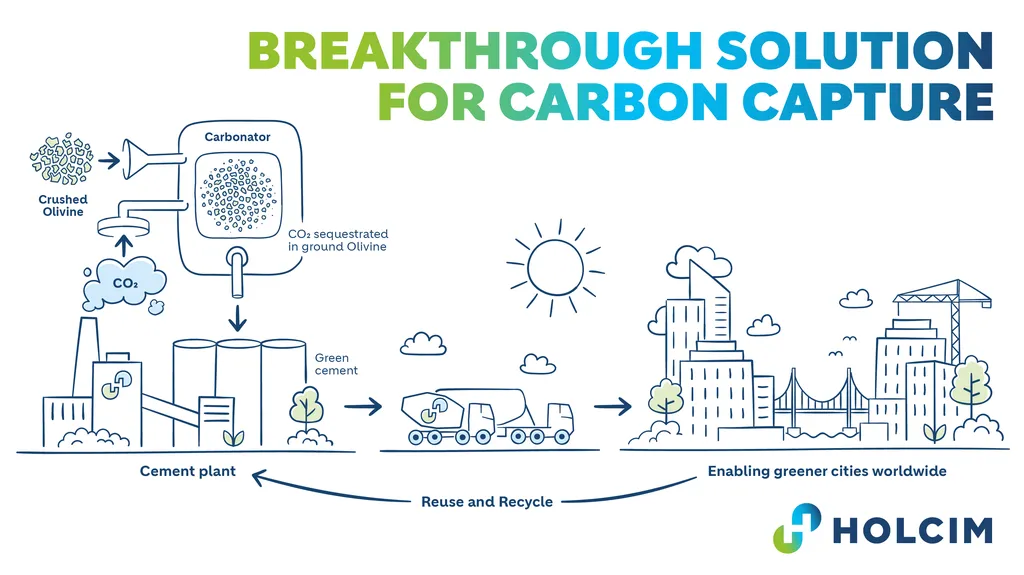
In the relentless pursuit of sustainable construction practices, a groundbreaking study has emerged that could revolutionize the way we think about concrete production and CO2 emissions. Published in the *Nonconventional Technologies Review* (translated from Romanian as *Review of Nonconventional Technologies*), this research delves into the potential of early-age carbonation of calcium silicate hydrate (C-S-H) in concrete, offering a promising avenue for CO2 capture and storage.
At the helm of this innovative research is Lucian Paunescu, a leading expert from Daily Sourcing & Research SRL in Bucharest. Paunescu and his team have identified a novel approach to sequestering CO2 by introducing sodium bicarbonate (NaHCO3) into the concrete mix as a partial substitute for cement. This method not only aims to reduce the carbon footprint of concrete production but also enhances the mechanical strength of the material at an early age.
“Limiting the gas footprint released into the atmosphere remains a very topical objective in the world,” Paunescu stated, underscoring the global significance of their findings. The study highlights that the addition of sodium bicarbonate leads to untimely carbonation of C-S-H, the most important phase of ordinary cement. This process not only captures and stores CO2 but also significantly boosts the mechanical resistance of the concrete.
One of the most striking discoveries is the substantial increase in compression and flexural strength observed just six hours after the concrete preparation. “Specific measurements carried out after only 6 hours have found very high values of compression and flexural strength, close to the values corresponding to the end of concrete curing process of 28 days,” Paunescu explained. This rapid strengthening could dramatically accelerate construction timelines and reduce costs, offering a competitive edge in the energy sector.
The implications of this research are far-reaching. By utilizing traditional Portland cement as the main binder, this method provides a practical and scalable solution for reducing CO2 emissions in the construction industry. “Its importance lies in the possibility of manufacturing without CO2 emissions and utilizing the traditional Portland cement as the main binder for construction concrete in the current situation of world environmental crisis,” Paunescu noted.
As the world grapples with the environmental crisis, this research offers a beacon of hope. The potential to produce concrete with enhanced mechanical properties while simultaneously capturing and storing CO2 could transform the energy sector. The study, published in the *Review of Nonconventional Technologies*, represents a significant step forward in the quest for sustainable construction practices.
Paunescu’s work not only addresses the urgent need for CO2 reduction but also paves the way for future developments in the field. By integrating this innovative approach into mainstream construction practices, the industry can make strides towards a more sustainable and environmentally friendly future. The research underscores the importance of continuous innovation and collaboration in tackling global challenges, offering a compelling narrative for professionals in the energy sector.