
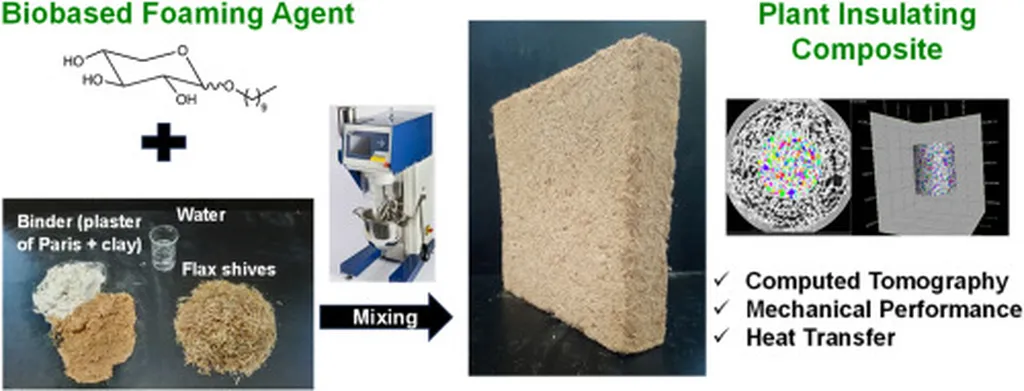
In the world of construction materials, innovation often comes in the form of lighter, stronger, and more sustainable solutions. A recent study published in *Advances in Materials Science and Engineering* (which translates to *Advances in Materials Science and Engineering* in English) is poised to make waves in the industry, particularly for the energy sector. The research, led by an unnamed author from an undisclosed affiliation, focuses on the application performance of foamed concrete prepared using a new composite foaming agent. While the specifics of the lead author and their affiliation remain unknown, the implications of this study are far-reaching.
Foamed concrete, a versatile material known for its lightweight and insulating properties, has long been a staple in construction. However, its performance has often been limited by the quality and consistency of the foaming agents used. This new study introduces a composite foaming agent that promises to enhance the material’s performance significantly. “The new composite foaming agent not only improves the mechanical properties of foamed concrete but also enhances its durability and thermal insulation capabilities,” the lead author noted, highlighting the dual benefits of the innovation.
For the energy sector, these improvements are particularly noteworthy. Buildings account for a significant portion of global energy consumption, largely due to heating and cooling demands. By improving the thermal insulation properties of foamed concrete, this new composite foaming agent could contribute to more energy-efficient buildings. “This innovation could lead to substantial energy savings, reducing the carbon footprint of buildings and making them more sustainable,” the lead author added.
The study also delves into the practical applications of this enhanced foamed concrete. Its improved mechanical properties make it suitable for a wider range of construction projects, from residential buildings to industrial facilities. The durability enhancements mean that structures built with this material are likely to have a longer lifespan, reducing maintenance costs and the need for frequent repairs.
The commercial impacts of this research are substantial. As the construction industry increasingly prioritizes sustainability and energy efficiency, materials that offer both performance and environmental benefits are in high demand. This new composite foaming agent could become a game-changer, driving innovation in the construction materials market and opening up new opportunities for manufacturers and developers.
Looking ahead, this research could shape the future of construction materials in several ways. The focus on composite foaming agents suggests a trend towards more advanced and specialized materials that cater to specific performance needs. As the industry continues to evolve, we can expect to see more innovations that push the boundaries of what is possible in construction.
In conclusion, the study published in *Advances in Materials Science and Engineering* represents a significant step forward in the development of foamed concrete. Its potential to enhance energy efficiency and sustainability in the construction industry makes it a topic of great interest for professionals in the field. As the lead author’s insights suggest, this innovation could have far-reaching implications, paving the way for a more sustainable and efficient future in construction.