
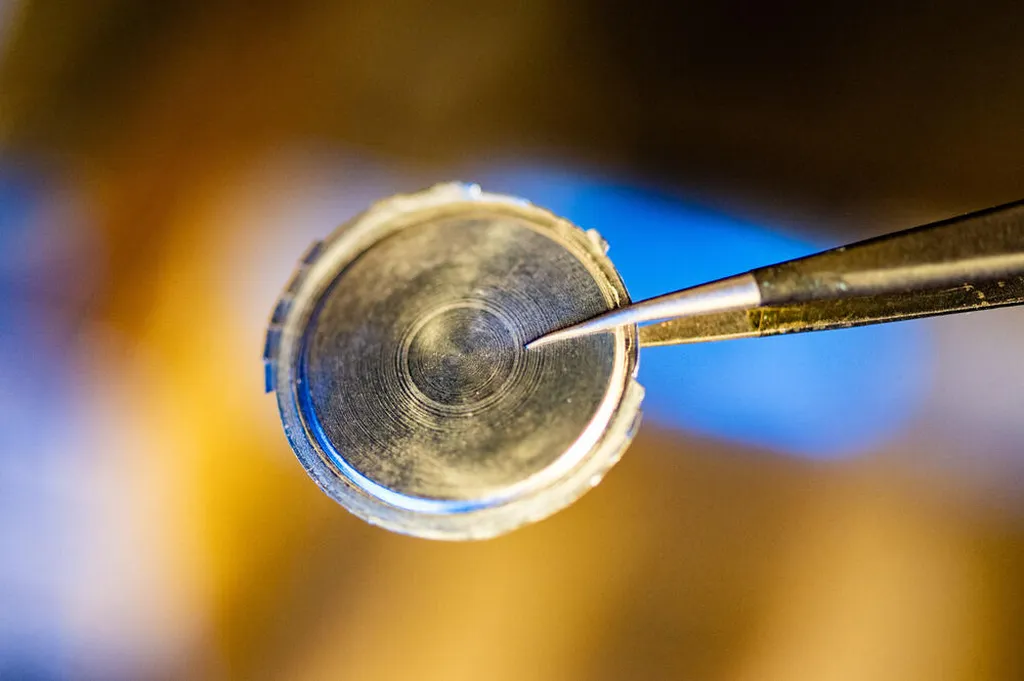
In a breakthrough that could reshape the energy sector, researchers have discovered a novel method to control the structure and properties of the equiatomic CuAu alloy, potentially enhancing its applications in various industrial processes. The study, led by Polina O. Podgorbunskaya from the M.N. Mikheev Institute of Metal Physics of the Ural Branch of the Russian Academy of Sciences in Yekaterinburg, was recently published in the journal “Frontier Materials & Technologies,” which translates to “Perspective Materials and Technologies.”
The research team investigated the effects of tensile stress on the ordering process of the CuAu alloy, a material known for its unique phase transformation properties. By applying a tensile stress of 40MPa during the cooling of the alloy from 500°C, the scientists observed significant changes in the material’s structure and behavior.
“One of the key challenges in materials science is finding ways to control the structure and properties of various materials,” Podgorbunskaya explained. “Our study shows that applying tensile stress during the ordering process of the CuAu alloy can influence its crystalline structure and thermal stability, which could have profound implications for its industrial applications.”
The study revealed that the short c-axes of the tetragonal L10 superstructure of the CuAu alloy predominantly align in the plane of the wire cross-section, perpendicular to the direction of the tensile force. This alignment was confirmed through X-ray diffraction analysis, a crucial technique for understanding the crystalline structure of materials.
Moreover, dilatometric investigations showed that specimens ordered under tension contract by approximately 0.8% when heated above the phase transformation temperature, while simultaneously expanding in diameter. This behavior is attributed to the difference in the volumes of the crystalline lattices of the ordered and disordered phases.
The research also found that heating a specimen ordered under load alters the temperature derivatives of electrical resistance, suggesting that the tensile load increases the disordering temperature and changes the thermal stability of the ordered CuAuI and CuAuII phases. “This effect is consistent with literature data for the CuAu alloy ordered after compressive deformations,” noted Podgorbunskaya.
The implications of this research for the energy sector are substantial. The CuAu alloy is already used in various applications, including shape memory alloys and actuators, due to its unique phase transformation properties. By controlling the structure and properties of this alloy through tensile stress, engineers could develop more efficient and reliable components for energy generation, transmission, and storage systems.
For instance, the enhanced thermal stability and altered disordering temperature could lead to the development of more robust and durable materials for use in high-temperature environments, such as in advanced power plants and renewable energy systems. Additionally, the improved control over the crystalline structure could enable the creation of more precise and responsive actuators for use in energy conversion and storage devices.
As the world continues to seek innovative solutions to meet its energy needs, the findings of this study offer a promising avenue for advancing the field of materials science and engineering. By pushing the boundaries of our understanding of phase transformations and material properties, researchers like Podgorbunskaya are paving the way for a more sustainable and efficient energy future.
The study, “Structure and properties of the equiatomic CuAu alloy ordered under a tensile stress of 40MPa,” was published in the journal “Frontier Materials & Technologies,” providing valuable insights into the potential of tensile stress in controlling the structure and properties of the CuAu alloy. This research not only expands our knowledge of materials science but also opens up new possibilities for the energy sector, highlighting the importance of continued innovation and exploration in this critical field.