
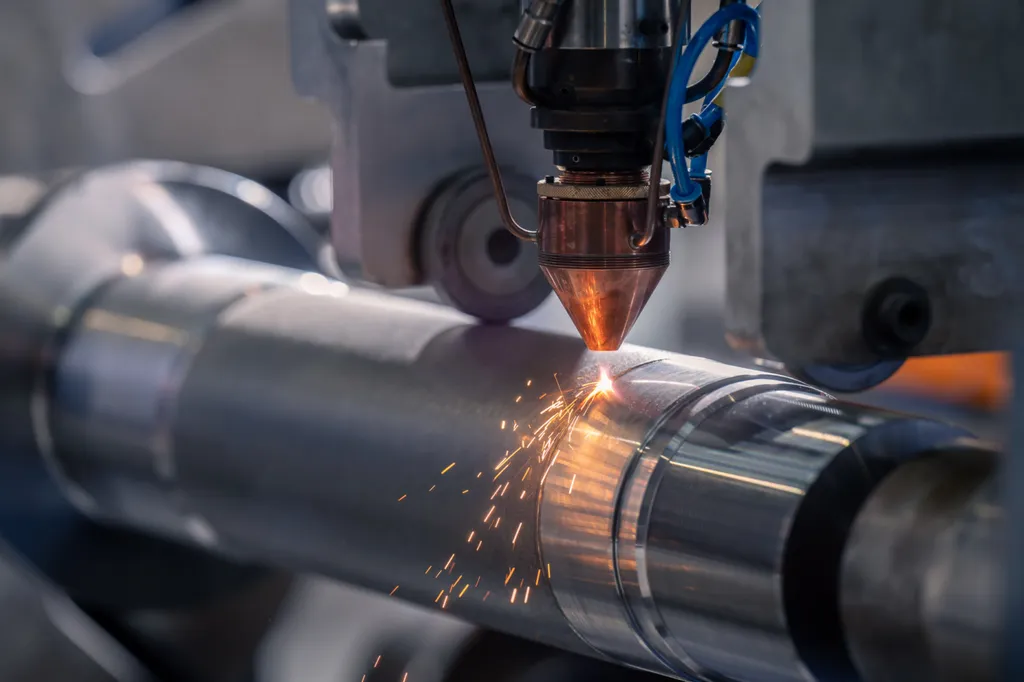
In the pursuit of enhancing the longevity and efficiency of industrial components, researchers have turned to advanced materials and innovative techniques. A recent study published in *Frontier of Materials Science and Technology* (formerly translated as ‘Frontier Materials & Technologies’) explores the potential of tantalum (Ta) and silicon carbide (SiC) coatings, bolstered by boron carbide (B4C) and boron nitride (BN) additives, applied through short-pulse laser cladding. This method could revolutionize the production of friction units, particularly in the energy sector, where wear resistance is paramount.
The research, led by Roman M. Kuznetsov of the M.N. Mikheev Institute of Metal Physics of the Ural Branch of the Russian Academy of Sciences in Yekaterinburg, investigates the structural and tribological properties of these coatings. The study reveals that coatings made from Ta and SiC powders alone exhibit large pores that connect into channels, but the addition of B4C and BN significantly alters the coating’s microstructure. “The addition of B4C and BN powders led to the formation of separate elliptical pores within the coating,” Kuznetsov explains. “This change in structure is crucial for improving the coating’s performance.”
The coatings with the lowest content of Ta and SiC powder mixture demonstrated the smoothest surface, indicating a more uniform and potentially more durable finish. Wear resistance tests further highlighted the benefits of B4C and BN additives. The coatings with the highest content of these additives showed the lowest mass loss for both the “pin” and “plate” specimens, suggesting a marked improvement in tribological properties. Even the TaSiC coating without additives performed better than uncoated 40Kh steel, with a mass loss 1.8 times lower.
The implications for the energy sector are substantial. Friction units, such as those found in turbines and other high-wear applications, could benefit greatly from these advanced coatings. By reducing wear and extending the lifespan of components, these coatings could lead to significant cost savings and improved efficiency. “The minimum mass loss values for both the ‘pin’ and ‘plate’ specimens were obtained after testing the coating with the maximum B4C and BN content,” Kuznetsov notes. “This indicates a positive influence of B4C and BN on the tribological properties of the coating based on Ta and SiC powders.”
As the energy sector continues to demand more durable and efficient materials, research like this paves the way for innovative solutions. The study published in *Frontier of Materials Science and Technology* not only demonstrates the technical feasibility of producing these coatings but also highlights their potential to enhance the performance of industrial components. With further development, these coatings could become a standard in the production of high-wear friction units, driving progress in the energy sector and beyond.