
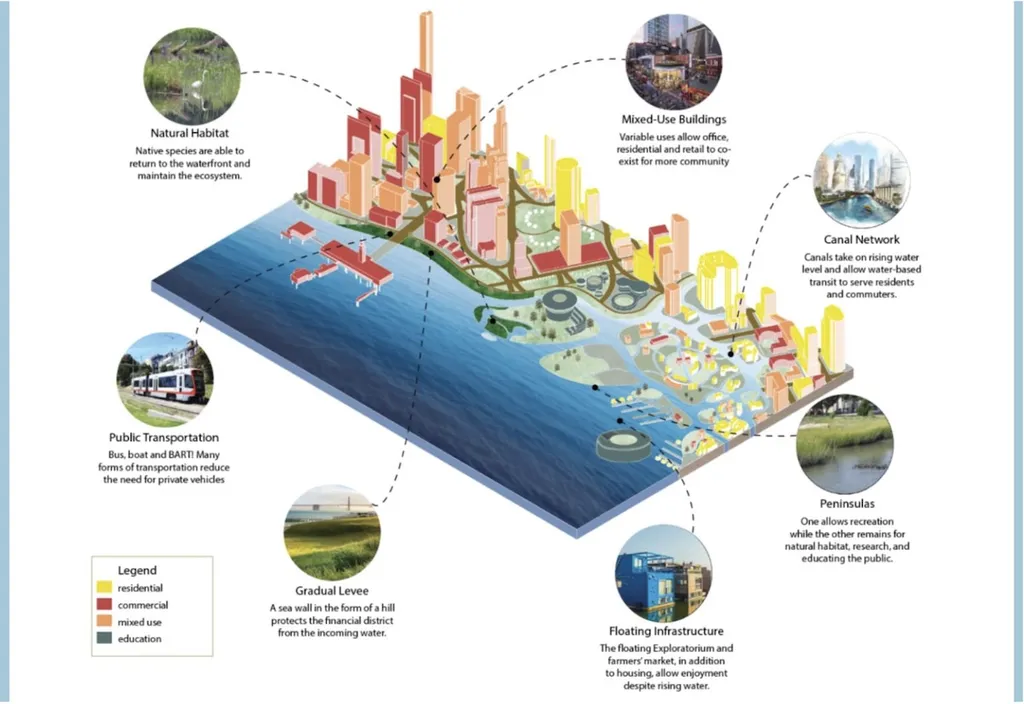
In the heart of California, a unique educational experiment is unfolding, one that could reshape the way cities are designed and built, with significant implications for the energy sector. At the University of California, Berkeley, Professor Peter C. Bosselmann and his colleagues are championing an interdisciplinary approach to urban design, breaking down traditional professional silos to create more resilient, sustainable, and equitable cities.
The initiative, detailed in a recent article published in the ‘Journal of Design for Resilience in Architecture and Planning’ (translated as ‘Journal of Design for Resilience in Architecture and Urban Planning’), brings together students and faculty from the departments of City and Regional Planning, Architecture, Landscape Architecture, and Environmental Planning. This collaborative approach is not just about creating better buildings or more efficient infrastructure; it’s about fostering a holistic understanding of urban systems and the complex relationships between economic development, environmental quality, and socio-political dynamics.
“Urban design is not just about aesthetics or functionality,” Bosselmann explains. “It’s about creating environments that serve a human purpose, that address social, economic, and environmental challenges. To do that, we need to educate professionals who can navigate these complex relationships and build bridges between different sectors.”
The energy sector, in particular, stands to gain from this interdisciplinary approach. As cities grapple with climate change and the need to reduce carbon emissions, the demand for integrated energy solutions is growing. Urban designers trained in this interdisciplinary context can play a crucial role in shaping energy-efficient cities, from designing buildings that generate their own power to planning neighborhoods that minimize energy use.
Moreover, this approach can help break down the professional silos that often hinder innovation and collaboration. “When you bring together people from different disciplines, you create a dynamic where ideas can cross-pollinate,” Bosselmann says. “This can lead to more innovative, more sustainable solutions.”
The potential commercial impacts are significant. As cities worldwide seek to become smarter and more sustainable, the demand for professionals who can integrate energy solutions into urban design is likely to grow. Companies that can offer these integrated services stand to gain a competitive edge.
The Berkeley initiative is not just about educating the next generation of urban designers; it’s about redefining the very nature of urban design. By fostering interdisciplinary collaboration and a holistic understanding of urban systems, it’s paving the way for more resilient, more sustainable, and more equitable cities. And in doing so, it’s shaping the future of the energy sector and the way we power our urban lives.