
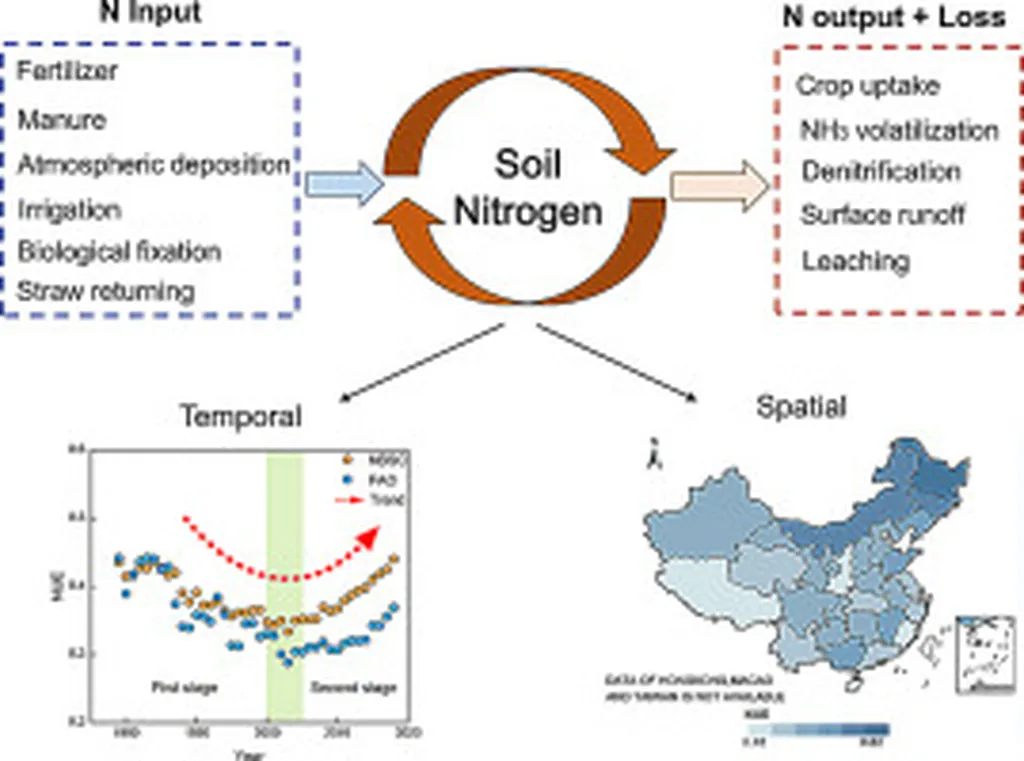
In the heart of China’s Three Gorges reservoir area, a quiet revolution is unfolding beneath our feet, one that could reshape our understanding of soil nitrogen dynamics and have significant implications for the energy sector. Researchers, led by Tian Chen from the College of Life and Environmental Sciences at Huangshan University, have been delving into the intricate world of soil aggregates to unravel the mysteries of nitrogen deposition and its impact on soil health.
The study, published in *Frontiers in Soil Science* (translated as *Frontiers in Soil Science*), focuses on a Quercus variabilis plantation subjected to varying levels of nitrogen (N) addition over three years. The findings are shedding light on how elevated atmospheric nitrogen deposition, a byproduct of industrial activities and agricultural practices, is altering the soil’s nitrogen cycle.
“Our research reveals that enhanced nitrogen inputs significantly stimulate the conversion of organic nitrogen into inorganic forms, thereby amplifying the soil’s nitrogen supply capacity,” explains Chen. This transformation is particularly pronounced in the finest soil aggregates, which are less than 250 micrometers in size. These tiny particles, often overlooked, play a crucial role in soil fertility and nutrient cycling.
The study found that net nitrification, the process by which ammonia is converted into nitrates, comprised over 80% of net nitrogen mineralization within these aggregates. This process was positively correlated with nitrogen addition and microbial biomass, indicating that increased nitrogen deposition can boost microbial activity and, consequently, nitrogen transformation rates.
However, the story doesn’t end here. The researchers also discovered that prolonged nitrogen deposition could lead to potential phosphorus loss and depletion of soil organic matter. “While increased nitrogen supply can initially enhance soil fertility, it may also disrupt the delicate balance of nutrients in the long run,” warns Chen.
So, what does this mean for the energy sector? As the world grapples with the challenges of climate change and the need for sustainable energy sources, understanding soil nitrogen dynamics becomes increasingly important. Nitrogen is a critical nutrient for plant growth, and its availability can significantly impact the productivity of bioenergy crops. Moreover, nitrogen deposition can influence carbon sequestration in soils, a process that plays a vital role in mitigating climate change.
The findings of this study could help energy companies and policymakers make informed decisions about land management practices, ensuring that bioenergy crops are grown sustainably and that soil health is maintained. Furthermore, the research underscores the importance of considering the long-term impacts of nitrogen deposition on soil ecosystems, a factor that should be integrated into future energy and environmental policies.
As we stand on the precipice of a new era in energy production, it’s clear that the answers to some of our most pressing challenges may lie beneath our feet. By unraveling the complexities of soil nitrogen dynamics, researchers like Chen are paving the way for a more sustainable and energy-secure future. The journey is just beginning, and the soil is more than willing to share its secrets.