
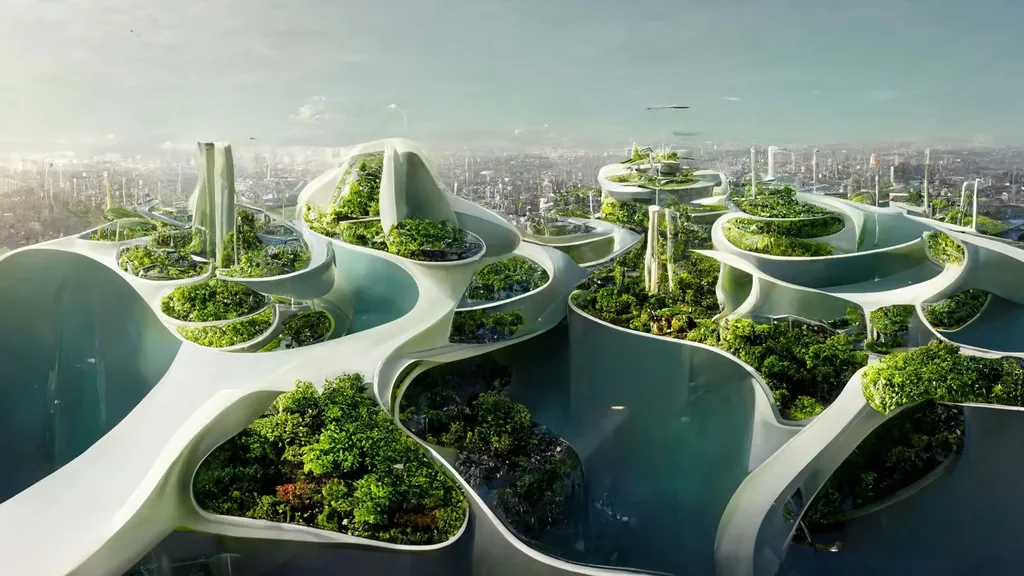
In the rapidly evolving landscape of urban design education, a novel approach is emerging that could reshape how future city planners and architects engage with technology. Researchers, led by Maryam Shafiei from the American University in Dubai, have been exploring how technological tools like virtual reality (VR), augmented reality (AR), and artificial intelligence (AI) are not just teaching aids but are becoming the very framework through which urban design is taught and practiced. This shift could have significant implications for the energy sector, particularly in how smart cities and sustainable urban planning are conceived and implemented.
Shafiei’s research, published in the *Journal of Design for Resilience in Architecture and Planning* (translated as the *Journal of Resilient Design in Architecture and Urban Planning*), focuses on the Master of Urban Design and Digital Environments (MUDDE) program. Here, technology is not just a tool but a pedagogical infrastructure that helps students interrogate, simulate, and communicate complex urban conditions. “We’re seeing a move beyond skill acquisition toward thematic mediation,” Shafiei explains. “Technology becomes a method for exploring and constructing urban narratives.”
The study highlights how these tools support the design process at multiple stages. VR and AR, for instance, allow students to produce multiple design outcomes through generative and parametric workflows. This capability could be a game-changer for the energy sector, where visualizing and simulating urban environments is crucial for planning sustainable energy infrastructure. “These tools inform data-rich site analysis, allowing for more informed decision-making,” Shafiei adds.
The MUDDE curriculum’s approach aligns with an international shift toward reflexive, exploratory, and projective models of urban design education. By integrating technology, method, and class culture, the program is reorganizing learning environments and extending the epistemic foundations of the field. This could lead to more innovative and sustainable urban planning solutions, benefiting the energy sector by fostering smarter, more efficient city designs.
As cities around the world grapple with the challenges of climate change and urbanization, the insights from Shafiei’s research could be instrumental. By embedding technology deeply into the educational framework, future urban designers will be better equipped to tackle these issues, potentially leading to more resilient and energy-efficient cities. The study contributes to ongoing debates on the future of urban design pedagogy, demonstrating how technology can reorganize learning environments and extend the epistemic foundations of the field. This shift could have far-reaching implications, not just for education but for the broader urban landscape and the energy sector that supports it.