
In the rapidly evolving landscape of urban design, a new player has emerged, promising to reshape both education and practice: Generative Artificial Intelligence (GenAI). Juliana Martins, a researcher at University College London, has published a thought-provoking viewpoint in the Journal of Design for Resilience in Architecture and Planning, exploring the implications of AI for urban design education. Her work challenges educators and practitioners to critically engage with this transformative technology, balancing innovation with ethical responsibility.
The integration of AI into urban design education is not without its challenges. “AI offers opportunities for personalized learning and innovative teaching,” Martins explains, “but it also raises significant concerns regarding assessment validity, learners’ intellectual development, and ethics.” These challenges are not merely academic; they have real-world implications for the energy sector, where urban design plays a crucial role in shaping sustainable and efficient cities.
AI is already being used in urban design for tasks such as data analysis, image generation, and design optimization. As AI continues to develop and become more integrated into design practice, it has the potential to expand automation and question the role of the designer. This raises important questions about the future of urban design education. How can educators ensure that graduates are equipped to navigate and shape an AI-augmented urban future?
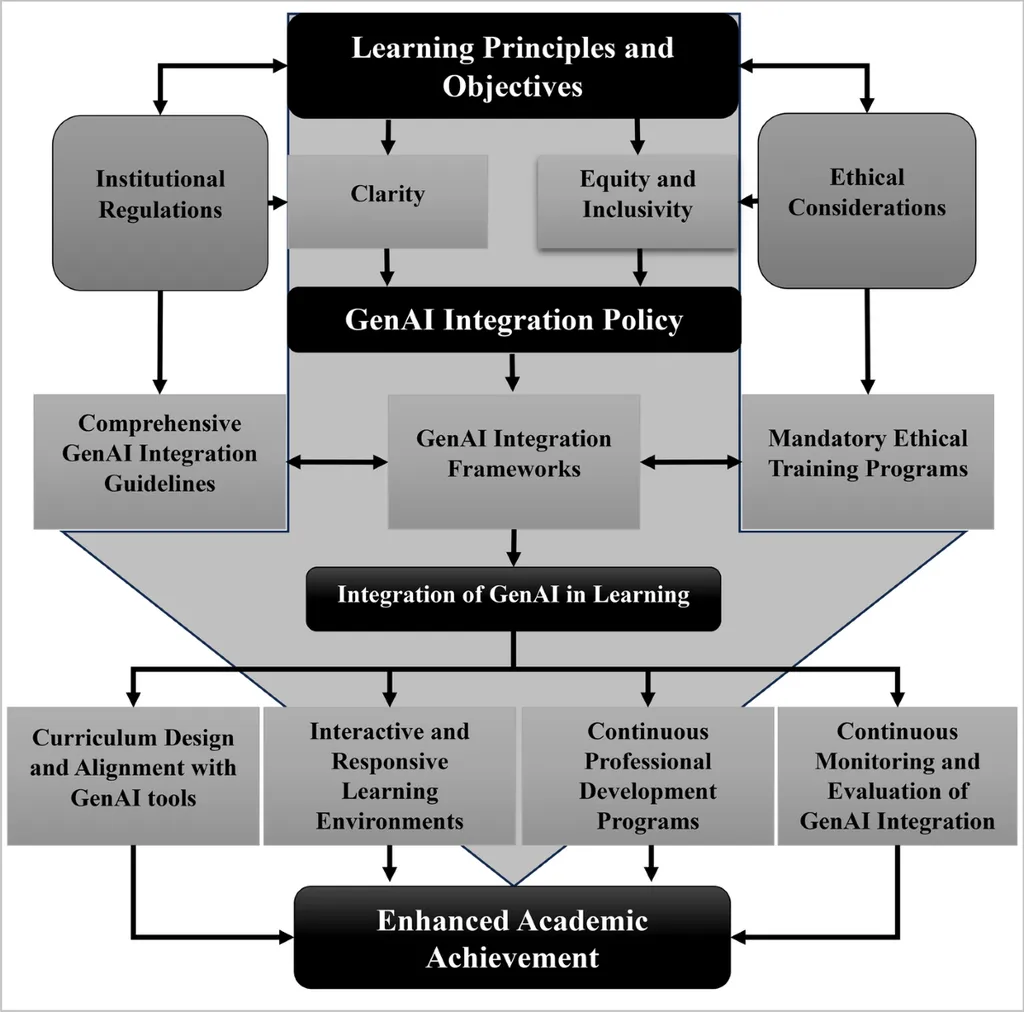
Martins suggests that institutions must adopt a critically engaged approach, balancing innovation with caution and ethical responsibility. Assessment practices require structural redesign to safeguard learning validity while embracing AI’s potential productively. Curricula must be updated to integrate critical AI literacy while protecting fundamental design and spatial reasoning skills. AI also offers potential to enhance teaching and learning, reimagining pedagogies to ensure graduates are prepared for the future.
The choices made today will determine whether AI enhances or undermines the intellectual and ethical foundations of the discipline. As Martins notes, “urban design education stands at a crossroads.” The implications of AI for the energy sector are significant. As cities become smarter and more interconnected, the role of urban design in shaping sustainable and efficient energy systems will only grow in importance. By embracing AI and integrating it into education and practice, the urban design community can help to shape a more sustainable and resilient urban future.
Martins’ viewpoint is a call to action for educators and practitioners to engage critically with AI, ensuring that it is used responsibly and ethically to enhance, rather than undermine, the intellectual and ethical foundations of the discipline. As the energy sector continues to evolve, the role of urban design in shaping sustainable and efficient cities will only grow in importance. By embracing AI and integrating it into education and practice, the urban design community can help to shape a more sustainable and resilient urban future.