
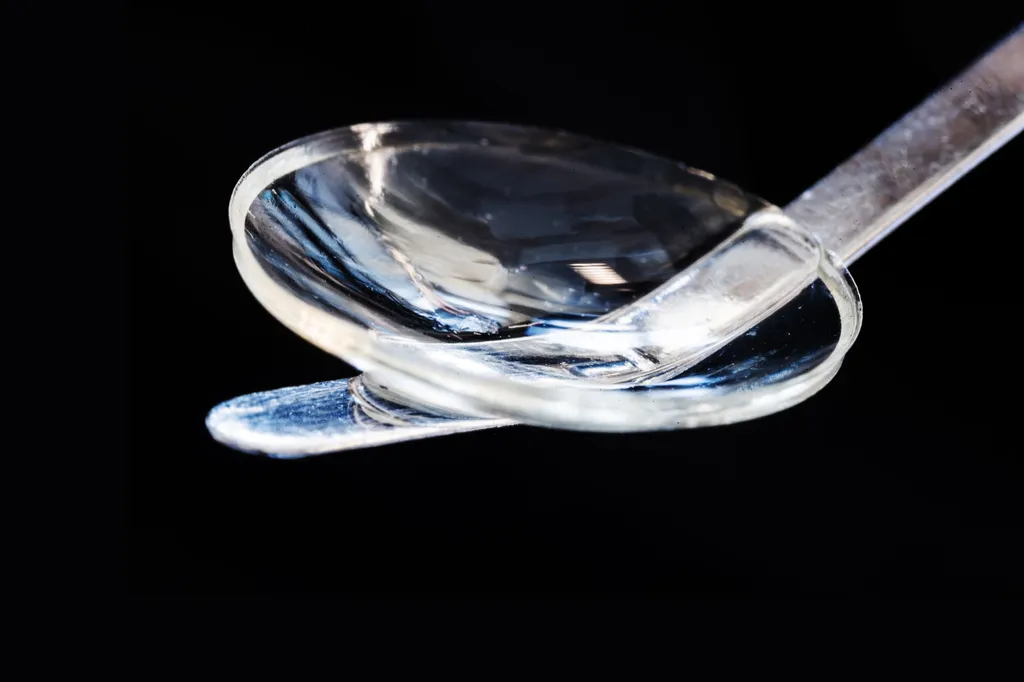
In a groundbreaking development that could revolutionize corneal transplantation, researchers have harnessed the power of bacterial synthetic biology to create personalized, biomimetic artificial corneas. This innovative approach, detailed in a study published in *Bioactive Materials* (translated as *活性材料* in Chinese), addresses the critical challenges of donor shortages and the precise matching of artificial corneal materials to individual patients’ needs.
The study, led by Liyin Wang from the Eye Institute and Department of Ophthalmology at Fudan University in Shanghai, introduces a novel method for creating customized artificial corneas. By combining a curvature-customized model with an aldehyde modification system, the team has developed a personalized biomimetic biological cornea (DBC@L-Cel) that boasts a nanofiber network structure and adjustable curvature and morphology.
“Our goal was to create an artificial cornea that not only matches the optical and mechanical properties of natural corneas but also integrates seamlessly with the patient’s own tissue,” said Wang. The researchers achieved this by using dialdehyde bacterial nanocellulose (DBC), which exhibits a remarkable transmittance of 91.91%, closely mimicking the transparency of natural corneas.
The incorporation of human-derived corneal lenticule microparticles (L) and Celastrol (Cel) significantly enhances the biocompatibility, adhesiveness, and anti-scarring capabilities of the DBC. In vitro studies demonstrated that DBC@L-Cel reduces stromal fibrosis by inhibiting specific pathways and activates epithelial proliferation and adhesion by upregulating the Wnt/β-catenin pathway.
In vivo experiments further validated the efficacy of the DBC@L-Cel. When transplanted into a large-scale rabbit corneal defect model, the artificial cornea significantly promoted the repair and regeneration of both the corneal stroma and epithelium, enabling rapid, scarless reconstruction of the damaged cornea.
The implications of this research are profound for the field of ophthalmology and beyond. By offering a personalized, biomimetic alternative to traditional corneal transplants, this innovation could address the critical shortage of donor corneas and improve outcomes for patients suffering from corneal blindness. The commercial potential is substantial, with applications extending to the broader medical device industry and potentially impacting the energy sector through advancements in biomaterial science.
As the world grapples with an aging population and increasing prevalence of corneal diseases, the development of personalized, biomimetic artificial corneas represents a significant step forward. This research not only highlights the potential of bacterial synthetic biology but also paves the way for future advancements in regenerative medicine and tissue engineering.
“The success of this study opens up new avenues for the development of personalized medical devices that can integrate seamlessly with the human body,” Wang noted. “We are excited about the potential of this technology to transform the field of ophthalmology and improve the lives of patients worldwide.”