
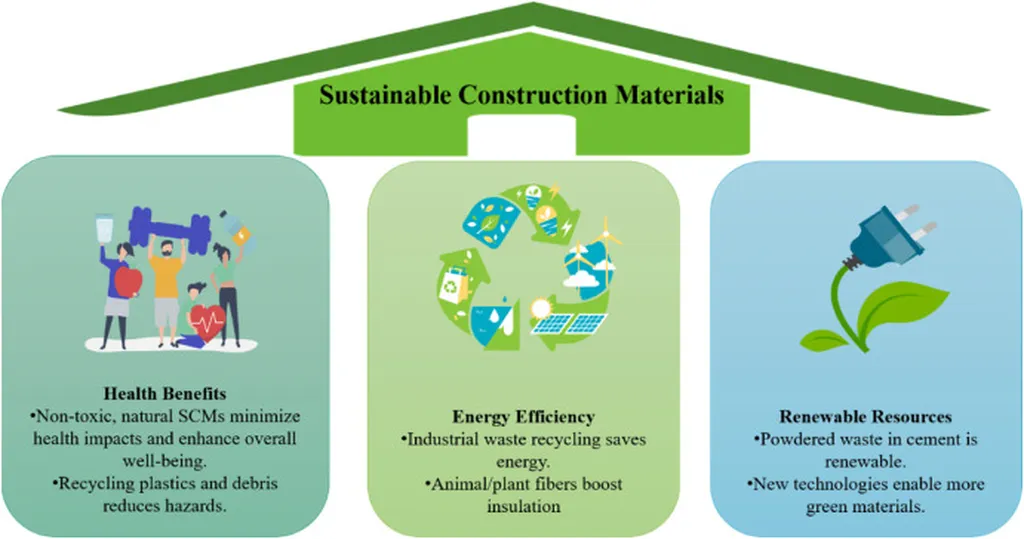
In a world grappling with the challenges of waste management and sustainable production, a team of researchers from Kahramanmaraş Sütçü İmam University in Turkey has made a significant stride towards turning everyday waste into valuable construction materials. Led by Bekir Cihad Bal, the team has developed a novel composite material using recycled plastic, glass powder, and aseptic carton particles, offering a promising solution for the energy and construction sectors.
The study, published in the journal *Tribology and Materials* (which translates to “Friction and Materials”), focuses on the responsible consumption and production of materials, aligning with the United Nations’ Sustainable Development Goals. The researchers created composite plates with six different mixing ratios of recycled polyethylene, glass powder, and aseptic carton particles, then tested their physical and mechanical properties.
“The idea was to find a way to repurpose common household waste into something useful,” Bal explained. “We wanted to see how different proportions of these materials would affect the properties of the composite.”
The results were intriguing. As the percentage of glass powder increased from 10 to 40% by weight, the density of the composite increased, but the tensile strength decreased. However, the flexural and tensile modulus of all experimental groups improved compared to the control group, indicating enhanced stiffness and rigidity. Additionally, the composites exhibited reduced swelling and water uptake as the glass powder content increased.
These findings have significant implications for the energy and construction sectors. The use of recycled materials not only reduces waste but also lowers the demand for virgin resources, contributing to a more sustainable and circular economy. The improved mechanical properties of the composites could make them suitable for a range of applications, from building materials to energy-efficient insulation.
“The potential is enormous,” Bal said. “We’re not just talking about reducing waste; we’re talking about creating new, valuable materials that can be used in various industries.”
The study also highlights the importance of optimizing the composition of composite materials to achieve desired properties. By carefully balancing the proportions of recycled plastic, glass powder, and aseptic carton particles, manufacturers could tailor the composites for specific applications, opening up new avenues for innovation and commercialization.
As the world continues to grapple with the challenges of waste management and sustainable production, research like this offers a beacon of hope. By turning trash into treasure, we can move towards a more sustainable future, one composite material at a time.