
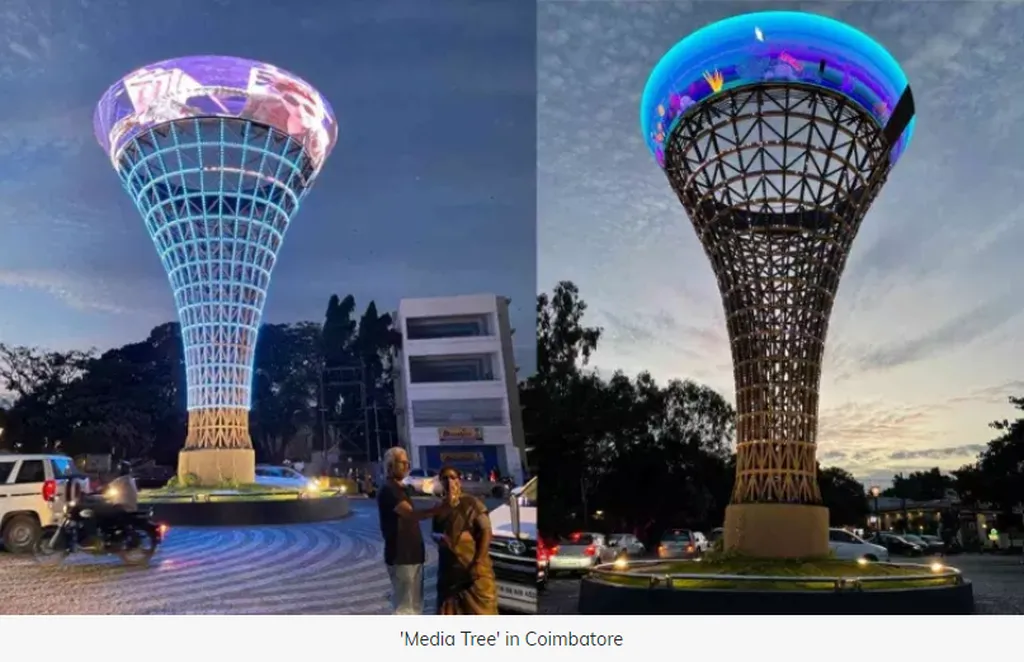
In the heart of Coimbatore, India, a team of researchers led by Lijo Jacob Varghese from the Department of Electrical and Electronics Engineering at Sri Krishna College of Technology is illuminating the path towards smarter, more energy-efficient cities. Their work, published in the Proceedings on Engineering Sciences (Proceedings of Engineering Sciences), focuses on automated street lighting technologies that promise to revolutionize urban infrastructure and energy consumption.
Imagine a city where street lights adjust their brightness in real-time, responding to human activity and reducing energy waste. This is not a scene from a futuristic movie, but a reality that Varghese and his team are bringing closer. Their research delves into the advancements and challenges of automatic smart street lamp systems, which integrate advanced sensor technologies, algorithms, and object detection mechanisms.
These systems use cameras to detect objects and adjust lighting intensity accordingly. “The adaptive approach enhances light for safety and visibility under human activity, but turns down lights for animal passing or incidental locomotion,” explains Varghese. This intelligent adjustment significantly reduces unnecessary energy consumption, steering cities towards sustainability goals.
The implications for the energy sector are substantial. By integrating remote surveillance systems, these smart street lights provide real-time, secured video access to remote and under-monitored areas. This not only enhances public safety but also allows for real-time monitoring and proactive maintenance. Smart grid integration further enables the adoption of best practices, minimizing system downtime and improving overall performance.
The use of state-of-the-art technologies like IoT, machine learning, and data analytics establishes a reliable fault detection and predictive maintenance system. Accurate and cost-effective energy consumption reporting becomes a reality, paving the way for more informed decision-making in urban planning and energy management.
Varghese’s research represents a significant step forward in the journey towards smart cities. “These advancements promise to improve urban infrastructure, reduce energy consumption, and build safer, more sustainable communities,” he asserts. The commercial impacts for the energy sector are profound, with potential reductions in energy costs, improved grid stability, and enhanced service reliability.
As cities around the world grapple with the challenges of urbanization and sustainability, innovations like these offer a beacon of hope. The research by Varghese and his team not only sheds light on the current state of automated street lighting technologies but also illuminates the path forward. Their work is a testament to the power of innovation in driving progress and shaping the future of our cities.