
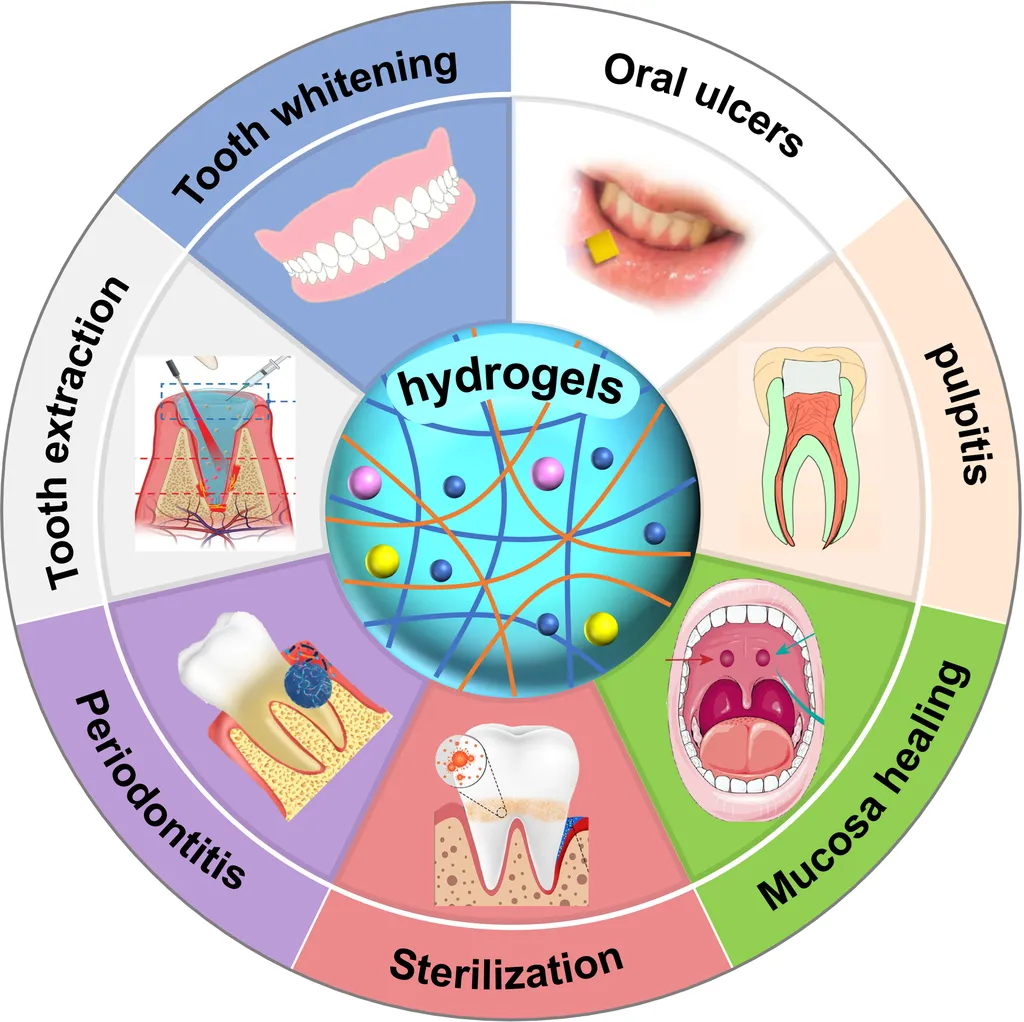
In the ever-evolving landscape of dental and bone regeneration technologies, a groundbreaking study published in *Bioactive Materials* (which translates to *活性材料* in Chinese) offers a promising new approach to post-tooth extraction care. Researchers, led by Dr. Jingmei Guo from the State Key Laboratory of Oral & Maxillofacial Reconstruction and Regeneration at Wuhan University, have developed an injectable living hydrogel that not only promotes wound healing but also aids in alveolar bone regeneration.
The hydrogel, a blend of probiotic Lactobacillus rhamnosus GG (LGG) and calcium phosphate nanoparticles (CP NPs) within a photopolymerizable poly (ethylene glycol) (PEG) matrix, is designed to be injected into the tooth-extraction socket. Once in place, it is activated by dental blue light, forming a protective and bioactive scaffold. This innovative approach addresses the complex, multistage demands of socket management, which have long been a challenge in clinical settings.
Dr. Guo explains, “Our hydrogel integrates infection control, immune regulation, and osteoinduction within a single platform. This multifunctional strategy is a significant step forward in post-extraction socket management.”
The probiotic LGG plays a dual role: it remodels the wound microenvironment through antibacterial and immunomodulatory activities, promoting early-stage healing, and facilitates the release of calcium and phosphate ions from CP NPs. This synergy with microbe-assisted biomineralization encourages osteogenic differentiation and bone regeneration.
The implications of this research are far-reaching. For the dental industry, this could mean faster healing times, reduced risk of infection, and improved patient outcomes. The commercial potential is substantial, with opportunities for developing new products and therapies that leverage living biomaterials.
Dr. Guo’s team validated their findings through in vitro and in vivo studies, confirming the hydrogel’s effectiveness. This research not only represents a transformative strategy for post-extraction socket management but also sets a new paradigm for dynamic tissue engineering applications.
As the field of regenerative medicine continues to advance, this study highlights the potential of living biomaterials to revolutionize patient care. The integration of probiotics and nanoparticles within a hydrogel matrix offers a versatile platform that could be adapted for various medical applications, from wound healing to bone regeneration.
In the words of Dr. Guo, “This is just the beginning. The possibilities for living biomaterials in medicine are vast, and we are excited to explore them further.”
With the publication of this research in *Bioactive Materials*, the stage is set for a new era in dental and bone regeneration technologies, promising significant advancements and commercial opportunities in the years to come.