
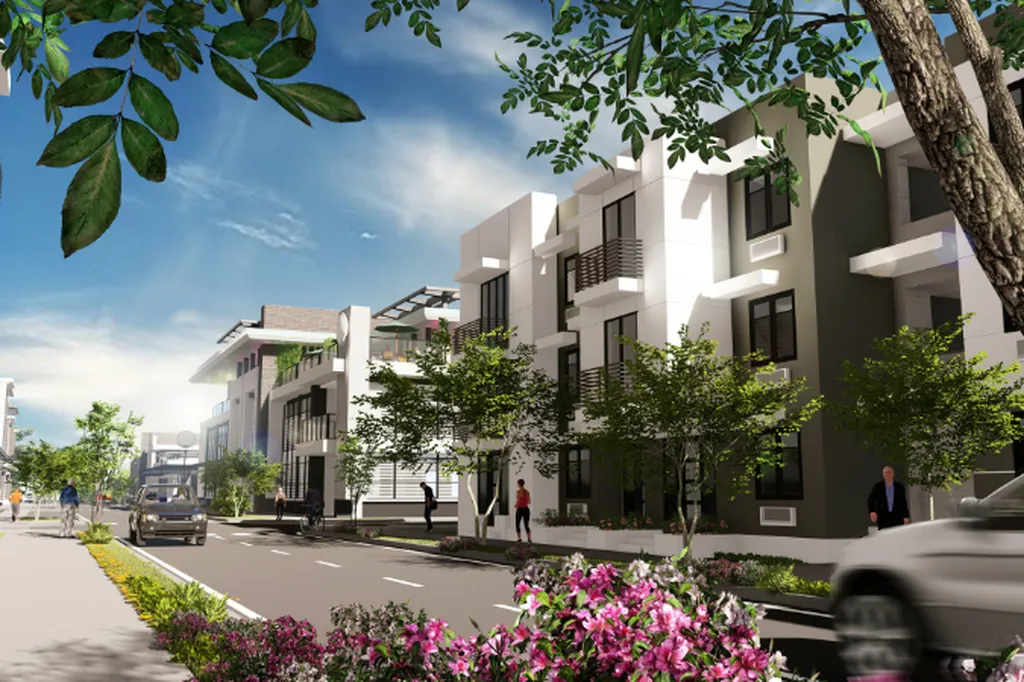
In the dense urban landscapes of tropical regions, the quest for optimal natural daylight in residential buildings has met a formidable obstacle: nearby obstructions. A recent study published in the *Journal of Daylighting* (which translates to the *Journal of Daylighting* in English) sheds light on how these obstructions—ranging from adjacent buildings to varying street widths—significantly impact indoor daylighting and glare in mid-rise apartments. Led by Meenatchi Sundaram A. from the Department of Architecture at the National Institute of Technology in Trichy, India, the research offers critical insights for architects, urban planners, and the energy sector.
The study, conducted at the Sri Aksalaya mid-rise apartment complex in Tirupur, India, employed advanced climate-based simulations using IES-VE with RadianceIES. By varying factors such as room orientation, road width, obstruction height, and façade reflectance, the researchers ran 1,152 simulation scenarios to assess daylight performance. The results were validated through surveys of 57 residents, ensuring that the findings aligned with real-world occupant experiences.
One of the most striking findings was the profound impact of obstructions on daylight access. “External obstructions are the primary factors impacting daylight performance,” Sundaram explained. “Those located closest to the building—just 4 meters away—reduce Spatial Daylight Autonomy (sDA) by up to 67% compared to open conditions.” This means that lower floors often suffer from insufficient daylight, while upper floors grapple with excessive glare. The study also revealed that façade reflectance plays a crucial role, particularly on middle floors, where glare probability can increase by 250% as reflectance rises from 30% to 65%.
The research underscores the importance of context-specific design strategies. For instance, window performance was found to be highly orientation-dependent. “From the selected room layouts, layouts 1, 3, and 4 performed best for north-east orientations, while layouts 2, 3, and 6 were ideal for south-west orientations,” Sundaram noted. This highlights the need for tailored solutions that consider both the building’s location and its surroundings.
For the energy sector, these findings are particularly relevant. Optimizing natural daylight can significantly reduce the reliance on artificial lighting, leading to lower energy consumption and costs. By understanding how urban morphology influences daylight access and visual comfort, developers and architects can design buildings that are not only more energy-efficient but also more comfortable for residents.
The study also emphasizes the importance of occupant feedback. The strong correlation between simulation metrics and resident satisfaction (R²= 0.84, p < 0.001) underscores the value of integrating human experience into design decisions. As Sundaram put it, "Urban morphology greatly influences daylight access and visual comfort in tropical homes. The study highlights the importance of context-specific fenestration design, façade reflectance, and floor-level strategies to optimise daylight and minimise glare in multi-floor residences in tropical settings." This research is poised to shape future developments in the field, encouraging a more holistic approach to building design that considers both technical and human factors. As cities continue to grow and densify, the insights from this study will be invaluable in creating sustainable, comfortable, and energy-efficient urban environments.