
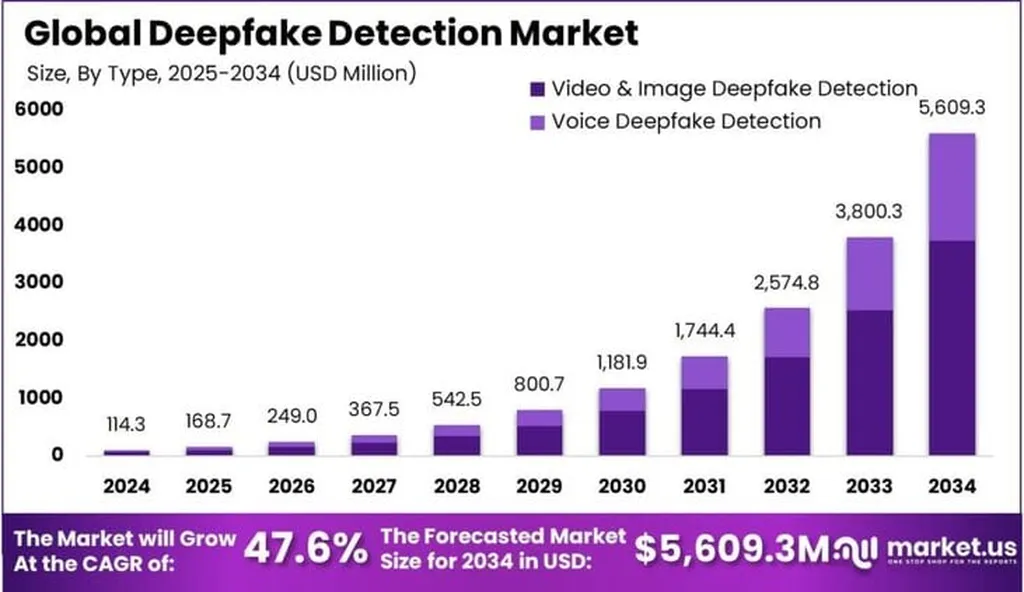
In the rapidly evolving digital landscape, the proliferation of deepfakes has become a pressing concern, with potential implications for various sectors, including energy. A recent study published in ‘Safety & Fire Technology’ (translated from Polish as ‘Safety and Fire Technology’) offers a promising approach to deepfake detection, focusing on image quality characteristics and processing artifacts. The research, led by Karol Jędrasiak from WSB University, provides a robust foundation for distinguishing synthetic content from authentic material, even under real-world conditions.
The study’s significance lies in its empirical verification of the hypothesis that image quality descriptors and processing artifacts can serve as a stable and interpretable basis for deepfake detection. “We aimed to identify measurable visual characteristics rooted in the physics of signal acquisition and processing,” Jędrasiak explained. “These characteristics allow synthetic content to be distinguished from authentic content with high resistance to platform degradation and recoding manipulation.”
To achieve this, Jędrasiak and his team developed the DeepFake RealWorld (DFRW) dataset, comprising 46,371 clips, including both authentic and synthetic content. The synthetic clips were generated using various models, such as GAN, diffusion, reenactment, and face swap, reflecting real-world processing chains. For each recording, the team calculated a set of 20 quality descriptors and artifacts, including BRISQUE, NIQE, PIQE, BLIINDS II, V-BLIINDS, CPBD, Wang–Bovik, PRNU, CFA, and double compression markers.
The results were striking. Significant differences were found between synthetic and authentic content, with BRISQUE, PIQE, Wang–Bovik, and Laplacian variance remaining resistant to recoding and mobile filters. “PRNU, CFA, and double compression features increased the evidentiary value in high-quality materials,” Jędrasiak noted. The set of quality characteristics and processing artifacts remained stable under conditions typical for Internet distribution, providing a reliable foundation for deepfake detection.
The commercial impacts of this research are substantial, particularly for the energy sector. As digital technologies become increasingly integral to energy infrastructure, the risk of deepfake-induced misinformation or manipulation grows. Effective deepfake detection can enhance cybersecurity measures, ensuring the integrity of digital communications and preventing potential disruptions.
Looking ahead, Jędrasiak and his team plan to expand the DFRW dataset to include more than 500,000 clips, incorporating full diffusion model involvement and audio-video multimodality. This expansion will further standardize the reporting of key parameters in forensic analyses, paving the way for more sophisticated and accurate deepfake detection methods.
In conclusion, the research led by Karol Jędrasiak offers a promising avenue for deepfake detection, with significant implications for the energy sector and beyond. By focusing on image quality characteristics and processing artifacts, the study provides a robust and interpretable foundation for distinguishing synthetic content from authentic material. As digital technologies continue to evolve, the ability to detect and mitigate deepfakes will become increasingly crucial, ensuring the security and integrity of digital communications in an ever-changing landscape.