
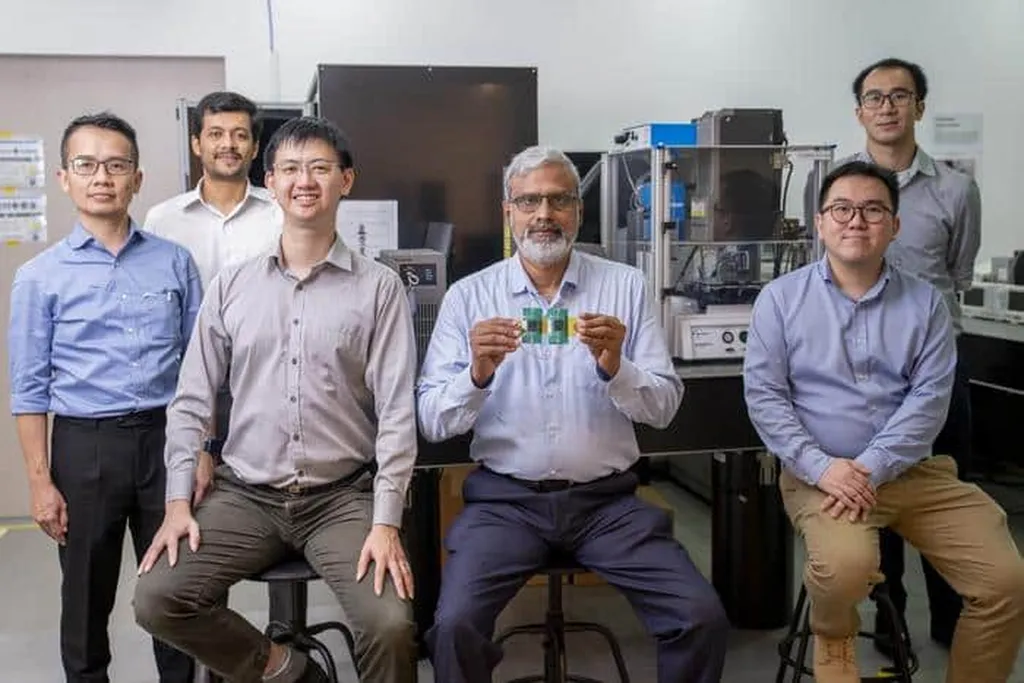
In a groundbreaking study published in the journal *Materials Research Letters* (translated from Chinese as “Materials Research Letters”), researchers from the Advanced Remanufacturing Technology Centre (ARTC) in Singapore have uncovered a critical challenge in the emerging field of multi-material additive manufacturing. The work, led by Shubo Gao, sheds light on the unintended consequences of mixing dissimilar materials during the directed energy deposition (DED) process, which could have significant implications for industries like energy, where high-performance materials are paramount.
The study focused on combining strong maraging steel with a ductile medium-entropy alloy using DED, a technique that employs a high-power laser to deposit materials layer by layer. The goal was to create a heterostructured material that would inherit the best properties of both base alloys—high strength from the steel and ductility from the medium-entropy alloy. However, the results were unexpected. Despite achieving defect-free interfaces between the layers, the final material exhibited lower strength and hardness than either of the base alloys.
The culprit? Extensive elemental mixing from melt pool dilution. “We found that the melt pool dilution during the DED process led to unintended in-situ alloying,” Gao explained. This mixing suppressed the formation of desirable phases in the material, ultimately degrading its mechanical properties. The study highlights the importance of considering dilution-driven compositional shifts in the design of multi-material components.
So, what does this mean for industries like energy, where materials must withstand extreme conditions? The findings underscore the need for careful material selection and process optimization in multi-material additive manufacturing. “Understanding and controlling the dilution effects is crucial for designing materials with tailored properties,” Gao noted. This research could pave the way for more robust and reliable multi-material components, potentially revolutionizing sectors that demand high-performance materials.
As the field of additive manufacturing continues to evolve, studies like this one are instrumental in guiding future developments. By addressing the challenges posed by melt pool dilution, researchers can unlock the full potential of multi-material additive manufacturing, leading to innovations that could transform industries ranging from energy to aerospace. The journey towards perfecting these techniques is ongoing, but each discovery brings us one step closer to a future where materials are not just strong or ductile, but both—and more.