
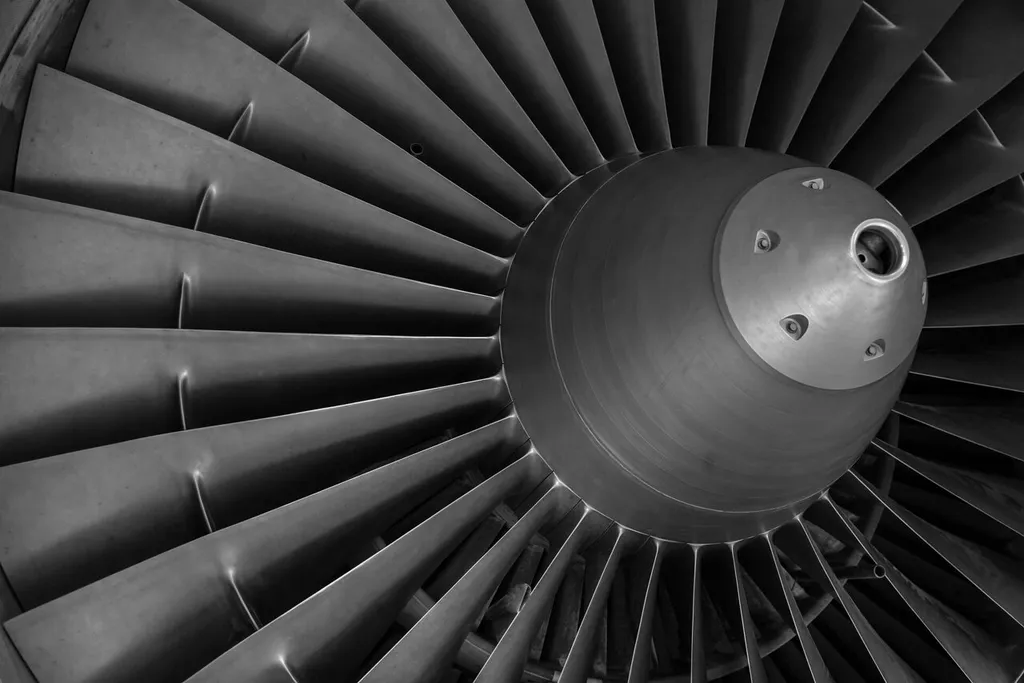
In the relentless pursuit of enhancing aero-engine efficiency, a team of researchers led by Dr. Zhang Le from the Science and Technology on Power Beam Processes Laboratory at AVIC Manufacturing Technology Institute in Beijing has made a significant stride. Their work, published in the journal *Cailiao Baohu* (which translates to *Materials Protection*), focuses on the high-temperature scraping properties of a Sc2O3-Y2O3-ZrO2-based abradable coating on SiCf/SiC composite surfaces at a scorching 1,150°C. This breakthrough could have profound implications for the energy sector, particularly in aviation and power generation.
Abradable coatings are crucial in aero-engines, acting as sacrificial layers that wear away to protect the underlying components. The quality of these coatings is often evaluated based on their high-temperature scraping properties. Dr. Zhang Le and his team meticulously tested and analyzed the metallographic, phase, porosity, thickness, Rockwell hardness, and high-temperature scraping properties of their Sc2O3-Y2O3-ZrO2-based coating. Their findings are promising.
“The Sc2O3-Y2O3-ZrO2-based abradable coating exhibited excellent high-temperature scraping properties,” Dr. Zhang Le explained. “After scraping tests at 1,150°C, the coating was primarily composed of t′-Sc2O3-Y2O3-ZrO2 and CaF2. The surface Rockwell hardness was 51.0 HR45Y, and the average Incursion Depth Ratio (IDR) of the blade was 5.98%.”
The excellent scraping properties of the coating can be attributed to several factors. Firstly, the t′-Sc2O3-Y2O3-ZrO2 and CaF2 in the coating exhibited good microstructural stability at 1,150°C without phase transformation. Secondly, the coating had relatively low Rockwell hardness, and CaF2 provided high-temperature self-lubrication, reducing wear on the blade material. Moreover, the counterpart blade was made of IC10 superalloy, which exhibited good high-temperature stability and wear resistance.
The implications of this research for the energy sector are substantial. In the aviation industry, more efficient and durable abradable coatings can lead to significant fuel savings and reduced maintenance costs. For power generation, particularly in gas turbines, these coatings can enhance performance and longevity, contributing to more reliable and cost-effective energy production.
Dr. Zhang Le and his team’s work is a testament to the power of advanced materials science in driving technological progress. As the world continues to demand more from its energy systems, innovations like these will be crucial in meeting those demands sustainably and efficiently.
The research, published in *Cailiao Baohu*, opens new avenues for exploration in high-temperature materials and coatings. It sets a strong foundation for future developments, potentially leading to even more advanced and efficient aero-engines and power generation systems. The journey towards more efficient and sustainable energy solutions is ongoing, and this research is a significant step forward.