
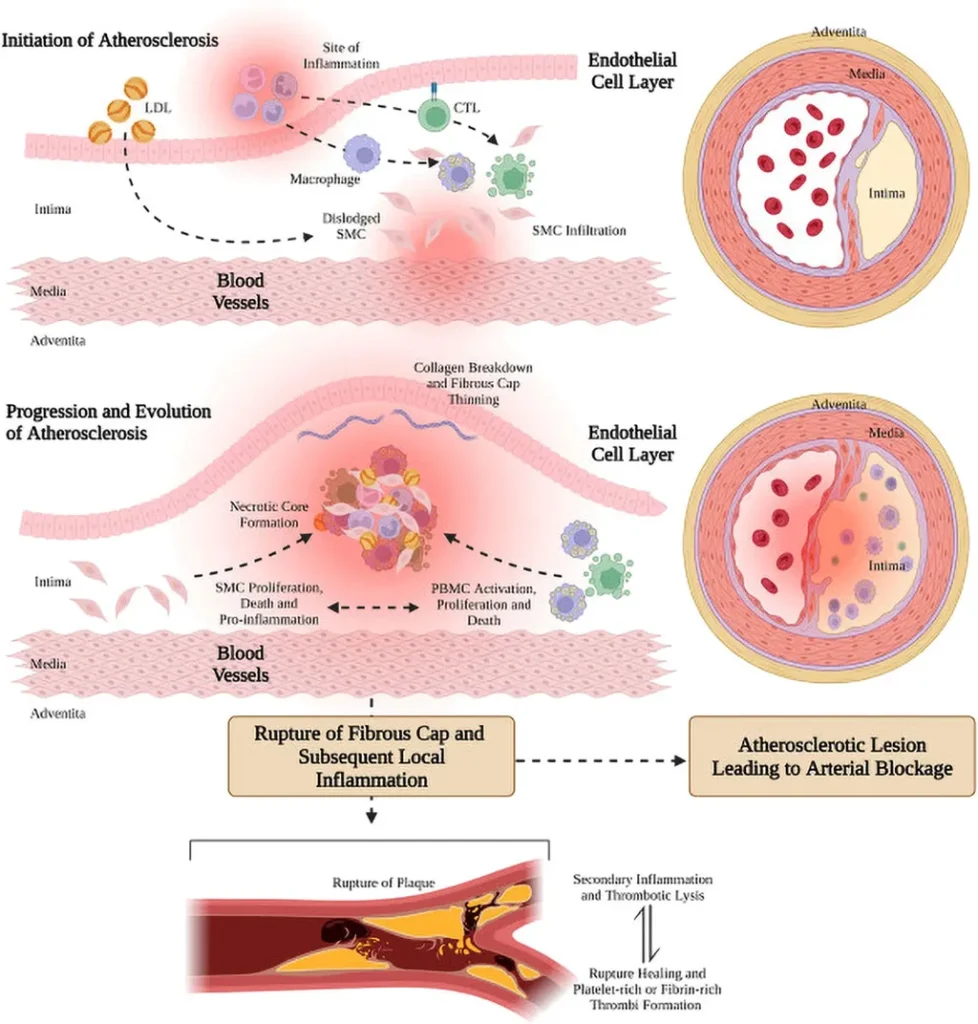
In a groundbreaking development poised to reshape the landscape of atherosclerosis treatment, researchers have unveiled a novel oral drug delivery system that combines the power of atorvastatin with a baicalein-copper network. This innovative approach, detailed in a study published in *Bioactive Materials* (which translates to *Bioactive Materials* in English), promises to revolutionize how we tackle this prevalent cardiovascular disease.
Atherosclerosis, a condition characterized by the hardening and narrowing of the arteries, is driven by a complex interplay of pathological mechanisms. Among these, vascular senescence—a process akin to cellular aging—plays a pivotal role. Traditional therapies, often limited to single-target approaches, have struggled to achieve the synergistic effects necessary to combat this multifaceted disease effectively.
Enter the baicalein-copper network (Cu-MON), developed by a team led by Kaijing Liu at the State Key Laboratory of Advanced Medical Materials and Devices, Institute of Biomedical Engineering, Chinese Academy of Medical Science & Peking Union Medical College. This cutting-edge system not only prolongs the gastrointestinal residence of atorvastatin (ATV) but also significantly boosts its oral bioavailability—all without the need for additional excipients.
“Our goal was to create a system that could address multiple aspects of atherosclerosis simultaneously,” explained Liu. “By integrating ATV with the baicalein-copper network, we’ve developed a synergistic therapeutic system (CMA) that targets vascular senescence, oxidative stress, inflammation, and cholesterol homeostasis.”
The CMA system employs a dual antioxidant approach to neutralize various reactive oxygen species (ROS), a major contributor to cellular damage and aging. Moreover, it reprograms macrophages—immune cells that play a crucial role in inflammation—to shift from a pro-inflammatory M1 phenotype to an anti-inflammatory M2 phenotype. This shift is vital for reducing inflammation and promoting tissue repair.
The study also highlights the system’s ability to modulate key pathways involved in cholesterol metabolism, enhancing cholesterol efflux and inhibiting the formation of foam cells—a hallmark of atherosclerosis. In preclinical trials using ApoE−/− mice, the CMA system demonstrated remarkable efficacy, significantly reducing aortic plaque burden and fibrosis while mitigating key features of atherosclerosis, including ROS levels, inflammation, DNA damage, and cellular senescence.
The implications of this research extend beyond the immediate therapeutic benefits. By offering a multi-target oral drug strategy, the CMA system could pave the way for more effective and personalized treatments for atherosclerosis, potentially reducing the need for invasive procedures and improving patient outcomes.
“This research represents a significant step forward in our understanding of how to combat atherosclerosis,” said Liu. “The CMA system’s ability to address multiple pathological mechanisms simultaneously offers a promising new avenue for treatment.”
As the energy sector increasingly focuses on the health and well-being of its workforce, particularly those at risk of cardiovascular diseases, innovations like the CMA system could play a crucial role in maintaining a healthy and productive workforce. By providing a more effective and efficient means of managing atherosclerosis, this research could help reduce the economic burden of the disease on both individuals and industries.
The study’s publication in *Bioactive Materials* underscores the importance of this research in the broader scientific community. As we continue to explore the potential of multi-target therapeutic systems, the CMA system stands as a testament to the power of innovative drug delivery technologies in transforming healthcare.
In the words of Liu, “This is just the beginning. The potential applications of this technology are vast, and we are excited to see how it will shape the future of cardiovascular medicine.”