
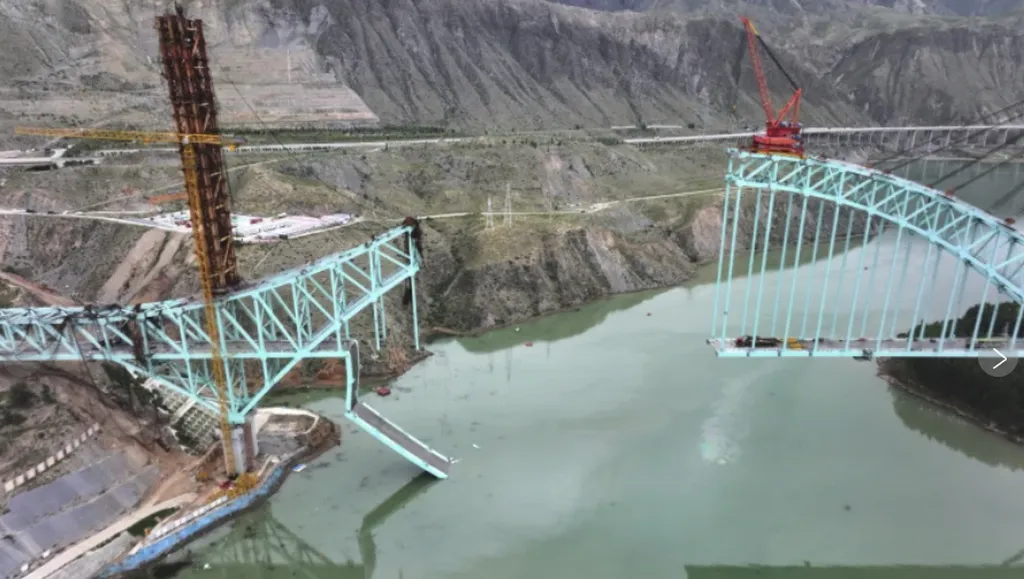
In the relentless battle against corrosion, particularly in the demanding environments of coastal bridges, researchers have made significant strides in understanding and mitigating stress corrosion in steel structures. A recent study published in *Cailiao Baohu* (translated as *Materials Protection*) sheds light on the stress corrosion behavior of welded joints in the steel structures of coastal bridge anchorage systems, offering valuable insights for the construction and energy sectors.
The study, led by LI Xiaosong from China Railway Bridge Group Co., Ltd., and his team at the University of Science and Technology Beijing, focused on a new type of weathering-resistant bridge steel, Q345qDNHY-Ⅰ. The research aimed to evaluate the corrosion and stress corrosion behaviors of the base metal and weld areas formed by two types of welding joints: submerged arc automatic welding and gas shielded welding.
The findings revealed that submerged arc welded joints exhibited superior corrosion resistance compared to the base material, with a corrosion current density of approximately 5.29 μA/cm² and a charge transfer impedance of 83.20 Ω·cm². “The submerged arc welded joints showed a 37.69% lower corrosion current density and a 120.9% higher charge transfer impedance than the base material, indicating relatively better corrosion resistance,” noted LI Xiaosong, the lead author of the study.
In contrast, the gas shielded welding joints had corrosion resistance slightly inferior to that of the base material and exhibited higher stress corrosion susceptibility. Despite these differences, all materials demonstrated high stress corrosion resistance, with elongation loss and reduction in area for all materials being less than 20%.
The implications of this research are significant for the construction and energy sectors, particularly in coastal and marine environments where structures are subjected to long-term tensile loads and harsh atmospheric conditions. Understanding the stress corrosion behavior of welded joints can inform better design and material choices, ultimately enhancing the durability and safety of coastal infrastructure.
As the energy sector increasingly relies on offshore and coastal installations, the findings from this study could shape future developments in material science and engineering. By optimizing welding techniques and selecting appropriate materials, engineers can mitigate the risks associated with stress corrosion, ensuring the longevity and reliability of critical infrastructure.
This research not only advances our understanding of corrosion mechanisms but also paves the way for innovative solutions in the field of materials science. As LI Xiaosong and his team continue to explore these complexities, their work will undoubtedly contribute to the development of more resilient and sustainable structures in challenging environments.