
In the heart of India, researchers are stirring up a revolution in materials science, and it’s not just about mixing ingredients—it’s about redefining the future of engineering. Rjasanthosh Kumar T., a mechanical engineering researcher from Puducherry Technological University, has been delving into the world of aluminum-based functionally graded materials (AFGMs), and his findings could have significant implications for industries ranging from aerospace to energy.
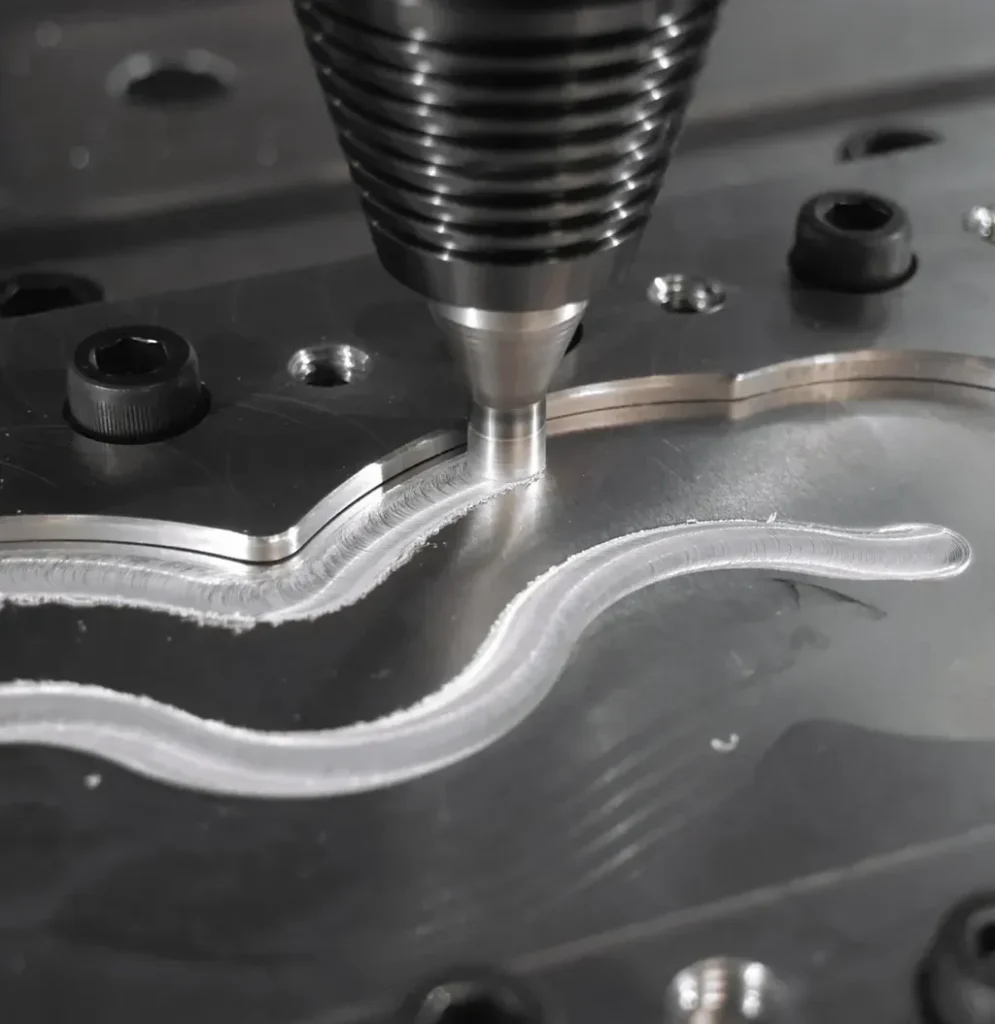
Kumar’s research, published in the journal *Materials Research Express* (which translates to “Materials Research Express” in English), focuses on a cutting-edge manufacturing technique known as friction stir additive manufacturing (FSAM). This process involves layers of different aluminum alloys being fused together to create a material with gradient properties—stronger in some areas, more flexible in others. The goal? To create advanced materials that can withstand the harsh conditions of industries like aerospace and automotive, where property gradients are crucial.
The key to unlocking the potential of these materials lies in the tool rotational speed (TRS) used during the FSAM process. Kumar and his team experimented with a range of speeds, from 400 to 800 revolutions per minute (RPM), to determine the optimal conditions for creating AFGMs with superior mechanical properties.
“We found that a rotational speed of 600 RPM produced the finest grain structure, leading to the best mechanical properties,” Kumar explains. This included a microhardness of 139 HV, a tensile strength of 310 MPa, a yield strength of 252 MPa, and an elongation of 18%. These properties are crucial for applications where materials need to be both strong and flexible, such as in the construction of aircraft components or energy infrastructure.
The implications of this research are far-reaching. In the energy sector, for instance, the ability to create materials with tailored properties could lead to more efficient and durable power generation and transmission systems. Imagine wind turbine blades that are stronger at the base but more flexible at the tips, or pipelines that can withstand extreme pressures and temperatures without compromising on safety.
Kumar’s work also sheds light on the importance of parameter selection in the FSAM process. By understanding how different rotational speeds affect the microstructure and mechanical properties of AFGMs, engineers can make more informed decisions when designing and manufacturing these advanced materials.
As Kumar puts it, “Our results provide realistic recommendations for parameter selection when fabricating AFGMs for industrial use using FSAM.” This could pave the way for more widespread adoption of these materials in various industries, driving innovation and progress.
In the ever-evolving landscape of materials science, Kumar’s research serves as a reminder that sometimes, the key to unlocking the future lies in understanding the intricacies of the present. As industries continue to push the boundaries of what’s possible, the need for advanced materials that can keep up with these demands will only grow. And with researchers like Kumar at the helm, the future of engineering is looking brighter than ever.