
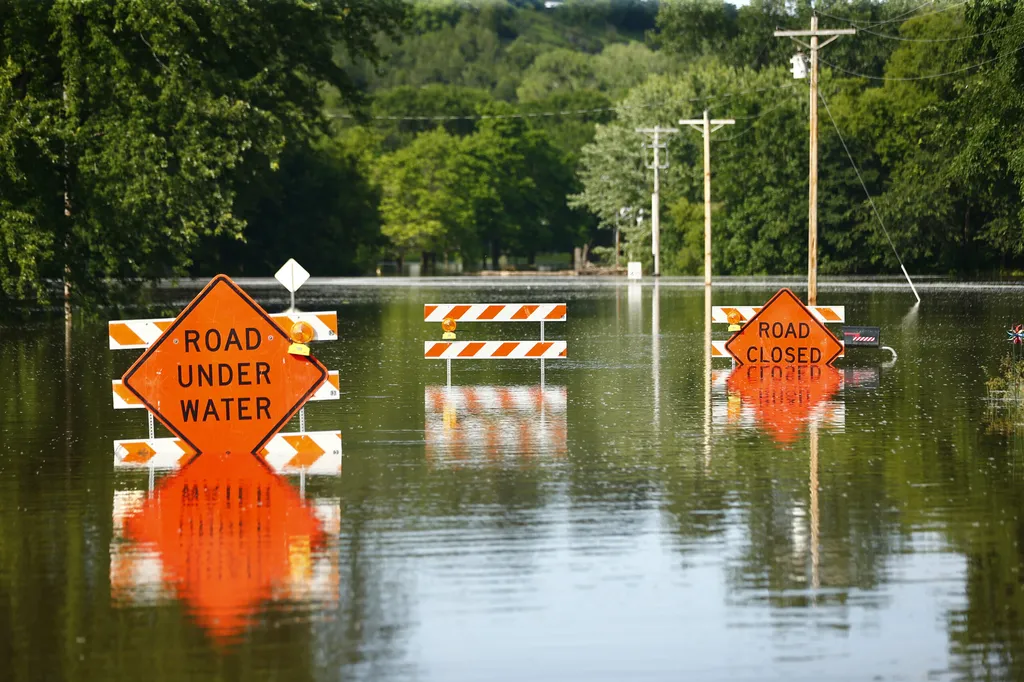
In the heart of the Midwest, Iowa’s concentrated animal feeding operations (CAFOs) are facing an underreported challenge: flooding. A recent study published in *Environmental Research Letters* (translated from Turkish as “Letters of Environmental Research”) has shed light on the vulnerability of these operations to extreme weather events, with significant implications for the agricultural sector and beyond.
Led by Ugur Satilmis of the IIHR—Hydroscience and Engineering at the University of Iowa and the Graduate School of Natural and Applied Sciences at Karadeniz Technical University in Turkey, the research employed advanced geospatial analysis techniques to assess the flood risk of 12,703 CAFOs across Iowa. The findings are stark: over 1.9 million animal units, or 13% of the state’s total, are located within the 100-year floodplain. This number rises to 2.05 million animal units, or 14% of the total, when considering the 500-year floodplain.
The study highlights that larger CAFOs, particularly those constructed before 2004, are disproportionately vulnerable. “These operations, due to their size and age, not only face higher flood risks but also have the potential to disrupt a significant portion of the agricultural supply chain,” Satilmis explained. The economic consequences of such disruptions are far-reaching, encompassing operational halts, infrastructure damage, and market instability.
Counties like Sioux, Lyon, and Hancock are particularly at risk, with Sioux County alone having over 16% of its animal units within the 100-year floodplain, a figure that increases to 17% in the 500-year floodplain. These numbers underscore the urgent need for adaptive strategies to mitigate flood risks and protect Iowa’s agricultural sector.
The research also draws attention to the broader implications of climate change. As extreme weather events become more frequent, the vulnerabilities of CAFOs are likely to increase, necessitating proactive measures to safeguard both livestock and the economic interests tied to them.
This study serves as a wake-up call for the agricultural industry and policymakers alike. It underscores the need for heightened awareness and further research into adaptive strategies to protect Iowa’s agricultural sector. As Satilmis noted, “The findings highlight the need for heightened awareness of CAFO vulnerabilities and call for further research into adaptive strategies to protect Iowa’s agricultural sector.”
The implications of this research extend beyond Iowa, offering valuable insights for other regions grappling with similar challenges. As the frequency and intensity of extreme weather events continue to rise, the need for robust flood risk assessment and mitigation strategies becomes ever more critical. This study not only advances our understanding of CAFO vulnerabilities but also paves the way for future developments in flood risk management and climate adaptation strategies.