
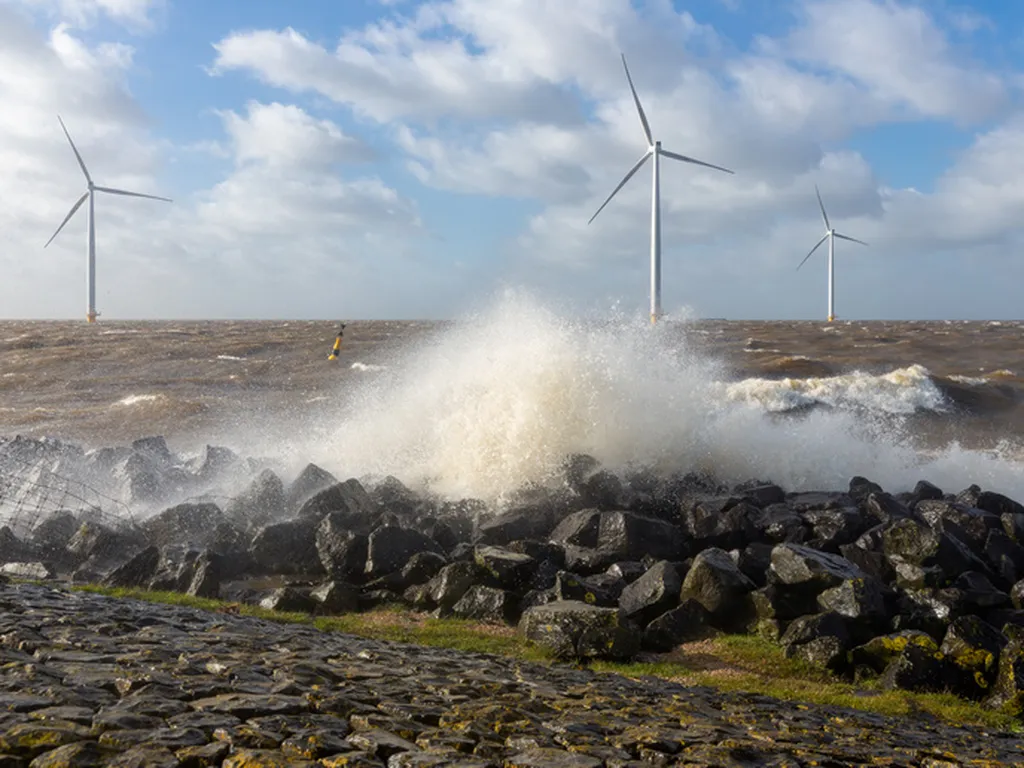
In the relentless pursuit of sustainable energy, offshore wind power stands as a titan, harnessing the ocean’s might to fuel our future. Yet, this formidable force is not without its challenges. The harsh marine environment poses a significant threat to the structural integrity of offshore wind turbines, primarily through corrosion. A recent study published in *Cailiao Baohu* (which translates to *Materials Protection*) sheds light on this pressing issue, offering insights that could revolutionize the industry.
Led by LIU Biyan of Jiangsu Longyuan Offshore Wind Power Generation Co., Ltd., and a team of researchers from Hunan University, the study delves into the intricate world of corrosion mechanisms, protection technologies, and monitoring systems for offshore wind structures. The team’s findings, a beacon of hope for the energy sector, could significantly enhance the longevity and efficiency of offshore wind farms.
The study highlights the most common and severe types of marine corrosion, their mechanisms, and influencing factors. “Understanding these aspects is crucial for developing effective protection strategies,” says LIU Biyan. The team’s analysis of corrosion cases and protection technologies provides a comprehensive overview of the current state of affairs, paving the way for innovative solutions.
One of the most compelling aspects of the study is its review of corrosion monitoring and prediction technologies. The team explores remote monitoring of steel pile foundations, corrosion detection in the splash zone, electrochemical monitoring of generator structures and bearings, and early warning management systems for critical equipment. These technologies, the researchers argue, could facilitate a shift from “reactive repair” to “proactive protection,” a paradigm shift that could save the industry millions in maintenance costs.
The study also underscores the importance of developing a full lifecycle corrosion management strategy. This strategy, the researchers suggest, should integrate anti-corrosion technologies, monitoring, and prediction technologies. “By doing so, we can ensure the longevity of offshore wind structures and enhance the overall efficiency of offshore wind farms,” says LIU Biyan.
The implications of this research are far-reaching. By improving corrosion control for key components, enhancing the corrosion database, corrosion monitoring network, and intelligent diagnostic systems, the energy sector could witness a significant boost in the reliability and efficiency of offshore wind power. This, in turn, could accelerate the global transition to renewable energy, mitigating the impacts of climate change.
As the world grapples with the challenges of climate change and energy security, the insights from this study could not have come at a better time. The research, published in *Cailiao Baohu*, serves as a testament to the power of scientific inquiry and innovation in driving the energy sector towards a sustainable future. The team’s work is a beacon of hope, illuminating the path towards a future powered by clean, renewable energy.