
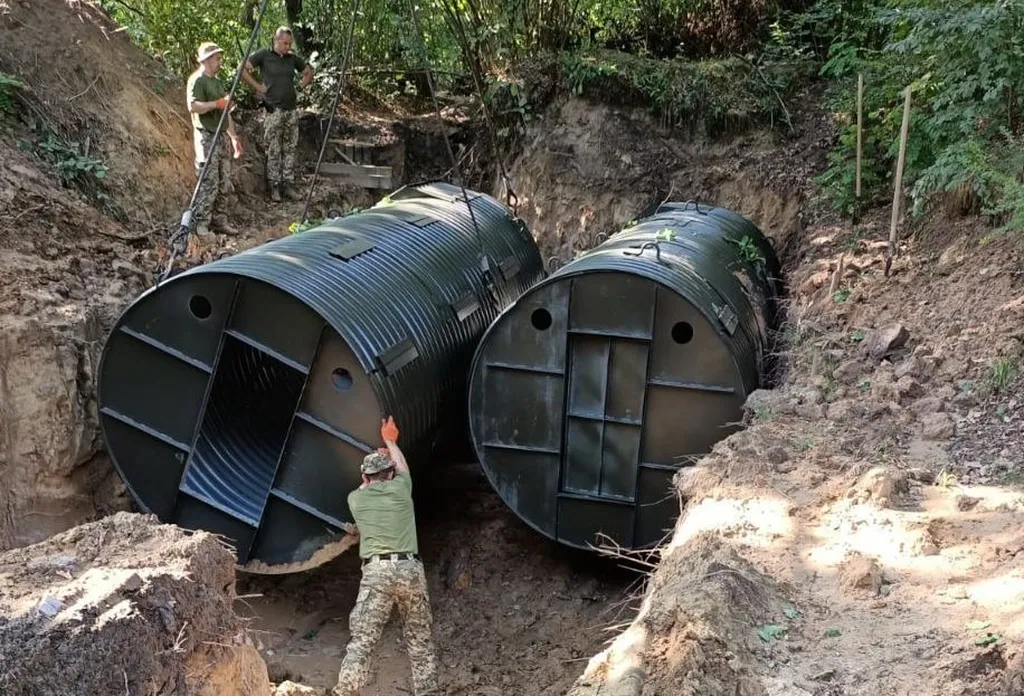
In the realm of road construction, a significant shift is underway, particularly in the design and calculation of structures made from metal corrugated structures (MCS). Volodymyr Abramov, a researcher from the Academy of Construction and Architecture in Ivano-Frankivsk, has delved into the nuances of different calculation approaches for these structures, shedding light on their impact on design outcomes. His work, published in the journal ‘Дороги і мости’ (translated to English as ‘Roads and Bridges’), is set to influence how engineers approach the construction of small bridges, arch-shaped overpasses, and drainage pipes under road embankments.
Abramov’s research highlights a critical gap in current regulatory and methodological documents in Ukraine. While these documents provide a methodology for analytical calculation of round pipes with diameters up to 6 meters, they fall short for structures of other shapes and sizes. “The existing normative analytical methodology needs improvement and supplementation,” Abramov asserts. His work suggests that the finite element method (FEM) could be a viable solution for calculating structures beyond the scope of current regulations.
The implications of this research are far-reaching, particularly for the energy sector. As the demand for efficient and durable infrastructure grows, so does the need for innovative construction methods. Metal corrugated structures offer a promising alternative to traditional materials, but their potential has been hampered by outdated calculation methods. Abramov’s work could pave the way for more widespread adoption of MCS in road construction, leading to cost savings and improved structural performance.
Moreover, the research underscores the importance of understanding the characteristics of different calculation approaches. As Abramov notes, “A better understanding of the features of different approaches to calculation and their impact on the results is crucial for improving the design methodology.” This insight could lead to more accurate and efficient designs, ultimately benefiting both the construction industry and the end-users of these structures.
In the broader context, Abramov’s work is a testament to the power of scientific inquiry in driving technological advancements. As the construction industry continues to evolve, so too must the methods and tools used to design and calculate structures. Abramov’s research is a step in this direction, offering a glimpse into the future of road construction and the role that metal corrugated structures could play in shaping it.
As the industry grapples with the challenges of climate change, urbanization, and technological disruption, innovative solutions like those proposed by Abramov will be crucial. His work serves as a reminder that progress often begins with a single idea, a single question, and a relentless pursuit of knowledge. In the words of Abramov, “It is important to have a better understanding of the features of different approaches to calculation and their impact on the results.” This pursuit of understanding could very well be the key to unlocking the full potential of metal corrugated structures in road construction.