
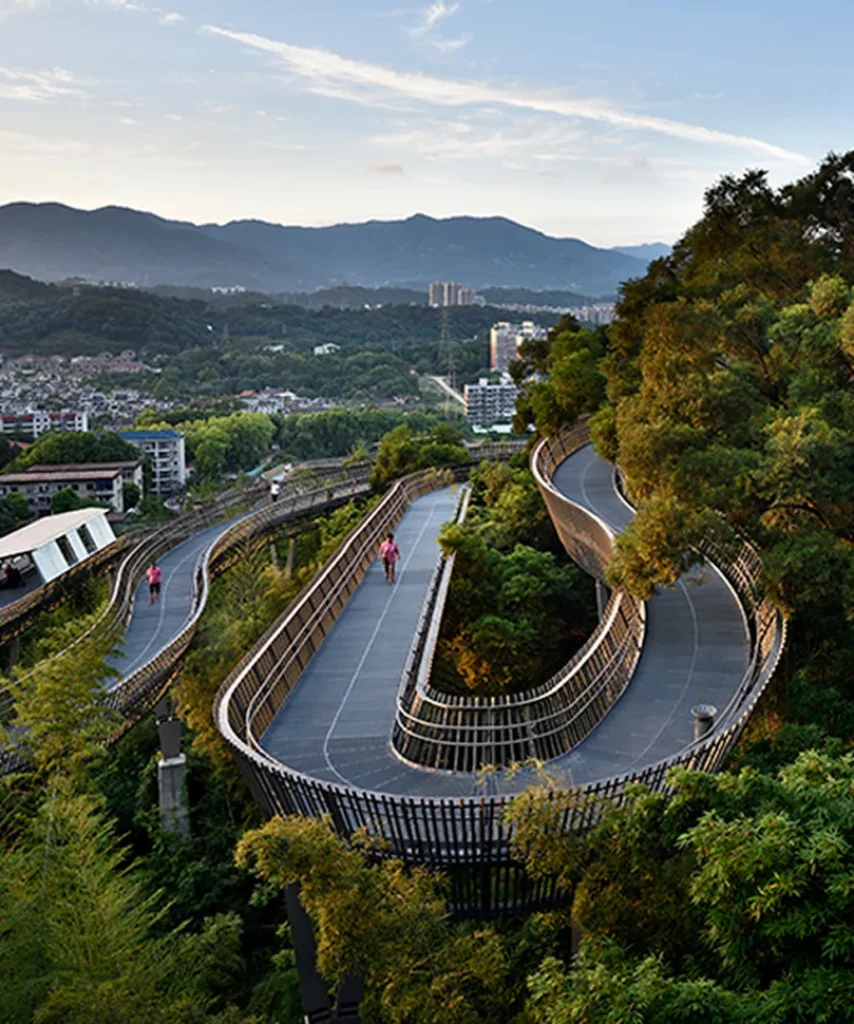
In the heart of Fuzhou, China, a delicate dance between urban growth and natural beauty is unfolding, and a groundbreaking study is shedding new light on how cities can harmonize their skylines with mountainous backdrops. Yuebin Lin, a researcher from Fujian Jiangxia University, has published a study in the Journal of Asian Architecture and Building Engineering (translated from its original Chinese title) that offers a scientific approach to preserving the aesthetic and emotional value of urban landscapes.
The study, titled “Evidence-based thresholds for harmonizing vertical growth and mountain preservation in urban skylines: a case study of Fuzhou, China,” delves into the visual impact of skyscrapers on the iconic Fu Forest Trail. Lin and his team conducted a photo-based survey with 450 participants, presenting them with 60 different skyline samples. The results revealed that public preference is strongly linked to the pleasure derived from viewing the skyline, with a significant positive correlation between visual preference and pleasure scores.
“Visual preference is predominantly pleasure-driven,” Lin explained. “Our findings show a strong positive correlation with pleasure scores and a negative trend with arousal. This means that people prefer skylines that evoke a sense of calm and enjoyment rather than excitement or tension.”
The study identified six key physical parameters that influence visual preference, with building contour volatility (PVB) being the most significant. This finding suggests that the variability in the shape and height of buildings plays a crucial role in how people perceive and appreciate urban skylines.
Perhaps the most compelling aspect of the study is its practical application. Lin’s team developed a decision tree model that uncovers critical parameter interactions and compensatory pathways, leading to specific, evidence-based threshold recommendations for planning. These recommendations include maintaining building contour volatility within a specific range, controlling the horizontal position of the tallest building, and managing mountain contour volatility.
“This research provides a scientific basis for data-driven skyline management,” Lin said. “It enables policymakers to implement targeted design guidelines and control measures that balance urban growth with the preservation of natural landscapes and aesthetic quality.”
The implications of this research extend beyond Fuzhou, offering valuable insights for cities worldwide grappling with the challenges of urbanization and the need to preserve natural beauty. For the energy sector, this study highlights the importance of considering visual impact assessments in the planning and development of energy infrastructure. As cities continue to grow vertically, the need for scientific, evidence-based approaches to managing visual impact will only become more pressing.
In an era where urbanization and environmental conservation are often at odds, Lin’s research offers a beacon of hope. By providing a scientific framework for harmonizing vertical growth with mountain preservation, it paves the way for cities to grow in a manner that respects and enhances the natural landscape, ultimately benefiting both residents and the environment.